
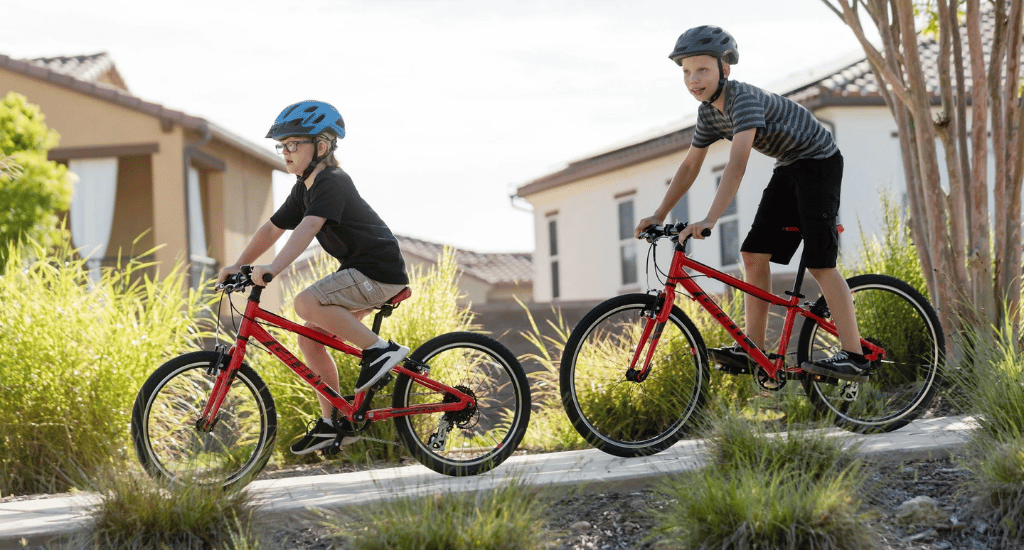
Zooming down a trail feels amazing when the bike fits just right. The best mountain bike for a 10-year-old boy can make rides safe, fun, and full of confidence. At this age, the right bike helps develop balance, control, and basic trail skills while keeping safety first.
A properly sized bike lets kids handle bumps and turns without fear. It builds courage on trails, strengthens coordination, and gives a sense of independence. Every pedal stroke becomes a small win.
Wheel size, weight, brakes, and riding style shape comfort and performance. Read this blog to learn how to choose a bike your child will love.
The 5 Best Mountain Bikes for a 10-Year-Old Boy
Finding the right bike can turn a young rider into a confident adventurer. These five mountain bikes suit 10-year-old boys with varying skill levels and riding styles. From full-suspension trail machines to lightweight neighborhood riders, each bike helps improve control, safety, and trail enjoyment.
| Bike | Best For | Frame / Weight | Brakes | Gears | Price |
|---|---|---|---|---|---|
| Woom Explore 5/6 (24″ / 26″, 19.8 lbs) |
Lightweight trail and road riding | 6061 aluminum, 19.8 lbs | Hydraulic disc | 8-speed (1×8) | Check on Amazon |
| Schwinn High Timber ALX (24″, ~35 lbs) |
Mid-range trail riding with disc brakes | Aluminum, ~35 lbs | Mechanical disc | 21-speed (3×7) | Check on Amazon |
| Glerc Skyline 24 (24″/26″, ~30 lbs) |
Budget disc-brake trail bike | High-carbon steel, ~30 lbs | Mechanical disc | 21-speed (3×7) | Check on Amazon |
| Huffy Stone Mountain (24″, ~35 lbs) |
Entry-level casual and neighborhood riding | Steel, ~35 lbs | V-brakes | 21-speed (3×7) | Check on Amazon |
| Mongoose Flatrock (24″, ~30-33 lbs) |
Best value aluminum with simple gearing | Aluminum, ~30-33 lbs | Linear-pull | 7-speed (1×7) | Check on Amazon |
1. woom EXPLORE 5 / EXPLORE 6
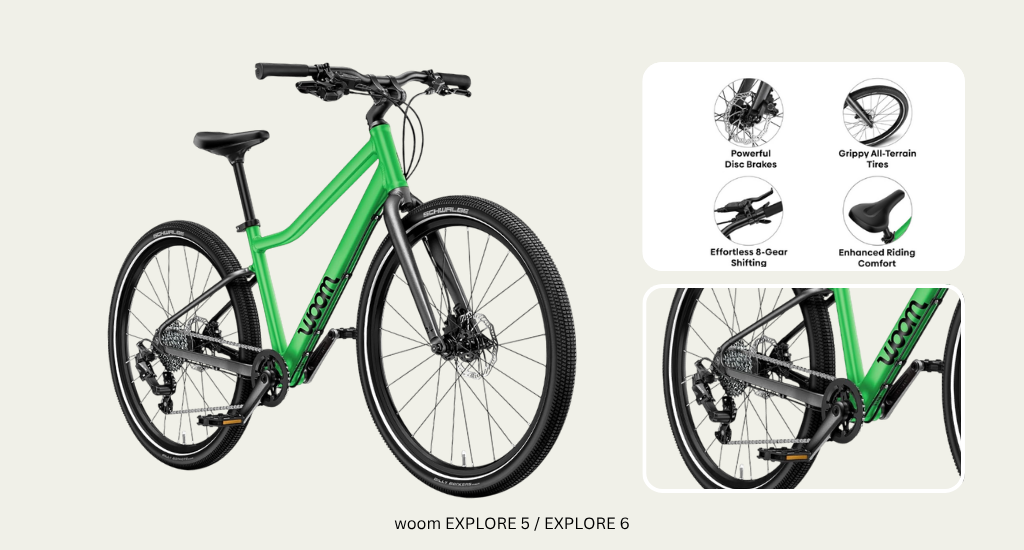
Best for: All-around trail + neighborhood riding
This bike is ideal for young riders starting on trails and streets. Beginner to intermediate riders benefit from its lightweight frame and adjustable setup, which grows with the child. Comfort and versatility make it a long-term companion.
- 24″ and 26″ wheels match heights from 49″ to 65″.
- 19.8 lb frame cuts effort on climbs and long rides.
- Hydraulic disc brakes stop with minimal hand force.
- 8-speed microSHIFT drivetrain shifts cleanly with one lever.
- Schwalbe Billy Bonkers tires grip dirt and pavement.
- Kid-specific geometry fits smaller hands and shorter reach.
2. Schwinn High Timber ALX
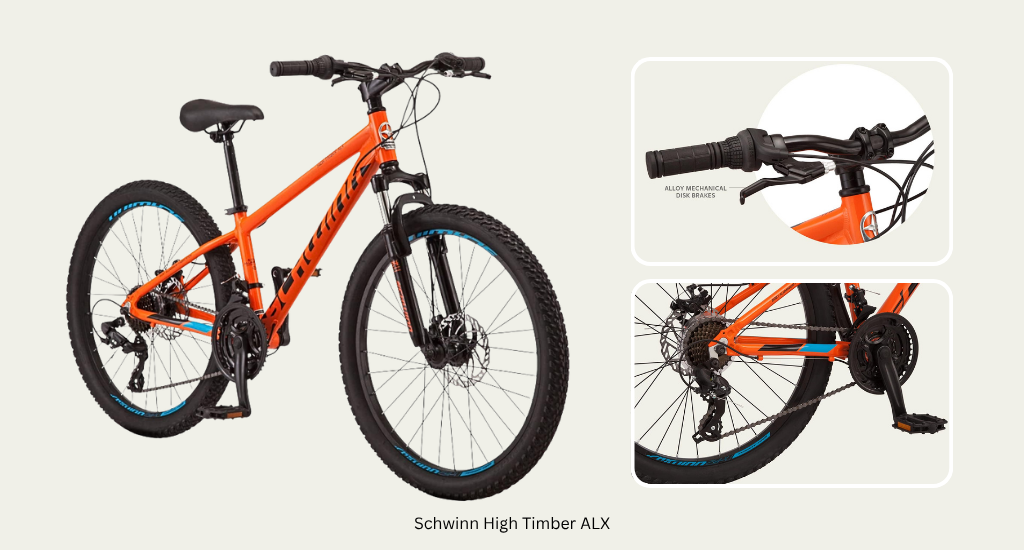
Best for: Mid-range trail riding with disc brakes
The Schwinn High Timber ALX pairs an aluminum frame with mechanical disc brakes. Its 21-speed Shimano Tourney drivetrain handles steep climbs and flat trails. A coil suspension fork absorbs bumps on packed dirt and gravel paths.
- 24″ wheels on alloy rims suit riders ages 8 to 12.
- Aluminum frame keeps weight manageable for young riders.
- Mechanical disc brakes work reliably in wet conditions.
- 21-speed Shimano drivetrain covers steep climbs and flats.
- Coil suspension fork smooths rough trail sections.
- Wide knobby tires grip loose dirt and gravel paths.
3. Glerc Skyline 24
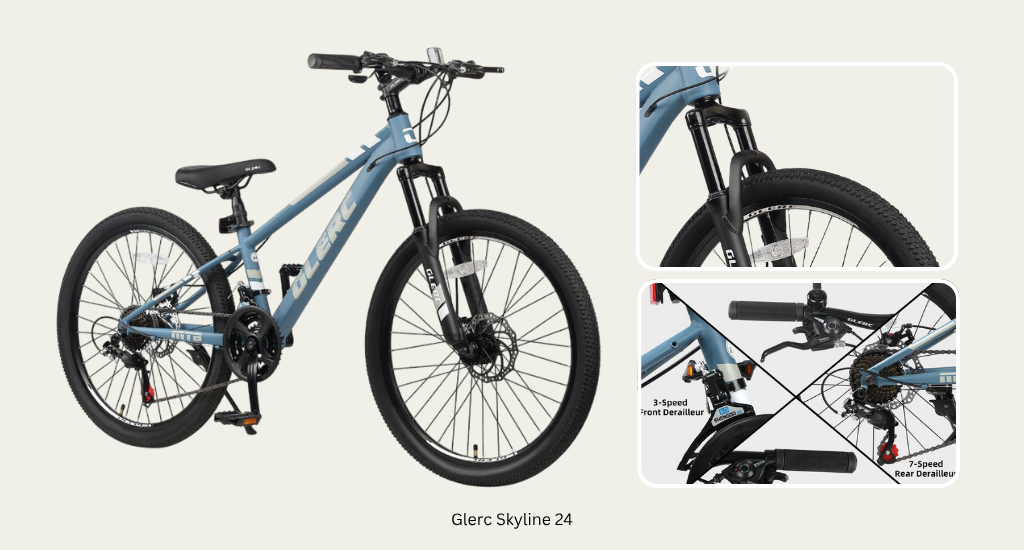
Best for: Budget disc-brake trail bike
The Glerc Skyline delivers disc brakes and front suspension under $260. Its high-carbon steel frame handles rough use and weighs about 30 lbs. A 21-speed drivetrain gives young riders the range they need for hills and flat paths.
- 24″ and 26″ sizes fit riders ages 10 to 14.
- High-carbon steel frame absorbs impacts and resists bending.
- Dual mechanical disc brakes deliver reliable stopping on dirt and pavement.
- 21-speed gearing covers steep climbs and fast flats.
- Front suspension fork smooths bumps on packed trails.
- Available in 6+ colors to match rider preference.
4. Huffy Stone Mountain
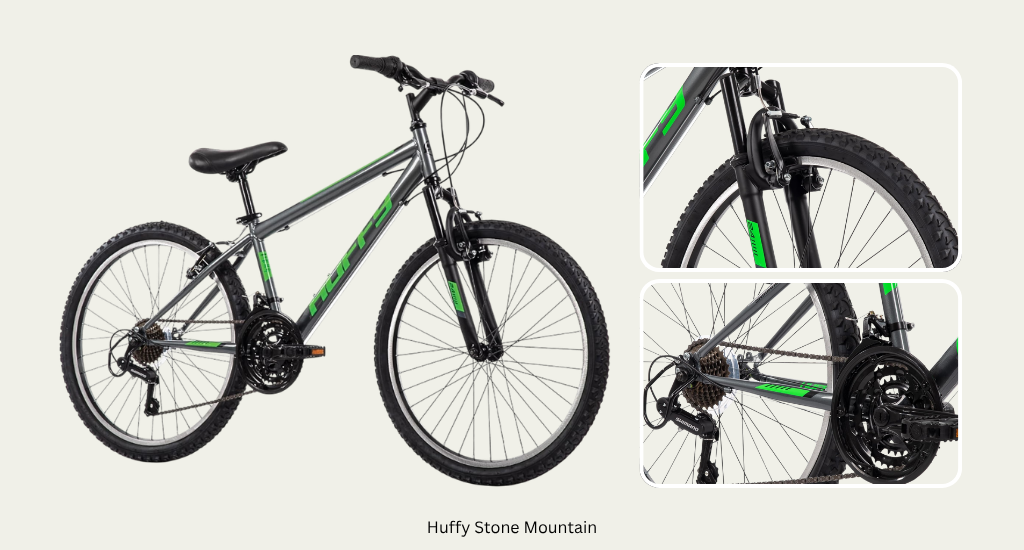
Best for: Entry-level casual and neighborhood riding
The Huffy Stone Mountain costs under $150 and suits casual riders. Its steel frame and Shimano Tourney drivetrain handle flat paths and gentle hills. V-brakes and a basic suspension fork work on paved roads and light gravel.
- 24″ knobby tires roll on pavement and packed dirt.
- The steel frame weighs about 35 lbs total.
- 21-speed Shimano twist shifters cover mild hills easily.
- Front suspension fork absorbs small bumps on paths.
- Comfort saddle reduces pressure on longer rides.
- Lowest price in this lineup at under $150.
5. Mongoose Flatrock
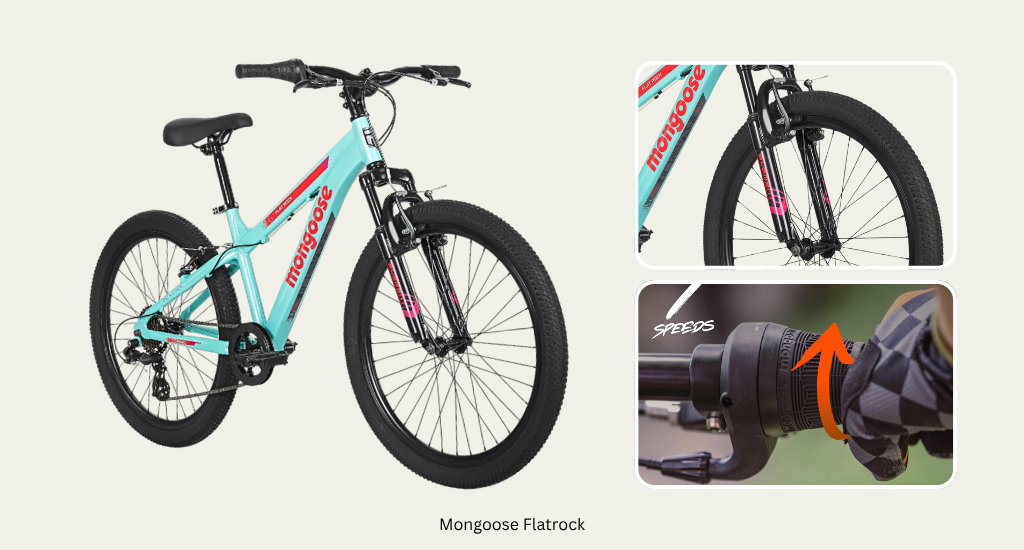
Best for: Best value aluminum frame with simple gearing
The Mongoose Flatrock combines an aluminum frame with a 7-speed drivetrain. Its 60mm suspension fork handles bumps better than most budget bikes. The 1×7 setup eliminates front-derailleur confusion for young riders.
- 24″ knobby tires on double-wall alloy rims grip trails.
- Aluminum frame weighs 30 to 33 lbs total.
- 60mm Element suspension fork absorbs rocks and roots.
- 7-speed twist shifter keeps gear changes simple.
- Linear-pull brakes provide solid stopping on dry trails.
- Fits riders from 4’4″ to 5’6″ tall.
What to Look for When Choosing a Mountain Bike for a 10-Year-Old
A mountain bike for a 10-year-old must fit well, feel safe, and be fun to ride. Size, weight, brakes, suspension, and gears all affect control, learning, and trail confidence.
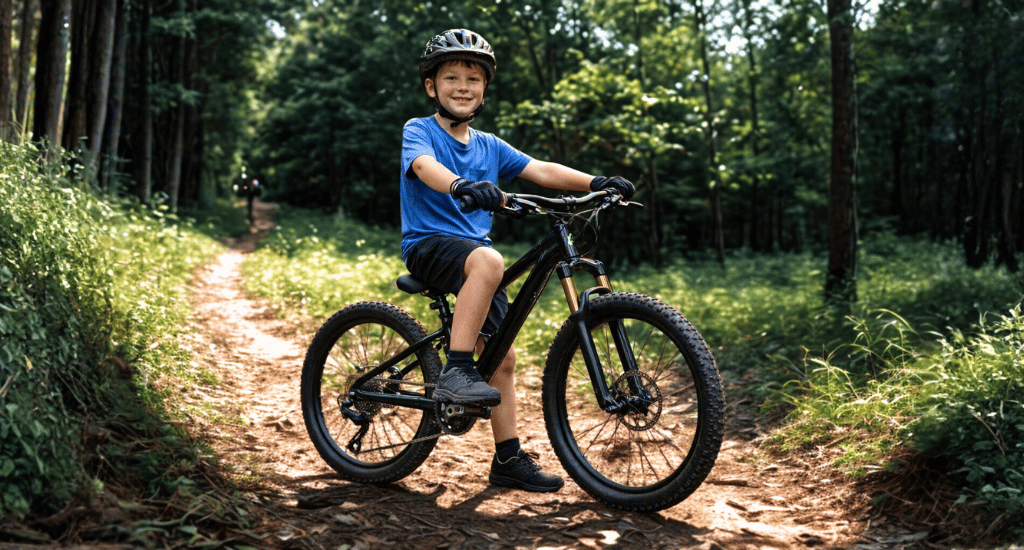
Wheel Size & Height Fit
24″ wheels are the most common because they strike a balance between stability and maneuverability for kids. 26″ wheels suit taller riders ready for bigger trails. Heights between 49″-59″ work best. Always focus on fit, not just age.
Bike Weight & Frame Design
A heavy bike makes climbing hills and turning harder for young riders. Lightweight frames let kids ride longer without getting tired. Kid-specific geometry improves posture, balance, and control on trails, helping beginners gain confidence.
Brakes & Safety
Mechanical disc brakes are reliable but need more hand strength. Hydraulic disc brakes are easier to squeeze and react faster. Good brakes help young riders stop safely on dirt, rocks, or slippery trails.
Suspension Type
Air forks absorb bumps smoothly, while coil forks are simpler and heavier. Full suspension suits advanced riders on rough trails. Beginners usually do well with front suspension only, which keeps bikes lighter and easier to handle.
Gearing & Drivetrain
1x drivetrains are simple and reduce shifting mistakes. Wide-range cassettes make climbing hills easier without pedaling too hard. Proper gearing helps a 10-year-old enjoy trails and build skills safely.
How to Choose the Right Size & Avoid Common Mistakes
1x drivetrains are simple and reduce shifting mistakes. Wide-range cassettes make climbing hills easier without having to pedal too hard. Proper gearing helps a 10-year-old enjoy trails and build skills safely.
Measure Height & Inseam Correctly
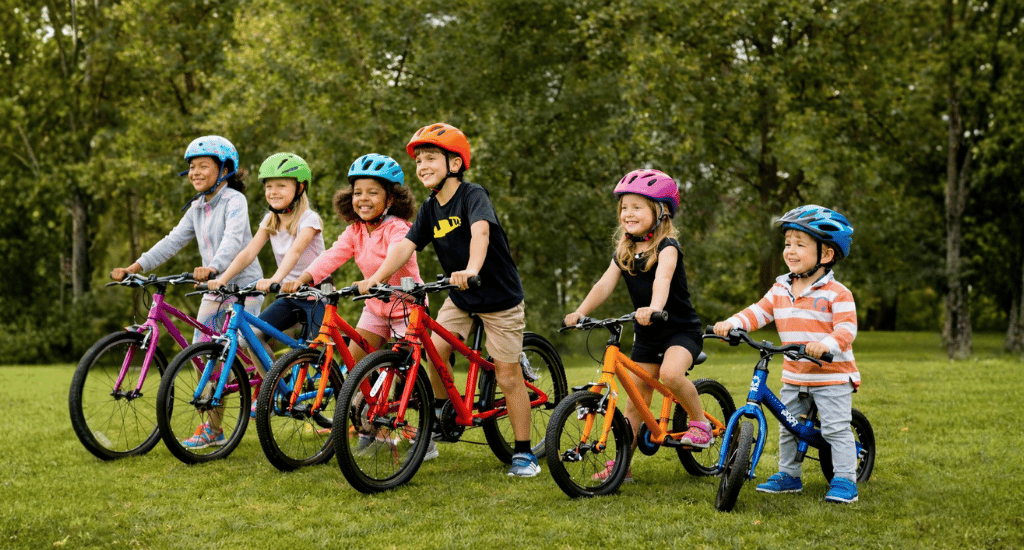
Check the standover clearance so kids can stand over the bike without touching the top tube. Reach affects control; too far makes steering hard. Proper measurements ensure comfort and safer handling on trails.
Buying for Growth (Without Oversizing)
Oversized bikes make pedaling and braking harder, lowering confidence. Instead, pick adjustable seat and handlebar positions. A bike that grows with the child keeps riding safe and enjoyable for longer.
Test Rides & Local Bike Shops
Test riding helps kids feel the bike’s weight, balance, and braking. Local shops and specialty stores allow a try-before-buying. Feeling the bike in action avoids size and comfort mistakes.
Check Hand & Foot Reach
Kids must reach the handlebars and brakes easily without stretching. Pedals should rotate smoothly without toe strain. Proper reach improves safety, confidence, and learning, especially on trails or rough terrain.
Inspect Components for Ease of Use
Shifters, brakes, and suspension should be kid-friendly. Smooth operation reduces mistakes and frustration. Small hands need easy-to-squeeze levers and simple gear systems to enjoy riding confidently.
Conclusion
Choosing the best mountain bike for a 10-year-old boy is more about fit than age. A properly sized bike matches height, reach, and skill level, letting young riders feel safe and confident.
Riding style matters, whether trail, neighborhood, or bike park, while quality brakes, suspension, and gearing boost control and learning. A bike that fits well and suits the child’s trails helps build balance, confidence, and joy. With the right setup, every ride becomes a rewarding adventure.
FAQs
What Size Mountain Bike Does a 10-Year-Old Need?
A 24-inch mountain bike fits most 10-year-old boys between 49 and 59 inches tall. Taller kids above 58 inches fit an adult XS frame with 26-inch or 27.5-inch wheels. Avoid 29-inch wheels on XS frames - the wheel diameter makes handling difficult for young riders. Measure inseam and standover height before choosing. Fit depends on height and leg length, not age alone.
Is a 20-inch bike too small for a 10-year-old?
Yes, a 20-inch bike is often too small. Kids may feel cramped, struggle with balance, and pedal inefficiently. It’s better for younger riders under 48″ tall. A 24-inch bike gives more stability and confidence on trails.
Are hydraulic disc brakes necessary for kids?
Not always. Hydraulic brakes are easier to squeeze and stop smoothly, but mechanical disc brakes work fine for many riders. Hand strength and trail type matter. Good brakes, of any type, are essential for safety and confidence.
Should a 10-year-old have a full suspension MTB?
Only if they ride rough trails or bike parks regularly. Beginners usually do well with front suspension only. Full suspension adds weight and complexity, which can make learning balance and control harder for young riders.
Is a Full Suspension Mountain Bike Good for a 10-Year-Old?
Full suspension suits 10-year-olds who ride bike parks or rough trails regularly. The added weight of 3-5 lbs and mechanical complexity make full suspension harder for beginners. Most 10-year-olds ride better on a hardtail with a quality air fork that adjusts to their lighter bodyweight.
Do These Bikes Work for 9- to 12-Year-Olds?
Yes. All five bikes in this guide fit riders 49-65 inches tall, covering most 9- to 12-year-olds. A tall 9-year-old and a shorter 12-year-old often ride the same 24-inch bike. Size depends on height and inseam, not age alone.


