

Can a bike with tires nearly four inches wide handle real mountain trails? Riders new to fat bikes often assume the wide tires are just a novelty. Yes, fat tire bikes are good for mountain biking, especially on loose, soft, uneven, and unpredictable terrain.
Wide tires bring strong traction, added stability, better flotation, and more comfort than narrow setups. A fat-tire mountain bike handles snow, sand, mud, gravel, and rocky trails with ease. The trade-off shows up on smooth trails and fast downhill runs, where a standard mountain bike feels quicker.
The right bike depends on your terrain. Keep reading to see where fat bikes hold an edge and where a traditional setup still wins.
Are Fat Tire Bikes Good for Mountain Biking?
Fat tire bikes work well for mountain biking. Builders design them for off-road use, and they handle many trail types with confidence. Their wide footprint holds traction where narrower tires slip or dig in.

Wide tires perform well on snow, sand, mud, loose gravel, and rocky ground. The flotation effect keeps the bike riding on top of soft surfaces instead of sinking. A larger contact patch spreads the rider’s weight evenly, which adds grip and control.
Standard hardtail and full-suspension bikes still hold an edge in some spots. They feel faster on smooth singletrack, fast descents, and tight corners. Suspension systems also give better control when the terrain turns fast and aggressively.
Fat bikes are not a replacement for every mountain bike. They work best for riders who face soft or unpredictable terrain often. Tire pressure and tire choice change a fat bike’s performance a lot.
Why Are Fat Tire Bikes Good for Mountain Biking?
Several specific strengths explain why fat bikes handle loose, soft, and unpredictable ground so well. Each strength ties back to the width and volume of the tire itself.
Excellent Traction on Loose Terrain
Wide tires create a larger contact patch than standard mountain bike tires. This added surface adds grip on loose dirt, gravel, mud, and rocky ground. Lower tire pressure adds even more grip, since the tire flexes and hugs the trail surface underneath it.
Better Stability on Uneven Trails
Wider tires help the bike feel planted even when the ground underneath shifts or wobbles. This steadiness helps beginners and riders who want a more predictable ride. Many riders gain real confidence on rough surfaces once they try a wider tire setup.
Better Flotation on Snow and Sand
Fat bikes stand out on soft surfaces like snow and sand. Wide tires spread the rider’s weight across a larger area, so the bike stays on top of the surface instead of digging in. A standard mountain bike often sinks fast in deep sand or snow.
More Comfort on Rough Terrain
High-volume tires soak up small bumps and trail vibration before it reaches the frame. Running lower pressure adds a cushioning effect close to a built-in suspension. Riders who convert mountain bike to fat bike setups often notice this comfort gain right away.
Excellent Obstacle Rollover
Large-volume tires roll over roots, rocks, and other trail obstacles with less effort than narrow tires. Tire size and pressure both shape how smooth this rollover feels. Fat tires do not make every obstacle easy, so technical sections still call for rider skill.
How Fat Bikes Perform on Different Mountain Bike Trails
Fat bikes do not perform the same way on every trail, so it helps to know where they shine and where a traditional setup takes over.
Snowy Mountain Trails

Snow may be the best environment for a fat bike. Wide tires give flotation and traction that narrow tires cannot match on packed or powdery snow. Tire pressure and tread pattern matter a lot here, since small changes shift how the bike handles.
Sand and Beach Trails
Fat tires keep the bike from sinking the way narrower mountain bike tires often do on loose sand. This gap shows up fast when you ride the two side by side on a beach trail. The right tire pressure stays key, since too much air removes the flotation benefit.
Muddy and Loose Trails
Wider tires add stability through muddy and loose sections where narrow tires tend to squirm. Aggressive tread adds traction and helps the bike push through soft ground. Deep, sticky mud can still slow down any bike, no matter the tire width.
Rocky and Technical Trails
High-volume tires help with obstacle rollover and stability on rocky ground. Very technical terrain can still expose limits, especially on steep or fast lines.
A mountain bike or fat bike choice often comes down to how technical your local trails get, since full-suspension bikes tend to offer more control once things turn demanding.
Smooth and Fast Singletrack
A standard mountain bike tends to feel faster and more efficient on smooth, fast singletrack. Fat tires add rolling resistance and extra weight that show up at higher speeds. Some riders still choose a fat bike here anyway, simply for the comfort and stability it gives.
Fat Bike vs. Traditional Mountain Bike
Both bikes make excellent mountain biking choices, but each one is built around different strengths. The table below breaks down where each bike holds an edge.
| Feature | Fat Tire Bike | Traditional Mountain Bike |
|---|---|---|
| Snow | Excellent | Limited |
| Sand | Excellent | Poor to moderate |
| Mud | Very good | Very good |
| Loose terrain | Excellent | Very good |
| Smooth trails | Good | Excellent |
| Fast downhill | Good | Excellent |
| Stability | Excellent | Very good |
| Comfort | Excellent | Depends on suspension |
| Rolling efficiency | Moderate | Excellent |
| Year-round versatility | Excellent | Very good |
Pick a fat bike if you often ride snow, sand, loose terrain, or a mix of surfaces throughout the year. Pick a standard mountain bike if speed, technical downhill runs, and efficient climbing matter most to you.
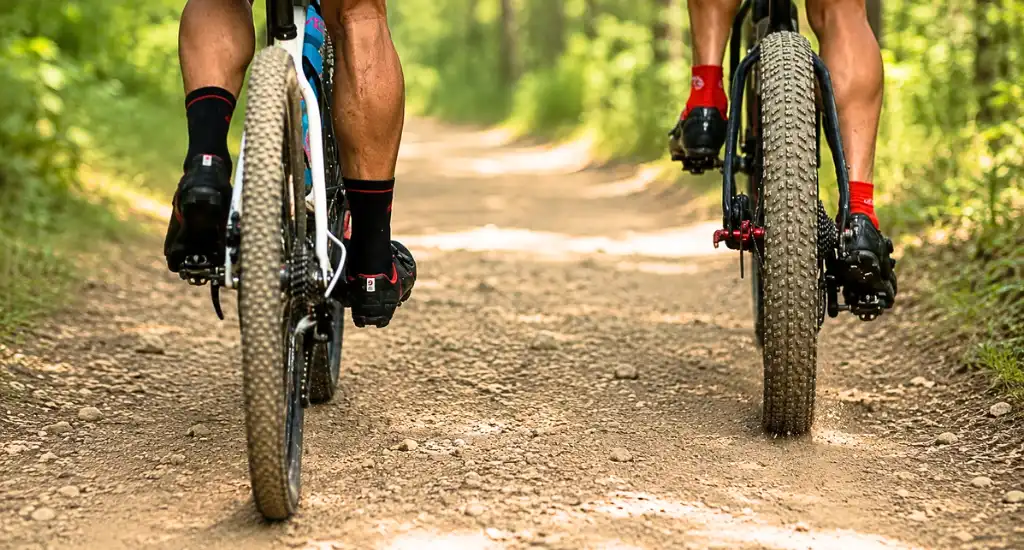
Riders who value stability and comfort tend to lean toward a fat bike, while those chasing aggressive technical riding usually prefer a full-suspension bike. Local trails, personal preference, and riding style should guide the final call more than any spec sheet.
What to Consider Before Buying a Fat Tire Bike for Mountain Biking
A few practical points separate a good fat bike purchase from a disappointing one. Think through these factors before you commit to a wider tire setup.
- Local terrain: think about whether you ride mostly snow, sand, mud, rocky trails, or smooth singletrack
- Tire width: wider tires add flotation but also add weight and rolling resistance
- Tire pressure: lower pressure adds grip, while too much air cancels out the fat bike advantage
- Frame and fork: some riders swap parts like a bike threadless headset or fork to fit wider tires on an existing frame
- Suspension: a rigid fat bike suits moderate trails, while front suspension adds comfort on rough ground
- Bike weight: fat bikes often weigh more than standard mountain bikes
- Climbing: extra traction helps on loose climbs, though added weight can offset that gain
- Descending: full suspension bikes typically hold an edge on fast, technical descents
- Riding frequency: think about whether you need the bike for one season or year-round use
- Maintenance: wide tires and specialized parts sometimes carry different upkeep needs
A fat bike makes the most sense once its strengths match the trails you ride most often.
Final Thought
Are fat tire bikes good for mountain biking? Yes, especially across snow, sand, mud, gravel, and loose or uneven trails where wide tires do their best work. Their traction, stability, comfort, and flotation make them a solid pick for many riders.
Traditional mountain bikes still hold an edge on smooth trails and fast technical descents, where speed and efficiency count most. The best choice comes down to where you ride, how you ride, and what terrain you face most often.
FAQs
Can you use a fat bike on mountain trails?
Fat bikes are built for off-road riding and handle dirt, rocks, gravel, snow, and sand with real confidence. Their wide tires make them a solid pick across most trail types you ride regularly.
Are fat tire bikes good for uphill mountain biking?
Their traction helps on loose, unstable climbs, though the extra tire weight and rolling resistance can make some steep climbs feel harder than on a lighter mountain bike.
Can fat bikes handle rocky trails?
High-volume tires give strong traction and obstacle rollover on rocky ground, though very technical rocky trails may still favor a full-suspension mountain bike over a fat tire setup.
What are fat tire bikes best for?
What fat tire bikes are best for comes down to snow, sand, mud, loose terrain, gravel, and mixed off-road conditions where wide tires hold a clear edge.
Do fat bikes make good all-around mountain bikes?
They work well as versatile year-round bikes across varied terrain. Fat tire mountain bike advantages show up most in winter or loose trail conditions, though riders focused on speed may prefer a standard MTB.


