Most mountain bikers never think twice about tire width until a bad ride forces them to. Slipping on corners, bouncing over rocks, or feeling sluggish on climbs, the wrong tire width causes all of these problems without any obvious warning signs.
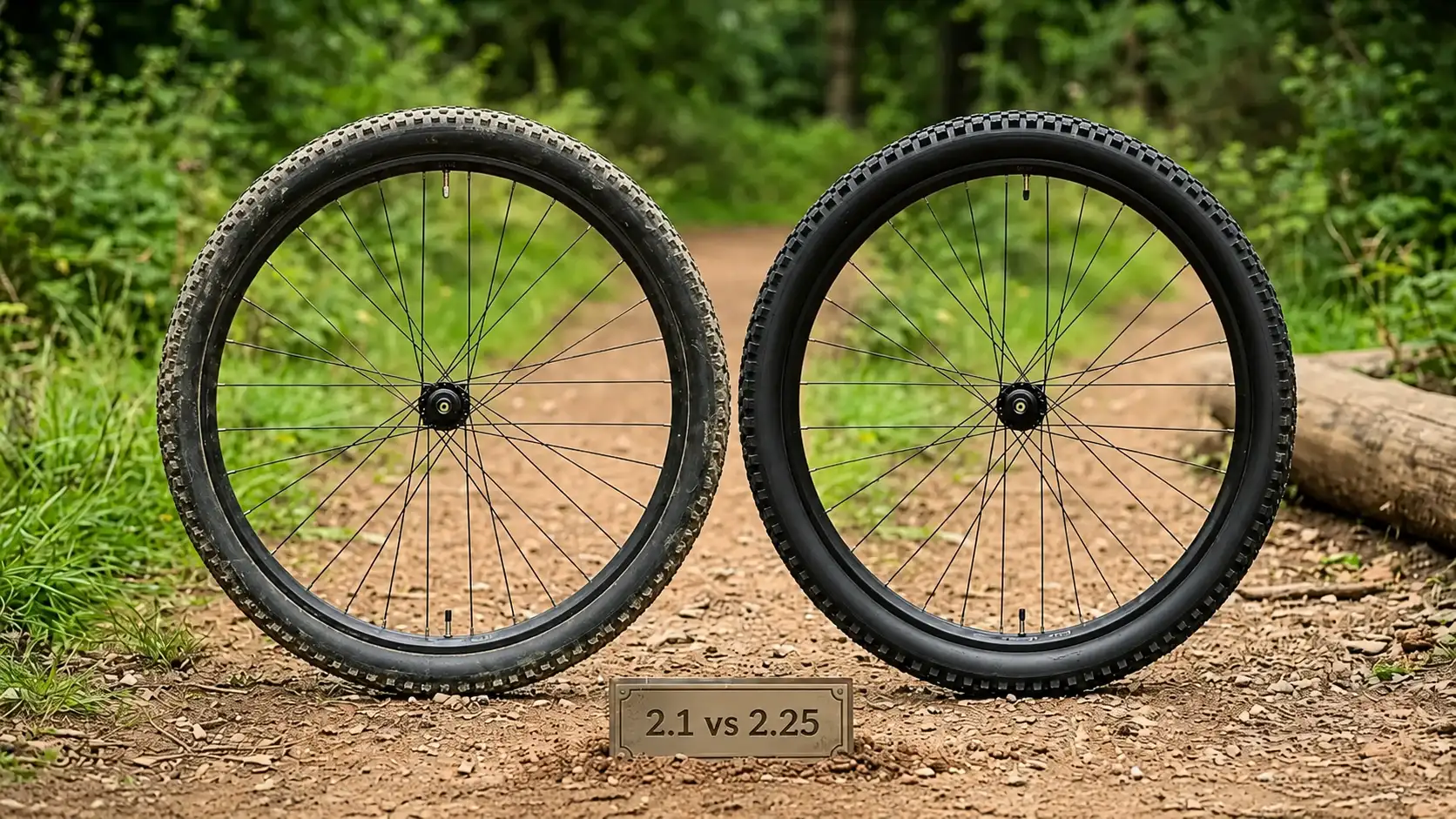
So, 2.1 vs 2.25 MTB tires – does that tiny 0.15-inch gap actually change anything on the trail? The short answer is yes. The 2.25 holds about 15% more air volume, scores better in cornering, and grips loose terrain more confidently than the 2.1 in real trail conditions.
The difference goes deeper than just the width numbers alone. This guide covers air volume, weight, grip, rolling resistance, and exactly which size suits your riding style best.
What Do 2.1 and 2.25 MTB Tire Sizes Actually Mean?
The numbers on your tire sidewall tell you exactly how wide that tire measures across at its widest point. A bigger number means a wider tire, more air inside, and a noticeably different feel under your wheels on every trail.
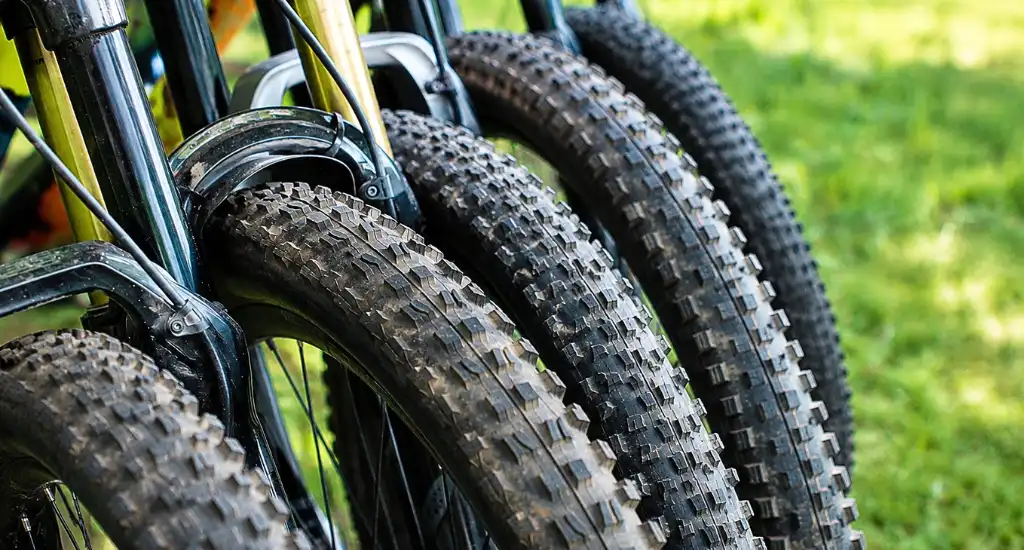
What the Decimal Numbers Actually Represent
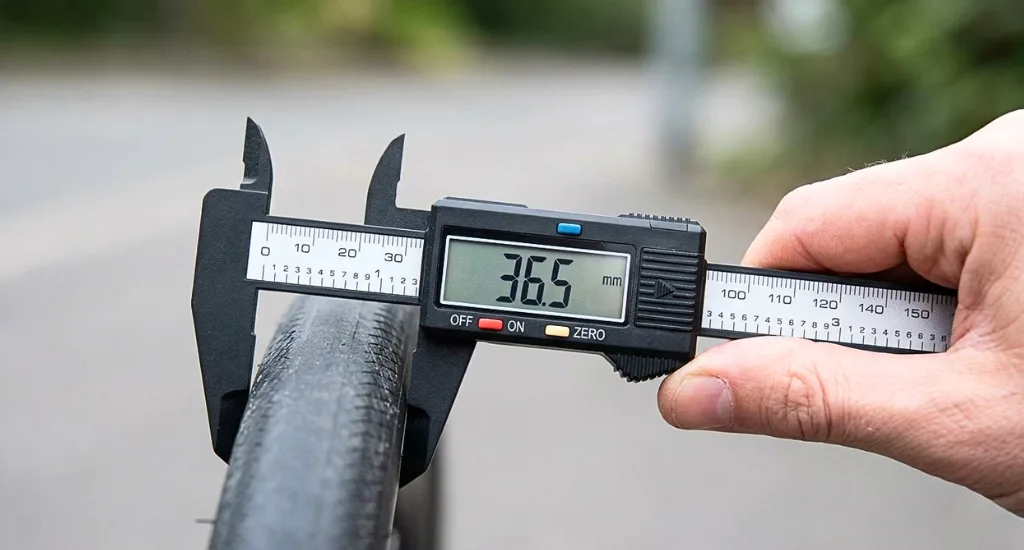
The number 2.1 means two-and-a-tenth inches wide, while 2.25 means two-and-a-quarter inches wide at a given pressure and rim width. That gap sounds tiny on paper, but the real-world difference in air volume, contact patch, and ride feel surprises most riders on the trail.
A true 2.1 tire holds around 5.1 liters of air inside, while a 2.25 holds approximately 5.9 liters. That 15% extra air volume changes how the tire absorbs bumps, grips loose dirt, and responds to your body weight during hard cornering.
Key measurements at a glance:
- 2.1 inches = approximately 53mm wide
- 2.25 inches = approximately 57mm wide
- Size difference = roughly 4mm in real width
- Air volume difference = approximately 15% more in 2.25
How Rim Width Changes Your Actual Tire Size
Rim width, meaning how wide the metal part of your wheel is, directly affects how wide your tire actually sits once mounted. The same 2.25 tire on a narrow rim measures slightly narrower than the same tire mounted on a wider modern rim.
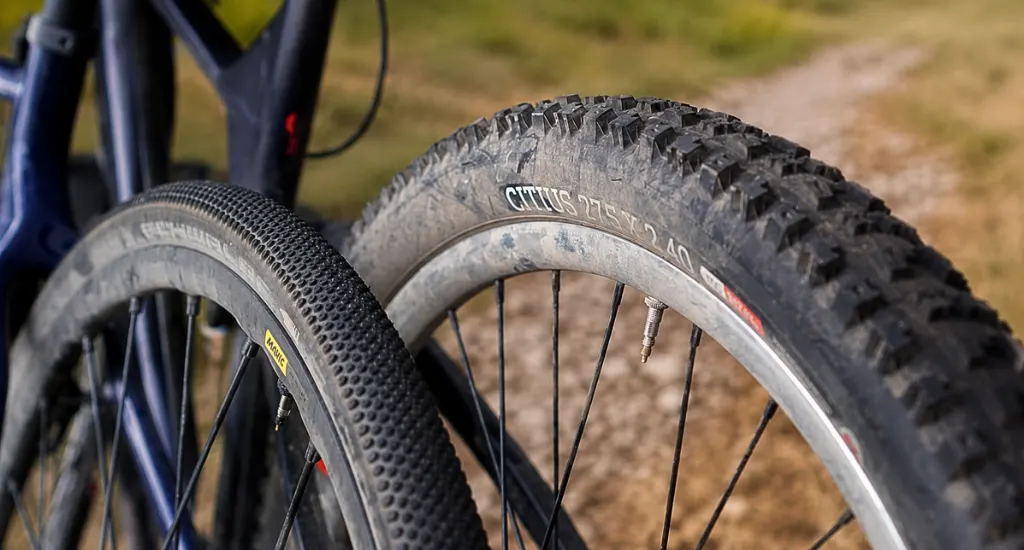
The best beginner-friendly mountain bike setups today use wider rims specifically because they open up the tire profile, improve cornering stability, and let riders run lower air pressure without the tire folding under hard turns. Always check your rim width before comparing tire size numbers between different bikes.
How rim width affects tire size:
- The narrow rim makes the tire taller and narrower in shape
- A wide rim makes the tire shorter and wider in the contact patch
- Most modern MTB rims measure between 30mm and 35mm internal width
- Wider rims give 2.25 tires a more stable and planted feel overall
2.1 vs 2.25 MTB Tires – The Key Differences Explained
The 2.1 vs 2.25 MTB tires debate comes down to four key factors that every trail rider should understand before making a swap. Air volume, weight, grip, and rolling resistance all behave differently between these two sizes on real terrain.
Quick Comparison Table
| Factor | 2.1 MTB Tire | 2.25 MTB Tire |
|---|---|---|
| Air Volume | ~5.1 liters | ~5.9 liters |
| Weight (UST) | ~690 g | ~900 g |
| Cornering Grip | Good on hardpack | Better on loose terrain |
| Rolling Resistance | Faster on smooth surfaces | Better on rough off-road terrain |
| Best Terrain | Hardpack, smooth trails | Loose, rocky, technical trails |
| Frame Clearance Needed | Less clearance required | Needs slightly more clearance |
Air Volume and Tire Size Difference
The 2.1 tire carries around 5.1 liters of air, while the 2.25 holds approximately 5.9 liters inside, a full 15% more air volume in the wider tire. That extra air acts like a natural suspension layer between your wheel and the trail surface underneath you.
More air volume means the tire deforms slightly around sharp rocks and roots instead of bouncing straight off them. This gives the 2.25 a noticeably smoother, more planted feel on rough terrain without needing any changes to your bike suspension setup at all.
Weight Difference Between 2.1 and 2.25
The UST version of the 2.1 tire sits at a reasonable 690 grams, while the 2.25 version weighs in at around 900 grams per tire. That 210-gram difference per tire adds up to over 400 grams of extra rotating weight across both wheels combined on your bike.
Rotating weight, meaning weight that spins around with your wheel, affects how quickly your bike accelerates, how easily it climbs steep sections, and how tired your legs feel on longer trail rides. For cross-country racers and long-distance riders, that weight gap genuinely matters on every climb.
Grip and Traction on Different Terrain
Real-world trail tests show the 2.25 consistently scores better in cornering confidence and overall traction compared to the 2.1 on loose and technical surfaces. The wider contact patch, meaning more rubber touching the ground at once, gives the tire more grip during hard turns and sudden direction changes.

The 2.1 still delivers perfectly adequate grip on hardpack, dry dirt, and smooth trail surfaces where the extra width of a 2.25 adds no real advantage. Riders who stick to well-maintained trails rarely feel any grip disadvantage on a properly inflated 2.1 tire during normal trail conditions.
Rolling Resistance Compared
Rolling resistance means how much energy your tire uses just to keep moving forward across a surface. The 2.25 actually rolls more efficiently on rough, loose, and off-road terrain because the extra air volume absorbs bumps rather than fighting against them with every rotation of the wheel.
The 2.1 rolls faster on smooth hardpack and groomed trail surfaces where the road surface stays flat and predictable throughout the ride. Think of the 2.4 vs 2.6 Mountain Bike Tires comparison as an even larger version of this same trade-off between speed on smooth surfaces and grip on rough ones.
When Should You Choose 2.1 MTB Tires?
The 2.1 tire earns its place on bikes where low weight, fast rolling, and tight frame clearance matter more than maximum grip. Cross-country racers, lightweight trail riders, and smooth terrain cyclists get the most value from this narrower tire size.
Older mountain bike frames and bikes with tight brake caliper clearance often leave no room for wider tires at all. A 2.1 tire fits where a 2.25 simply cannot, making it the only practical option for many riders on classic or entry-level mountain bike setups.
2.1 Tires Work Best When:
- Tight frame clearance: Your frame lacks the space needed for any wider tire size
- Hardpack and smooth trails: You ride mostly firm, dry, and well-maintained dirt surfaces regularly
- Weight priority: You want lighter rotating weight for faster climbing and quicker acceleration
- Cross-country racing: You compete on groomed courses where rolling speed beats grip every time
- Smooth riding style: You ride in a controlled, predictable way without aggressive cornering or high-speed descents
When Should You Choose 2.25 MTB Tires?
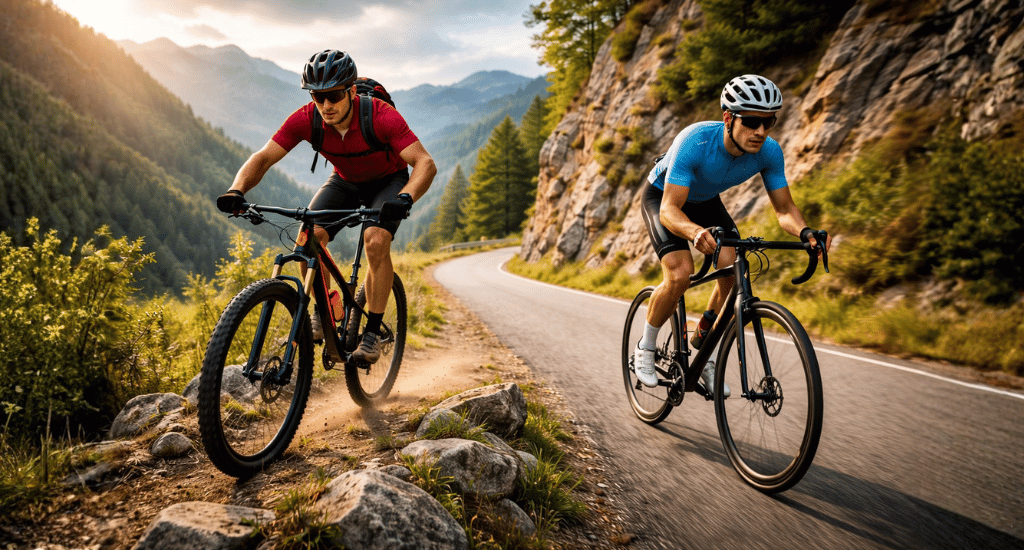
The 2.25 tire suits riders who face unpredictable, rough, and technically demanding trail surfaces on a regular basis. More air volume, better cornering grip, and stronger traction make this wider size the smarter daily choice for trail and enduro riders who push harder on every descent.
Switching to 2.25 tires sometimes means checking whether your disc brakes still clear the wider tire profile properly. Always remember to adjust disc brakes after a tire width change, because the extra width in 2.1 vs 2.25 MTB tires can occasionally affect how cleanly your brake caliper sits beside the rotating wheel.
2.25 Tires Work Best When:
- Loose and rocky terrain: You regularly tackle rough, unpredictable trail surfaces that demand a stronger grip and more air cushion
- High-speed cornering: You push hard into corners at speed and need maximum tire contact with the ground beneath you
- Sufficient frame clearance: Your bike frame has enough space between the tire and frame to safely fit the wider profile
- Comfort over weight: You value a smoother, more forgiving ride feel over saving a few extra grams on the trail
- Wet and muddy conditions: You ride through rain, mud, and slippery surfaces where traction matters far more than rolling speed
Final Thought
The gap between 2.1 vs 2.25 MTB tires is small in numbers but very real on the trail. The 2.1 rolls faster on smooth hardpack, while the 2.25 grips better and absorbs rough terrain more confidently. Your riding style and trail type decide which size truly serves you better.
Never forget that tire compound matters just as much as width alone. Pick the right width first, then choose the best rubber compound for your terrain, and every trail ride will feel noticeably more controlled and enjoyable.
FAQs
Does a 2.25 tire width make a noticeable difference on trails?
Yes, the difference is real on loose, rough, and technical terrain. The 2.25 grips corners better, absorbs bumps more smoothly, and gives noticeably more confidence than a 2.1 tire during aggressive trail riding.
Are 2.25 tires heavier than 2.1 tires?
Yes, the 2.25 UST version weighs around 900 grams compared to roughly 690 grams for the 2.1 UST version. That 210-gram difference per tire affects climbing speed, acceleration, and overall leg fatigue on longer rides.
Which MTB tire size is better for cross-country riding?
The 2.1 tire suits cross-country riding better because of its lower weight and faster rolling speed on smooth, hardpack terrain. Every gram of rotating weight matters on long climbs and competitive cross-country race courses.