
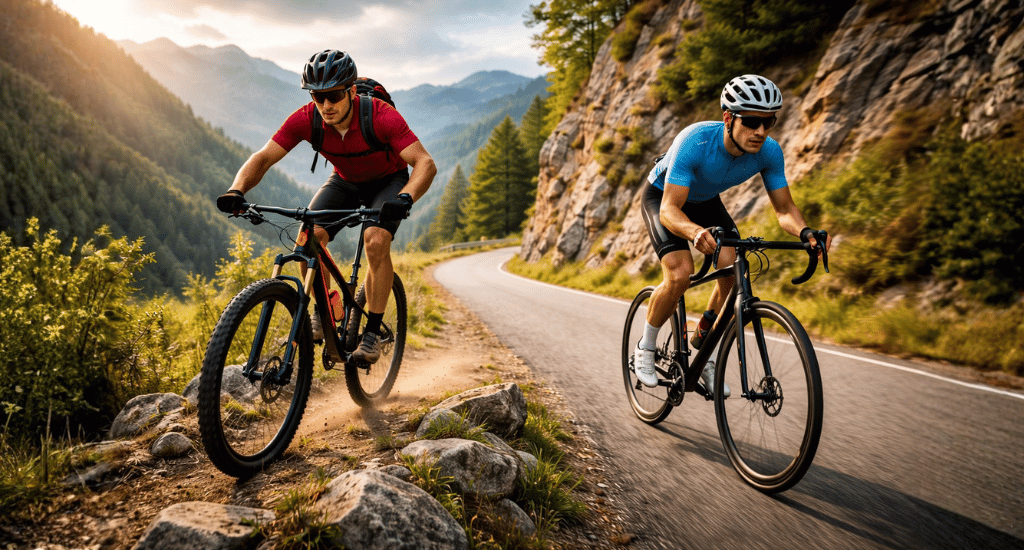
A road bike rides faster on pavement than a mountain bike. A mountain bike handles dirt, rocks, and roots that a road bike cannot survive. The difference between a mountain bike and a road bike starts with terrain and extends into frame weight, tire width, suspension, gearing, and price.
I have ridden both types across Pacific Northwest roads and trails for 22 years. My road bike averages 18 mph on a 20-mile paved loop. My hardtail mountain bike averages 13 mph on the same route. Tire width and frame weight account for most of that 5-mph gap.
This guide compares mountain bikes and road bikes across every major factor and helps you decide which bike to buy.
Quick Comparison: Mountain Bike vs Road Bike:
| Feature | Mountain Bike | Road Bike |
|---|---|---|
| Best Terrain | Dirt, rocks, roots, mud, gravel | Paved roads, bike paths, smooth surfaces |
| Frame Weight | 25-35 lbs (aluminum/steel) | 15-22 lbs (aluminum/carbon) |
| Tire Width | 2.0-2.6 inches | 25-35 mm |
| Tire Pressure | 18-35 PSI | 80-100 PSI |
| Tire Tread | Knobby for grip on loose surfaces | Slick or lightly treaded for low rolling resistance |
| Suspension | Hardtail (100-170 mm) or full suspension (100-200 mm) | Rigid frame, no suspension |
| Handlebars | Flat/riser bars, 75-82 cm wide | Drop bars, 40-46 cm wide, 3 hand positions |
| Riding Position | Upright, short reach, slacker head tube angle | Forward-leaning, long reach, closed hip angle |
| Brakes | Hydraulic disc (standard) | Rim or disc |
| Gearing | Low range for steep climbs (1x or 2x) | High range for speed (mostly 2x) |
| Avg Road Speed | 12-15 mph | 17-22 mph |
| Entry Price (2026) | $500-$1,500 (Check on Amazon) | $700-$2,000 (Check on Amazon) |
| Premium Price (2026) | $2,000-$8,000 | $2,000-$13,000+ |
| Best For | Trail riding, off-road adventure, rough commutes | Speed, fitness, long-distance road rides |
Differences Between a Mountain Bike and a Road Bike
Mountain bikes and road bikes serve different purposes. A mountain bike handles rough trails and off-road adventures. A road bike delivers speed and efficiency on smooth pavement. Some riders confuse road bikes with racing bikes; a mountain bike vs racing bike comparison covers that distinction separately. Understanding the real differences between mountain and road bikes saves time and frustration when choosing a bike.
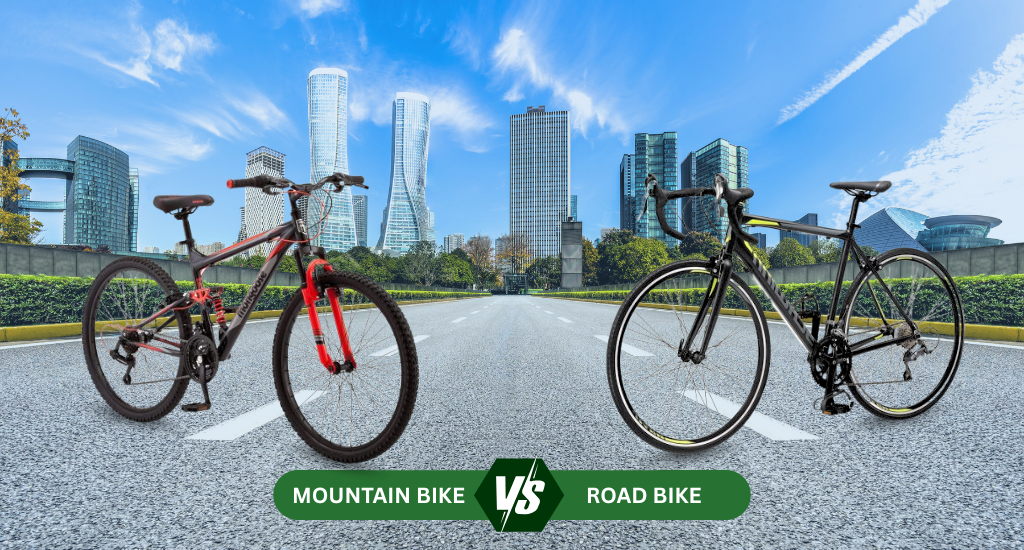
1. Terrain
Mountain bikes handle dirt trails, rocky singletrack, roots, mud, and gravel. Wide knobby tires grip loose surfaces that would send a road bike sliding. Road bikes perform best on smooth pavement, city streets, and bike paths. Thin slick tires reduce rolling resistance on flat surfaces but lose traction instantly on loose ground.
I ride both bikes on Pacific Northwest terrain. My mountain bike handles every trail condition from wet roots to loose rock. My road bike covers the same paved miles in two-thirds the time.
2. Frame & Weight
Mountain bike frames weigh 25 to 35 lbs when made of aluminum or steel. The extra weight adds stability on rough descents and absorbs trail impacts. Road bike frames weigh 15 to 22 lbs when made of aluminum or carbon fiber. Lighter frames accelerate faster and climb paved hills with less effort.
Carbon road bikes from brands like Cannondale, Trek, and Specialized drop below 17 lbs at the $3,000+ price point. Budget aluminum mountain bikes from Giant, Specialized, and Trek start at around $500 to $800 in 2026.
3. Tires
Mountain bike tires run 2.0 to 2.6 inches wide at 18-35 PSI. Knobby tread grips loose dirt, wet rocks, and mud. Road bike tires run 25- 35 mm wide at 80-100 PSI. Slick tread minimizes rolling resistance on pavement.
Tire swap is the single biggest performance change between the two riding styles. Switching a mountain bike to semi-slick tires like the Continental Terra HardPack closes the road speed gap by 2-3 mph without buying a new bike.
Our Pick:
- Continental Terra Hardpack – Check on Amazon
- Maxxis Ardent Race – Check on Amazon
Check out our research on 26” vs 29” mountain bikes.
4. Suspension
Mountain bikes use front suspension (hardtail, 100-170mm travel) or full suspension (front + rear, 100-200mm travel). Suspension absorbs rocks, roots, and drops that would damage a rigid frame. Road bikes use rigid frames with zero suspension. All pedaling power transfers directly to the wheels.
Full-suspension mountain bikes cost $1,500 to $8,000+, depending on travel and components. Hardtails start at $500 and suit most beginner and intermediate trail riders.
5. Handlebars, Riding Position, and Frame Geometry
Mountain bikes use flat handlebars 75-82 cm wide. The upright posture, short reach, and slacker head tube angle keep the rider’s center of gravity low. This improves stability on steep descents and gives better visibility on trails and in traffic.
Road bikes use drop handlebars 40-46 cm wide with three hand positions: hoods, drops, and tops. A forward-leaning posture with a longer reach and closed hip angle reduces wind resistance. Endurance road bikes relax this geometry slightly for all-day comfort without losing aerodynamic efficiency.
Posture affects fatigue directly. An aggressive road position strains shoulders and lower back over long rides. An upright mountain bike position reduces upper body strain but sacrifices speed.
6. Gearing & Brakes
Mountain bikes use low-range gearing (1x or 2x drivetrains) for steep off-road climbs. Hydraulic disc brakes provide strong stopping power on wet and muddy terrain. Road bikes use higher-range gearing optimized for sustained speed on flat roads. Most road bikes in 2026 ship with disc brakes, though some budget models still use rim brakes.
7. Speed & Efficiency
A road bike covers paved ground 25-40% faster than a mountain bike with the same rider effort. Thin tires, light frames, and an aerodynamic position reduce rolling resistance and wind drag. A mountain bike on pavement wastes energy through knobby tire friction, frame weight, and suspension bob.
Riders switching from mountain bikes to road bikes consistently report riding faster with less fatigue. One rider in a controlled comparison logged 150 miles on a mountain bike in one week, then borrowed a road bike and immediately felt the difference over just 14 miles.
8. Frame Geometry and Riding Position
MTB frames have short reach, upright posture, a slacker head tube angle, and a low center of gravity. This makes them stable on rough terrain and forgiving for new riders.
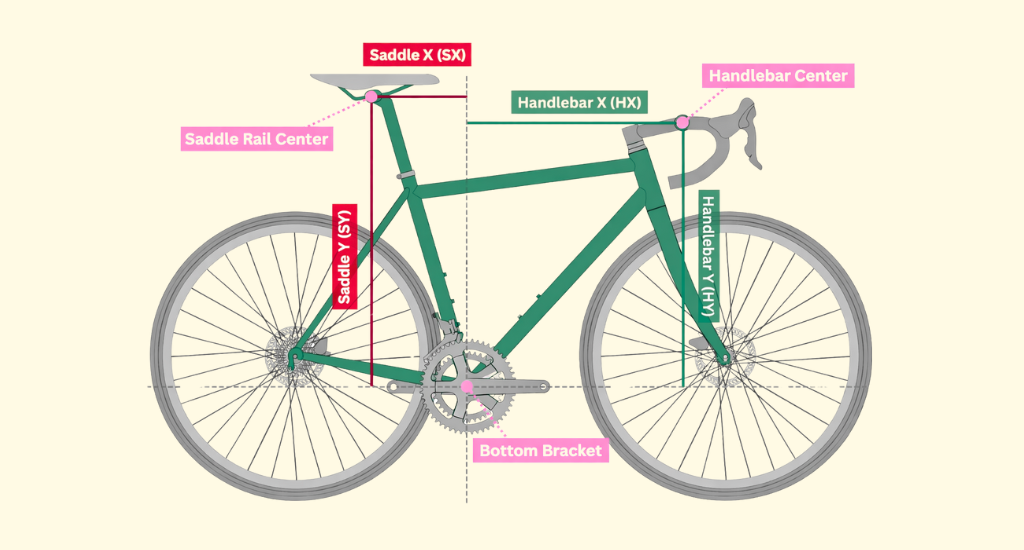
Road bikes have a long reach and a forward-leaning posture. Closed hip angles increase efficiency and speed. Endurance road bikes relax the geometry slightly for comfort but remain aerodynamic. Posture impacts fatigue, handling, and comfort.
Can a Mountain Bike Be Used on the Road?
A mountain bike works on paved roads but rides more slowly and requires more effort than a road bike. Knobby tires create rolling resistance on smooth pavement. Heavier frames need more energy to accelerate. Active suspension absorbs pedaling power through a problem called pedal bob.
Three changes are needed to convert a mountain bike to a road bike. Lock the suspension fork using the lockout switch to stop energy loss. Swap knobby tires for semi-slick commuter tires like the Continental Terra HardPack or Maxxis DTH to cut rolling resistance. Raise tire pressure to the maximum PSI printed on the sidewall.
A mountain bike handles potholes, cracked pavement, and road debris better than any road bike. Wide tires absorb bumps that would damage thin road tires. Disc brakes stop faster in the rain. The upright riding position gives better visibility in traffic.
For short commutes or mixed routes that switch between pavement and dirt, a mountain bike with semi-slick tires is a practical choice without having to buy a second bike.
Mountain Bike vs Road Bike: Which Should You Buy?
The right bike depends on terrain, budget, and how you plan to ride. Use this framework to decide.
Buy a mountain bike if 60% or more of your riding happens on dirt trails, gravel paths, or rough roads. A hardtail mountain bike between $500 and $1,200 handles trail riding, light commuting, and weekend adventures. The Trek Marlin 7, Giant Talon 1, and Specialized Rockhopper Comp rank among the best entry-level hardtails in 2026. If you are a beginner, then check our best mountain bike for beginners article.
Buy a road bike if 80% or more of your riding happens on paved roads or bike paths. An entry-level road bike priced between $700 and $1,500 is suitable for fitness rides, group rides, and long-distance touring. The Giant Contend AR, Specialized Allez, and Trek Domane AL rank among the best entry-level road bikes in 2026.
Buy a gravel bike if your riding splits evenly between pavement and unpaved surfaces. A gravel bike combines drop-bar road speed with wider tire clearance for dirt and gravel. The Canyon Grail, Specialized Diverge, and Cannondale Topstone suit riders who refuse to choose between road and trail.
Budget under $500? A used hardtail mountain bike with a semi-slick tire swap delivers the best value for mixed-use riding. Check local bike shops and online marketplaces before buying new.
Gravel Bikes: The Middle Ground
A gravel bike pairs a road bike’s drop handlebars and lightweight frame with wider tire clearance for dirt and gravel surfaces. Most gravel bikes in 2026 run 35-50mm tires, 1x or 2x drivetrains, and hydraulic disc brakes. Frame weight sits between road and mountain bikes at 19-26 lbs.
Over half of riders in online cycling forums recommend gravel bikes over mountain bikes when someone asks “road or mountain bike?” Google’s own AI recommendations cite gravel bikes as the top compromise for riders torn between the two.
The Cannondale Topstone, Specialized Diverge, and Trek Checkpoint rank among the most popular gravel bikes in 2026. Prices start around $1,000 for aluminum frames.
Gravel bikes handle light singletrack, fire roads, bike paths, and pavement in a single ride. They do not replace a dedicated mountain bike for technical trails or a race road bike for pure speed.
Conclusion
A road bike delivers speed and efficiency on pavement. A mountain bike delivers control and durability on trails. A gravel bike bridges the gap for riders who want both. Match the bike to where you actually ride, set a realistic budget, and test ride before buying.
FAQs
Which is better, a road bike or a mountain bike?
It depends on your riding style. Road bikes are better for speed and smooth roads. Mountain bikes are best for rough trails, hills, and off-road adventure. Your terrain and goals decide the right choice.
Can a mountain bike be used as a road bike?
Yes, a mountain bike can be ridden on roads, but it is slower and less efficient. Wide tires and heavier frames make pedaling harder. It works for occasional streets but not for long, fast rides.
Which bike is better for beginners: mountain or road?
Mountain bikes are easier for beginners because they are stable and forgiving. Road bikes need balance, control, and proper posture, making them slightly harder for new riders.


