
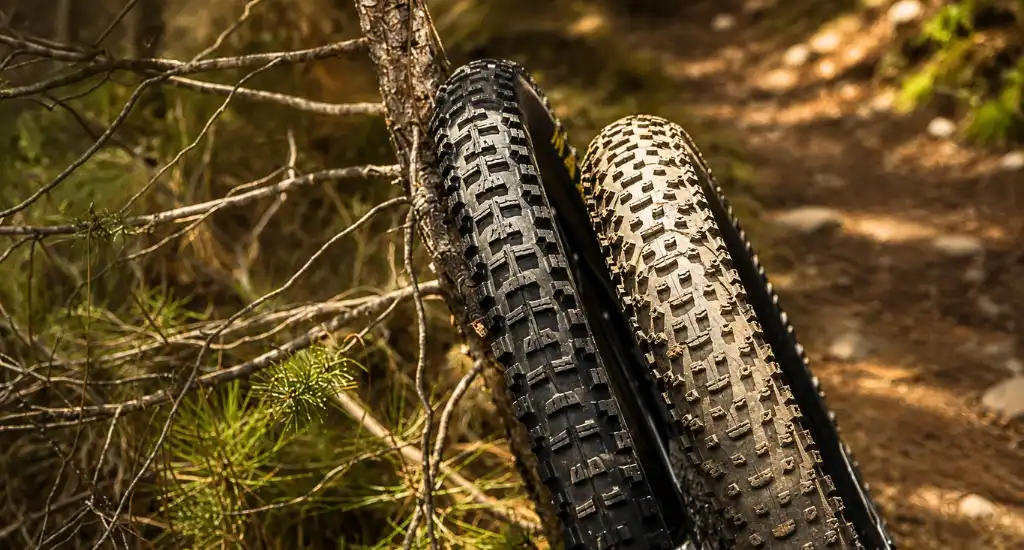
Standing between two tires that look almost identical on paper is a common moment for any mountain biker upgrading their setup. A quarter inch of difference does not sound like much, yet it changes how a bike rolls, grips, and feels on the trail.
The industry has shifted hard toward wider rubber in recent years. Even XC world champions like Nino Schurter now race on 2.4 width, though 2.25 still holds a place for riders chasing speed over grip.
This guide breaks down every measurable difference between these two sizes, so keep reading to find the width that actually fits your trails and riding style.
Quick Answer
| Spec | 2.25″ Tire | 2.4″ Tire |
|---|---|---|
| Approx. Weight (29er) | 650-750g | 750-900g |
| Actual Width on 30mm Rim | ~57-60mm | ~61-65mm |
| Ideal Internal Rim Width | 23-28mm | 25-30mm |
| Recommended PSI Range | 22-28 PSI | 20-26 PSI |
| Rolling Resistance | Lower | Higher |
| Grip / Contact Patch | Moderate | High |
| Comfort / Damping | Moderate | High |
| Best For | XC race, smooth trails, mud | Trail, all-mountain, mixed terrain |
Riders comparing wider setups often end up looking at 2.4 vs 2.6 mountain bike tires too, since the jump beyond 2.4 follows the same logic of trading speed for float and grip on rougher terrain.
What Do 2.25 and 2.4 Mean on MTB Tires?
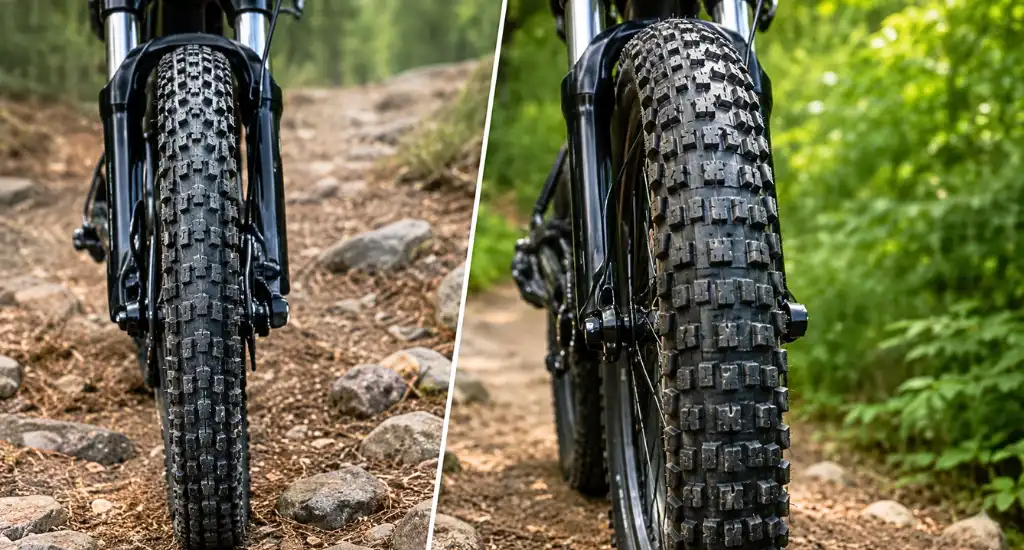
Tire width numbers refer to the casing width once the tire is fully inflated, not the rim it sits on. Actual measured width shifts depending on the brand and the rim beneath it.
Label Width vs. Real Width
A tire labeled 2.25 can measure closer to 2.3 inches on a wider rim, while a 2.4 tire can measure anywhere from 2.35 to 2.45 inches depending on casing shape. This gap exists because manufacturers round labels for marketing rather than printing exact molded dimensions.
Riders shopping for narrower setups often search for 2.2 mtb tires in mm, which typically converts to roughly 55 to 56 millimeters once mounted and aired up on a standard rim.
Why the Small Gap Matters
That 0.15-inch difference on paper translates to roughly 4 to 7 millimeters of actual rubber touching the ground. This small change affects three things directly.
- Air volume inside the casing, which changes ride comfort
- Contact patch size, which changes grip and traction
- Overall tire weight, which changes acceleration and climbing feel
How 2.25 and 2.4 Tires Perform Differently
Performance differences between these two widths show up clearly once you compare them across specific riding conditions rather than as a single blanket rating.
Rolling Resistance and Speed
A 2.25 tire rolls 5 to 10 percent faster on smooth, hard-packed surfaces since less rubber makes contact with the ground.
On loose or rough terrain, that gap narrows quickly, since the extra grip on a 2.4 mountain bike tire helps maintain momentum through technical sections instead of losing traction.
Grip and Traction
A 2.4 tire places 8 to 15 percent more rubber on the ground, giving it stronger grip on wet roots, loose gravel, and rocky sections. A 2.25 tire breaks loose sooner on soft terrain but cuts through mud more effectively, since a narrower profile floats less on top of soft ground.
Comfort and Vibration Damping
Wider casings hold more air volume, letting 2.4 tires run 1 to 2 PSI lower without added pinch-flat risk. That lower pressure smooths out trail chatter and small bumps noticeably. A 2.25 tire transmits more direct feedback, which some riders actually prefer for precision.
Weight and Acceleration
A 2.25 tire weighs roughly 100 to 200 grams less per tire, or 200 to 400 grams less per pair. That lighter rotational weight translates to quicker acceleration, snappier climbing, and faster direction changes, mattering most to XC racers and long climbers.
Cornering and Handling
Wider 2.4 tires spread out more in turns, offering more sidewall support and confidence at steep lean angles. A 2.25 tire steers quicker and responds faster to rider input, though it feels less forgiving once you push toward the limit.
Which Riders Should Choose 2.25 Tires?
A 2.25 tire is a deliberate performance choice for specific riders rather than a compromise pick for those who cannot fit anything wider.
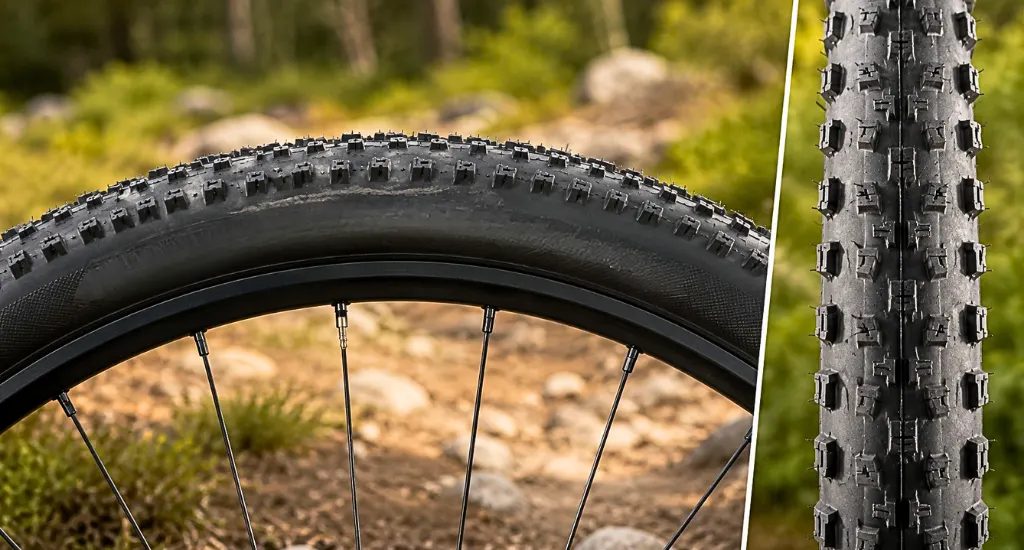
- XC racers competing on smooth, groomed courses where weight and rolling speed matter most
- Mud specialists, since a narrower tire cuts through soft ground instead of floating on top
- Lightweight builds where every gram saved improves climbing performance
- Older bikes with tight frame or fork clearance limits that cap tire width
- Riders on narrow rims between 21 and 25mm internal width, where 2.25 profiles fit correctly without ballooning
Which Riders Should Choose 2.4 Tires?
A 2.4 tire has become the modern default across most riding styles, and for good reason given how much confidence the extra width adds.
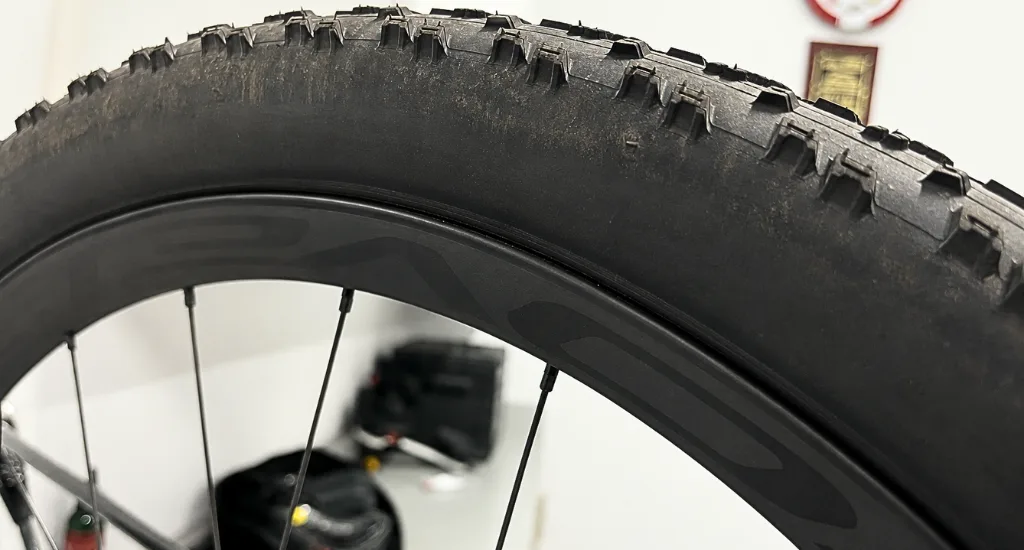
- Trail and all-mountain riders facing mixed terrain and unpredictable conditions
- XC riders on technical courses, since even pro racing has shifted toward 2.4 for its grip advantage
- Riders prioritize comfort, since lower PSI reduces fatigue on longer rides
- Modern bikes are built around 30mm or wider internal rims, where 2.4 MTB tires profile optimally
- Beginners and less confident riders, since a bigger contact patch feels more forgiving and builds trust
Can You Mix 2.25 and 2.4 Tires on the Same Bike?
Yes, and mixing widths front and rear is a smart setup many riders overlook entirely. Running a 2.4 front with a 2.25 rear is the most popular combination.
The front tire gets maximum grip for steering and braking, while the lighter rear tire rolls faster and helps with climbing. XC racers on technical courses often run this exact setup.
A 2.25 front with a 2.4 rear is less common, but it suits loose climbing conditions where the rear needs extra traction for power transfer. Mixing works best when both tires share a similar tread pattern, such as a Maxxis Rekon 2.4 front paired with a Rekon Race 2.25 rear.
Rim Width and Tire Compatibility: 2.25 Vs 2.4 MTB Tires
Rim width is one of the most overlooked factors in this whole comparison, and it changes how either tire actually performs once mounted.
Matching Tire to Rim
A 2.25 tire profiles best on rims between 23 and 28mm internal width, while a 2.4 tire profiles best between 25 and 30mm. Both sizes technically fit a standard 30mm rim, though a 2.25 tire can look slightly rounded or balloon-shaped once mounted that wide.
- On narrow rims between 21 and 23mm, a 2.4 tire can squirm and feel unstable at lower PSI
- Measure your rim with calipers or check the printed spec sheet to confirm internal width before buying
Checking Frame Clearance
If you are upgrading from a narrower tire to something wider, checking clearance matters just as much as rim width. Frames and forks need roughly 5mm of gap on each side of the tire at minimum.
- Spin the wheel slowly and check for rubbing at the chainstay and seatstay
- A hard impact bad enough to knock the wheel out of true often means fixing a buckled wheel on a mountain bike becomes part of the job before you can even test your new tire’s clearance properly
Popular Tire Models in Both Sizes
Several well-known tire lines come in both widths, which makes direct model comparisons easier than guessing based on brand alone. Checking exact weights side by side shows the real penalty of going wider before you commit to a purchase.
- Maxxis Ardent: roughly 700 grams at 2.25, about 835 grams at 2.4, a solid all-round trail tire in either width
- Maxxis Rekon: around 720 grams at 2.25, about 860 grams at 2.4, built for fast rolling trail use
- Maxxis Aspen: about 640 grams at 2.25, roughly 818 grams at 2.4 with 120 TPI casing, aimed squarely at XC racing
XC race tires shave weight aggressively in both widths, since every gram matters more on long climbs and groomed courses.
- Schwalbe Racing Ralph: about 590 grams at 2.25, roughly 680 grams at 2.4
- Continental Race King: around 697 grams in its 2.25 XC-focused build
Riders comparing narrower race options sometimes look at 2.0 vs 2.2 mountain bike tires as well, since that lighter end of the spectrum follows the same weight and grip tradeoffs on an even smaller scale.
Final Thought
Choosing between 2.25 vs 2.4 mtb tires comes down to what you value more on your rides, whether that is raw speed or added grip and comfort.
Riders chasing lap times on smooth courses tend to stick with 2.25, while anyone riding mixed or technical terrain usually finds 2.4 tires the safer, more confident choice overall.
FAQs
Is 2.4 too wide for XC?
No, 2.4 is now the XC standard. Even World Cup racers run it, since grip and comfort gains outweigh the small weight penalty on all but the smoothest courses.
Is there a big difference between 2.25 and 2.4 tires?
Yes, more than the numbers suggest. The 4 to 7mm width gap creates a noticeable weight difference, grip change, and different ideal PSI for each size.
What PSI should I run on 2.25 vs 2.4 MTB tires?
Run 22 to 28 PSI on 2.25 and 20 to 26 PSI on 2.4. Start higher and drop 1 PSI at a time until the ride feels right.
Can I put 2.4 tires on my bike?
Check that your internal rim width is 25mm or wider and that your frame or fork allows roughly 5mm of clearance on each side before switching.


