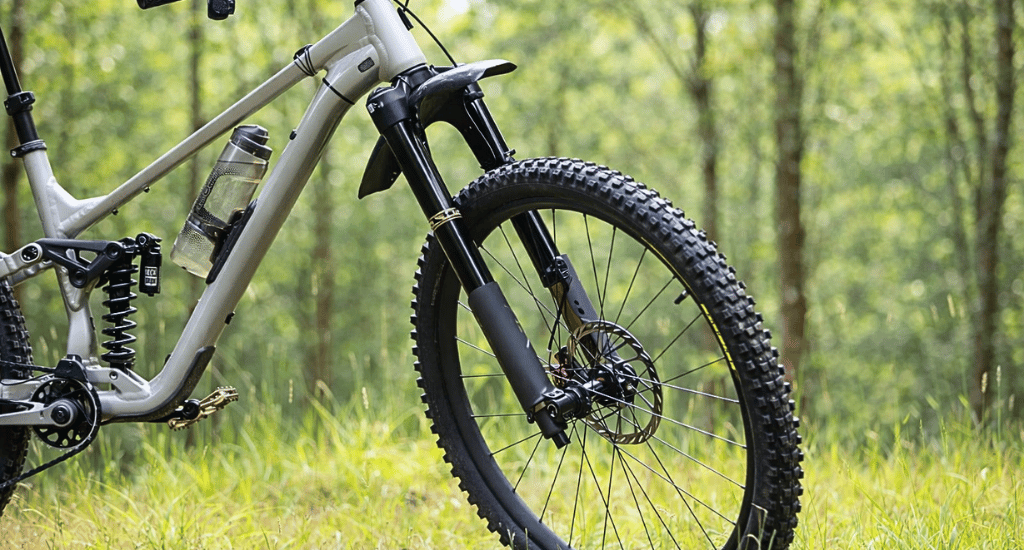
Front shocks on a mountain bike control how the front wheel reacts on rough trails and bumps. When they fail, the bike feels harsh, unstable, and hard to handle on uneven ground.
Most front shock problems come from low air pressure, dirt inside the fork, or worn seals that leak oil. You can fix many of these issues at home with simple cleaning, correct air setup, and basic adjustments.
This guide will give you clear steps to repair, adjust, and maintain your front suspension for better control and comfort.
How to Fix Front Shocks on a Mountain Bike (Step-by-Step)
Front shocks help your bike stay stable on rough trails and sharp bumps. When they stop working well, control becomes difficult, and rides feel uncomfortable. These simple steps will help you fix common issues at home.
Step 1: Identify the Problem First (Diagnosis)
Before any repair, you need to check what feels wrong in your front fork. Each problem shows clear signs, so careful inspection will save time and effort later.
- The fork feels too stiff: The fork does not move easily when you push it down with your hands. It usually means low air pressure or dry, stuck seals inside the fork.
- Fork bottoms out easily: The fork compresses too much, even on small bumps during your ride. It shows the fork is too soft or does not have enough air pressure.
- No rebound or slow return: The fork stays compressed and returns very slowly after you push it down. This condition points to a rebound damping issue inside the fork system.
- Oil leaks around seals: You may see oil marks or dirt stuck near the rubber seals. It often means the seals are worn and cannot hold oil properly.
- Clicking or knocking noise: A loose or worn part can create noise when the fork moves over bumps. This noise may come from bolts, bushings, or internal parts.
Step 2: Clean the Front Suspension (Basic Fix)
Dirt and dust are the most common reasons for poor fork performance. Even a good fork will feel rough if dirt blocks smooth movement inside the seals.
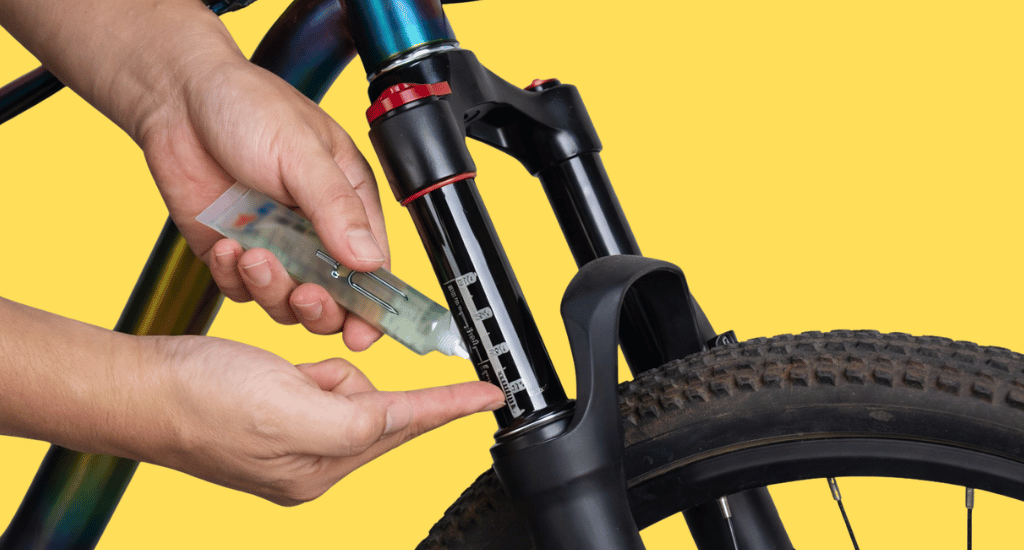
Follow these simple steps to clean your suspension:
- Wipe the stanchions (upper tubes) with a soft and clean cloth.
- Clean the dust seals gently to remove trapped dirt and mud.
- Press the fork down slightly to expose hidden dirt near the seals.
- Wipe again to ensure the surface stays smooth and clean.
Important note: You should never use high-pressure water because it can push dirt inside the fork and damage internal parts.
Step 3: Lubricate the Fork Seals
After cleaning, the next step is to add light oil around the fork seals. It will help reduce friction and allow smooth movement during rides.
You can apply a few drops of suspension oil around the rubber seals carefully. Press the fork up and down several times so the oil spreads inside evenly. This simple step often improves fork smoothness very quickly.
Step 4: Adjust Air Pressure (Sag Setup)
Air pressure controls how soft or firm your fork feels during riding. A correct setup improves comfort and keeps your bike stable on rough ground.
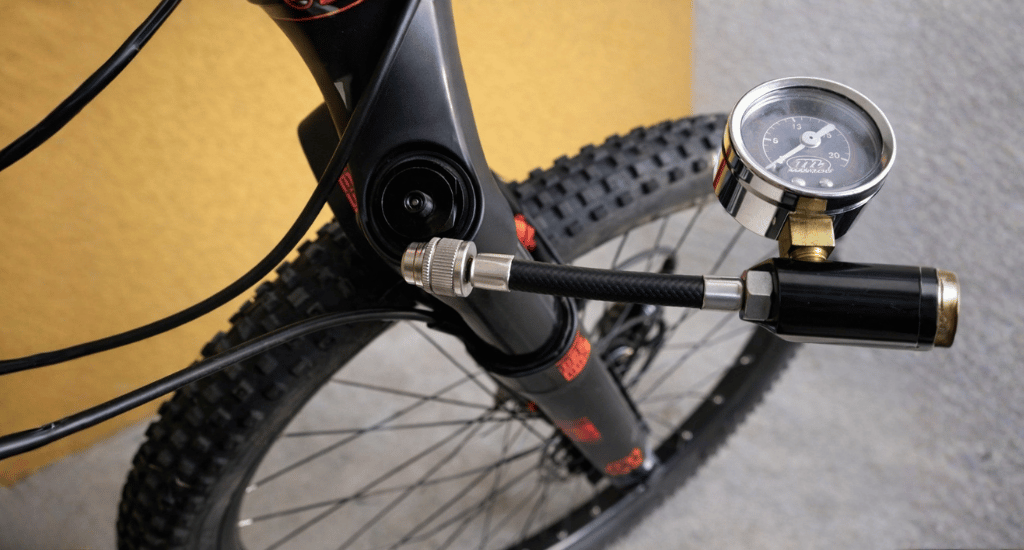
You should use a shock pump to adjust the air pressure in your fork. Do not use a regular pump because it cannot measure pressure correctly.
Key setup rule:
- Front sag should be about 20% of total fork travel.
Example:
- If your fork travel is 100mm, sag should be around 20mm.
Adjustment tips:
- If the fork feels too soft, add more air using the shock pump.
- If the fork feels too stiff, release some air slowly.
A proper sag setup can help your bike absorb bumps without losing control.
Step 5: Adjust Rebound Damping
Rebound damping controls how fast the fork returns after compression. This setting affects how your bike feels after hitting bumps or drops. Adjust the front suspension on a mountain bike with proper rebound damping.
You will find a small knob at the bottom of the fork leg in most bikes. This knob controls the rebound speed.
Adjustment guide:
- If the rebound is too fast, the bike feels bouncy and unstable.
- If the rebound is too slow, the fork feels stuck and does not recover quickly.
Start from the middle setting, then adjust slowly until the fork feels balanced and smooth.
Step 6: Adjust Compression Damping (If Available)
Some forks have a compression adjustment feature that controls how the fork reacts to bumps and impacts. This setting helps you match the fork performance with your riding style.
- More compression makes the fork firmer and reduces movement.
- Less compression makes the fork softer and more responsive.
You can adjust front compression damping based on the type of trail. A firmer setup works better for smooth climbs, while a softer setup suits rough trails.
Step 7: Tighten Loose Components
Loose parts can create noise and reduce fork performance during rides. A quick check can fix many of these small issues easily.
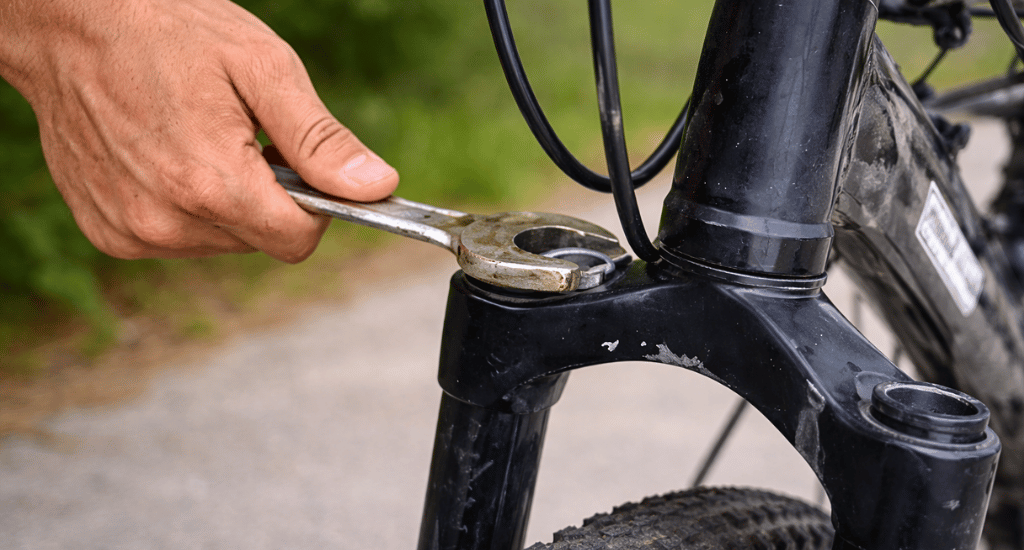
Check the following parts carefully:
- Axle or quick release
- Crown bolts near the top of the fork
- Stem bolts that hold the handlebars
You should tighten all parts properly to remove knocking sounds and improve stability.
Step 8: Replace Worn Seals or Oil (Advanced Fix)
Some problems cannot be fixed with cleaning or adjustment alone. If the fork still feels rough or leaks oil, internal parts may need replacement.
You may need this step if:
- Oil leaks continue even after cleaning.
- The fork feels rough and does not move smoothly.
Required tools and parts:
-
- Seal kit for your fork model
- Suspension oil
This process needs careful work and proper tools. If you feel unsure, it is better to visit a professional mechanic for safe repair.
Signs Your Mountain Bike Front Shocks Are Bad
Front shocks wear out slowly, so many riders fail to notice early warning signs. A bad fork can reduce comfort and control, and it can also make your ride unsafe on rough trails.
Common Warning Signs
Your fork will show clear physical signs when something is wrong inside the system. These signs are easy to notice if you check your bike before and after each ride.
- Fork not compressing: The fork feels locked and does not move when you push it down. It often means internal parts are dry or stuck.
- Excessive bouncing: The fork moves too fast and feels unstable after hitting bumps. This condition shows poor rebound control inside the fork.
- Oil leaking from seals: Oil marks near the seals mean they are worn and cannot hold fluid properly. It reduces fork performance quickly.
- Grinding or squeaking noise: Strange sounds during movement often come from dirt, dry seals, or worn internal parts.
- Uneven travel: The fork does not move smoothly through its full range, which signals internal damage or dirt buildup.
Performance Issues You’ll Notice
A faulty fork also affects how your bike feels on the trail. These changes can reduce confidence and control during rides.
- Poor traction on rough surfaces
- Hand fatigue because of harsh vibrations
- Loss of control on uneven terrain
When to Upgrade or Replace Your Fork
Front shocks can last many years with proper care, but every fork has a limit. Some problems keep returning even after repair, which means replacement becomes the better and safer option.
When Repair Isn’t Enough
Some issues show that your fork cannot perform well even after basic fixes. In these cases, spending more on repair may not give long-term results.
- Repeated oil leaks: If oil keeps leaking after seal replacement, internal wear is likely too severe.
- Internal damage: Scratches inside the fork or damaged parts reduce smooth movement and cannot be fixed easily.
- Old or entry-level forks: Basic forks often lack strong parts and advanced adjustment options, which limit performance over time.
Why Upgrading Your Fork Matters
A better fork can improve your entire riding experience on trails and rough terrain. Many riders see a big difference after upgrading, even without other bike changes.
- Better control: The front wheel stays stable on bumps, which helps you ride with more confidence.
- Smoother ride: A quality fork absorbs shocks better and reduces impact on your hands and arms.
- Adjustable settings: Modern forks offer more control over air pressure, rebound, and compression for a custom setup.
Conclusion
Clean your fork, set sag around 20 percent, adjust rebound, and add light oil to seals to improve shock performance and ride comfort. These steps will help the fork move smoothly, absorb bumps better, and keep your bike stable on rough trails.
Regular care prevents damage and costly repairs over time. If performance still feels weak after fixes, upgrading your fork can give better control and a smoother riding experience. It is better to replace it if the fork condition seems bad.
FAQs
How often should I rebuild mountain bike shocks?
You should rebuild mountain bike shocks every 100 to 200 hours of riding, based on usage and trail conditions. Frequent rough rides or wet conditions may require earlier service to keep the fork smooth and reliable.
How to adjust front suspension on a bike?
You should set the front sag to about 20 percent of total travel, then adjust rebound and compression settings. Use a shock pump for air pressure, and fine-tune each setting until the fork feels balanced on different terrain.
Should you grease MTB shock bushings?
Yes, you should apply a small amount of grease to MTB shock bushings for smoother movement. Light lubrication reduces friction and wear, but too much grease can attract dirt and cause faster damage over time.