Every bike ride tells a story, and the first choice shapes that story. BMX bike vs mountain bike is a common question before a new bike enters your life. Some riders want fast moves and small parks. Some want dirt paths and long roads. This guide helps match a bike to your plan, land, skill, and budget.
Many people ask one clear thing. Which bike fits my ride style? A smooth park needs a quick bike. A rocky trail needs a strong bike. Your age and money also play a role here.
A BMX bike suits jumps and short trips. A mountain bike suits hills and dirt roads. Read this blog to pick the right bike for you.
Comprehensive Comparison: BMX vs Mountain Bike (MTB)
Many riders see BMX and mountain bikes in the same store and feel unsure. Both bikes look tough, yet they serve very different ride goals. This section explains how each bike works in real life, so the right choice feels simple.
Core Purpose & Riding Use-Case
Every bike exists for a reason. BMX bikes focus on tricks, tight control, and short bursts of action. Mountain bikes focus on distance, rough terrain, and steady travel. A clear ride goal helps avoid waste of money and regret later.
BMX Bike
A BMX bike serves tricks and quick moves. Riders use it for jumps, spins, and street stunts. The short frame lets the rider lift and turn the bike with ease. This helps to have full control in small spaces.
These bikes fit places like skateparks, pump tracks, and dirt jump parks. Smooth concrete and shaped ramps suit BMX well. Many riders also use BMX on city streets where stairs, rails, and narrow paths appear often.
BMX rides stay short and full of effort. The body works hard in each move. This type of ride helps strengthen leg and arm power. Many young riders also use BMX to build sharp bike skills.
Mountain Bike (MTB)
A mountain bike suits dirt paths, hills, and rocky terrain. Riders use it on trails, forest roads, and mountain routes. The long frame and wide tires keep the bike stable on loose soil and uneven ground.
MTB trips last much longer. Riders often travel far from the city into nature. These bikes help cover many miles with steady pace and with less body strain. This suits outdoor fans and fitness lovers.
Mountain bikes also serve adventure goals. Riders can climb hills and then roll down slopes with control. Many people also use MTBs for daily rides on rough roads near home.
Your ride goal must guide the choice. Tricks and tight turns need BMX. Trails and long paths need MTB. No bike can do both jobs well.
Design & Geometry Differences
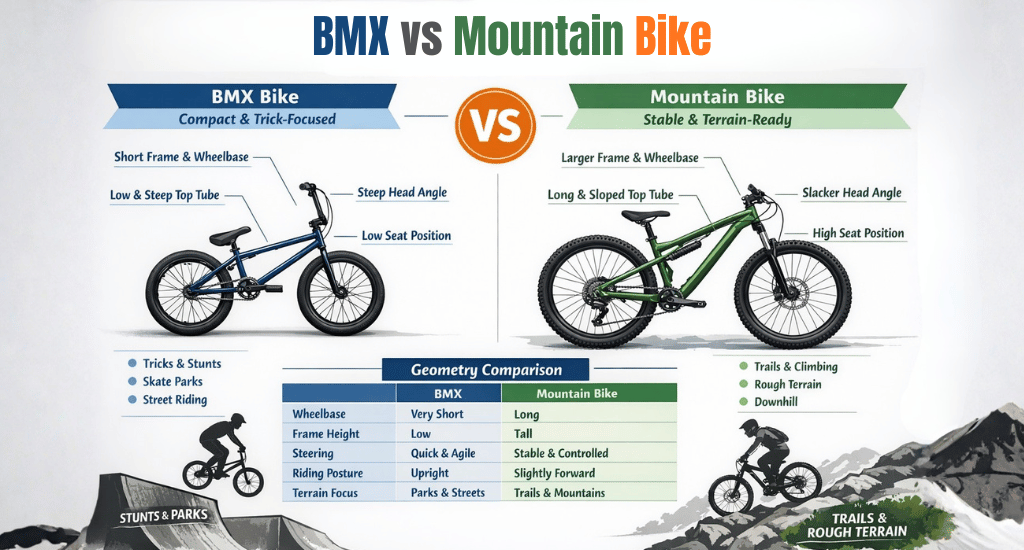
Bike shape affects how it feels. BMX and MTB frames have very different sizes and angles. These changes control balance, reach, and body position. These details shape comfort, safety, and the bike’s ease of handling.
Frame size
BMX frames stay compact and low. This helps riders move the bike with their legs and arms. The low top bar allows quick steps on and off. MTB frames stay longer and taller. This spreads body weight across the bike. This helps balance on slopes, rocks, and fast downhill paths.
Wheel size
BMX bikes use 18 to 20-inch wheels. Some models use 24-inch wheels, but small wheels remain common. These wheels spin quickly and facilitate easy jumps.
MTB bikes use 26, 27.5, or 29-inch wheels. These large wheels roll over rocks and roots with less shaking. This helps for smoother rides on trails.
Riding position
A BMX bike keeps the rider upright. Arms stay close to the body. This pose helps with fast turns and mid-air moves. An MTB keeps the rider in a light forward lean. This pose helps with long rides and hill climbs. It also cuts pressure on the back and arms.
Frame material
BMX frames use strong steel. This metal resists bends and cracks after hard landings. Extra bars add more strength. MTB frames use aluminum or carbon. These metals keep the bike light. A lighter bike helps speed and long-distance comfort.
Gearing & Drivetrain
Gears control how power moves from legs to wheels. BMX and MTB bikes use very different systems. This affects speed, hill ability, and how tired a rider feels after each ride.
BMX Bike
A BMX bike uses one gear. The chain stays on one front ring and one back cog. This simple design keeps the bike strong and easy to care for. This gear suits short bursts of power. It does not suit hills or long flat roads. Riders must push hard to keep speed.
Mountain Bike
A mountain bike uses many gears. A shifter on the handlebars moves the chain across several cogs. This lets the rider adjust power for hills or flat paths. Low gears help slow climbs. High gears help speed on open roads. This saves energy on long rides.
Gear comparison
| Feature | BMX | MTB |
| Number of gears | One | Many |
| Hill ability | Weak | Strong |
| Care needs | Low | Medium |
| Speed control | Limited | Wide |
Suspension & Comfort
Suspension controls how the bike handles bumps. This affects comfort and safety. BMX and MTB bikes use very different methods to deal with rough ground.
BMX Bike
A BMX bike has no suspension. The frame and tires absorb all shocks. This keeps the bike firm and easy to control during jumps and tricks. Long rides feel hard on the body. Arms and back feel more strain on rough land. This bike suits short rides better.
Mountain Bike
An MTB uses front or full suspension. These parts absorb hits from rocks and roots. This makes the ride smoother and safer on rough trails. Long rides feel easier. The body stays relaxed. Riders can keep control on steep drops and loose dirt.
Terrain Compatibility
Each bike fits a certain type of land. BMX bikes work best on smooth or built surfaces. Mountain bikes work best on wild and rough land. The wrong bike on the wrong land feels unsafe.
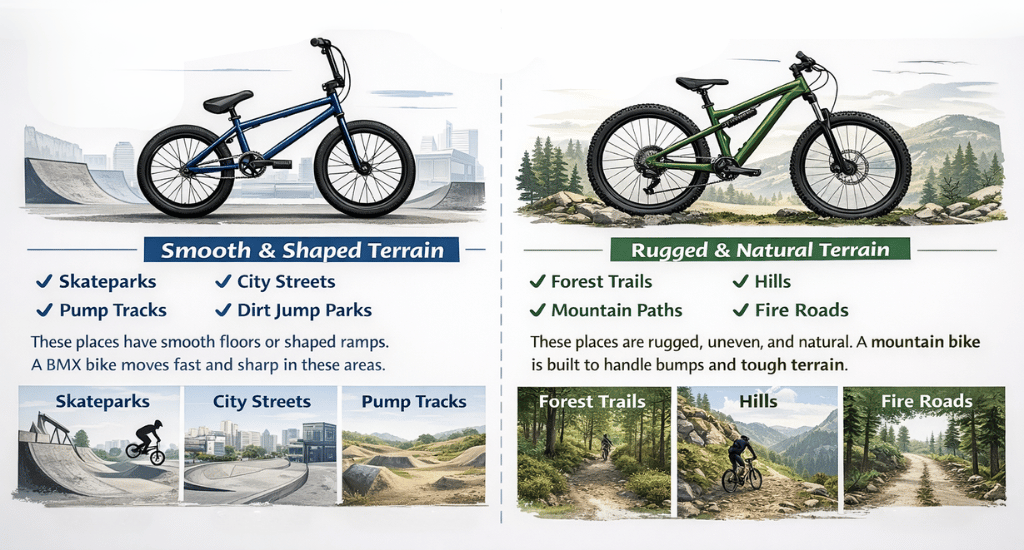
BMX best land
- Skateparks
- City streets
- Pump tracks
- Dirt jump parks
These places have smooth floors or shaped ramps. A BMX bike moves fast and sharply in these areas.
MTB best land
- Forest trails
- Hills
- Mountain paths
- Fire roads
These areas have rocks, mud, and slopes. An MTB keeps grip and balance on this type of land.
Speed & Efficiency
Speed depends on design. BMX bikes and mountain bikes use power in very different ways. Many riders feel confused about which bike is faster.
A BMX bike gains speed fast. Small wheels and low weight help with quick starts. This suits short sprints in parks or streets. Yet top speed stays low. Long roads take more effort. The bike loses speed fast on open paths.
A mountain bike starts slower. Large wheels need more power to move. Yet it keeps speed over long distances. This makes MTB better for trails and long rides. It wins in steady pace.
Skill Level & Learning Curve
Skill growth differs by bike type. BMX bikes need more body control. Mountain bikes feel more forgiving. This affects how fast a new rider feels safe.
A BMX bike demands sharp balance. Jumps and tight turns need strong control. Falls happen more during early practice. This suits riders who like a challenge and fast progress.
A mountain bike feels calmer. Wide tires and suspension help balance. New riders feel safer on trails. This bike suits casual riders and outdoor fans.
Age & Rider Type
Age and size matter for bike fit. BMX and MTB bikes serve different rider groups. Body height and ride goals guide the best choice.
BMX bikes fit kids and teens well. Short frames suit small to medium height riders. Trick fans also favor this bike.
Most BMX riders stay under about 5’10”.
Mountain bikes fit teens and adults. Many sizes exist. Fitness riders, trail fans, and commuters often use MTBs.
Urban Riding vs Practicality
City use shows clear trade-offs. BMX bikes bring fun. MTBs bring use.
A BMX bike jumps curbs and turns fast. It suits street tricks and short city rides. It cannot carry bags or bottles well.
An MTB handles holes and rough roads. Racks and bottle holders fit well. This suits long city trips.
Maintenance & Durability
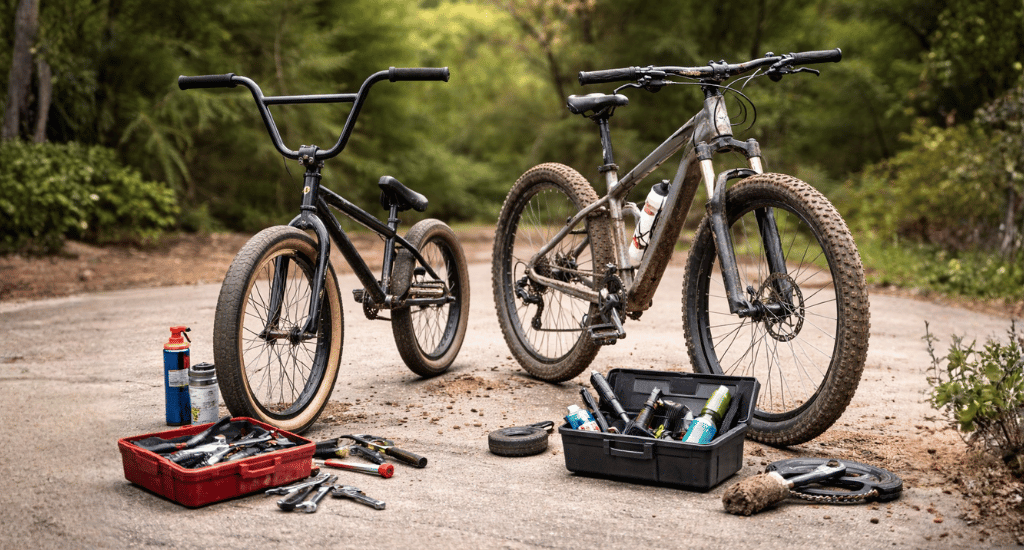
Long-term cost depends on how much care a bike needs. BMX bikes have a simple build with very few parts. Mountain bikes have more parts that move and wear. This makes their care needs very different.
BMX Bike
A BMX bike stays very tough. It has no gears, no shock parts, and no extra cables. This simple design means less chance of damage. Riders can use it hard in parks and on streets.
Parts such as chains, pedals, and tires cost less. They also last longer due to fewer stress points. Most BMX parts are easy to replace. Local bike shops across the U.S. carry these parts.
Mountain Bike (MTB)
An MTB has gears, brakes, and suspension. These parts need regular tune checks. Dirt, dust, and mud can cause wear on chains and cogs. Shock parts also need care. This adds cost over time. Most U.S. bike shops stock MTB parts, yet labor and service raise the total cost.
Price & Value Per Dollar
The bike cost should match how the bike will be used. BMX bikes cost less. Mountain bikes cost more yet cover many types of rides. Both give good value when used for their main role.
BMX Bike
A good BMX bike costs about $300 to $800. This price gives a strong frame and quality parts. These bikes last mfor any years with simple care. They suit park use, street tricks, and small ramps. For riders who love stunts and city rides, BMX gives high value for each dollar.
Mountain Bike (MTB)
A mountain bike starts at around $600. Many models reach $1,000 or more. This higher price brings gears, wide tires, and suspension. This bike fits trails, long rides, and outdoor trips. For fitness and adventure fans, the higher cost makes sense due to wider use.
Which One Is Better for Different Types of Riders?
A BMX bike suits riders who love short, fun action, while a mountain bike suits riders who enjoy long trips on rough terrain. The best choice depends on age, place, and ride goal.
For Kids and Beginners
Kids and new riders often need a bike that feels safe and easy. A BMX bike has a small frame and a low seat, so young riders can place their feet on the ground with ease. This gives more control and less fear. Falls also hurt less due to the low height.
BMX bikes turn fast, which helps kids avoid obstacles in small spaces. A mountain bike feels larger and may feel heavy for small riders. It suits older kids who ride on dirt paths.
For Teenagers and Young Riders
Many teens love action and fun. A BMX bike lets them try jumps, spins, and street moves. Skateparks and ramps keep rides exciting. Teens who love dirt trails and long trips may enjoy a mountain bike more.
An MTB lets them ride far with friends and explore nature. Both bikes offer fun, yet the type of fun differs.
For Adults and Fitness Riders
Adults often ride for health or calm outdoor time. A mountain bike helps the heart and legs due to long rides and hills. It suits people who want exercise and fresh air. A BMX bike feels hard on the body for long use. It suits adults who enjoy tricks or park rides.
For Urban vs Outdoor Riders
City riders often pick BMX bikes. Small size and sharp turns suit streets and curbs. Outdoor fans prefer mountain bikes. Trails, dirt, and hills need wide tires and strong frames.
End Note
BMX bike vs mountain bike comes down to purpose, land, skill, comfort, and budget. BMX suits tricks, parks, and short rides. Mountain bikes suit trails, long trips, and rough paths. Each bike fits a clear type of rider.
Before you buy, think about where and how you plan to ride. Visit a bike shop and try both styles. A short test ride can help you feel which BMX bike or mountain bike fits you best.