
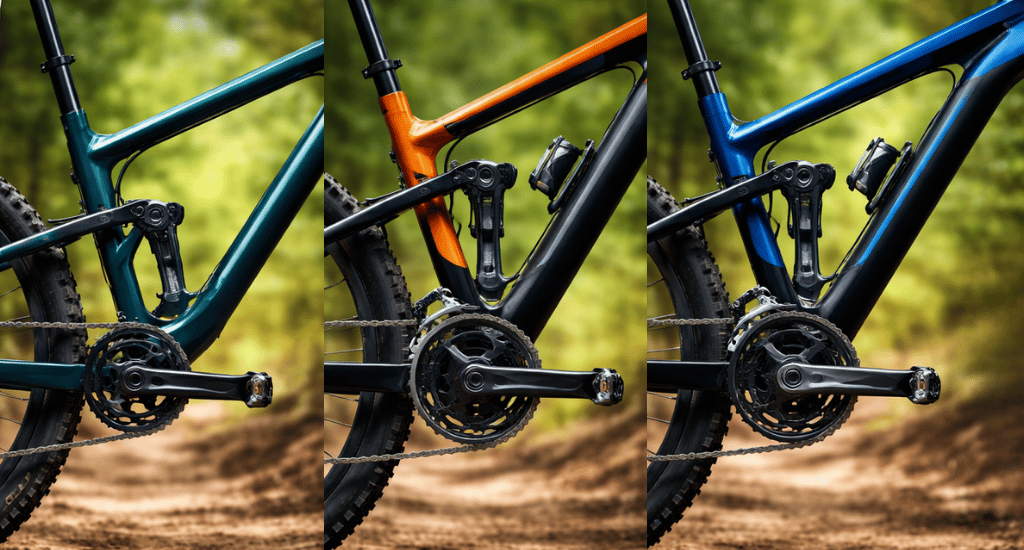
One small part changes how a mountain bike feels on every ride. 1x vs 2x vs 3x drivetrains shape speed, effort, and control on the trail, and there’s no single setup that wins for every rider.
Older bikes often shipped with three front gears. Most new mountain bikes now ship with one. That shift raises a simple question: should you pick the clean, simple setup, or the wider gear range that comes with a second or third chainring?
This guide compares all three side by side so you can match the right drivetrain to your terrain, fitness, and riding goals.
What Does 1x, 2x, and 3x Mean in Mountain Bike Drivetrains?
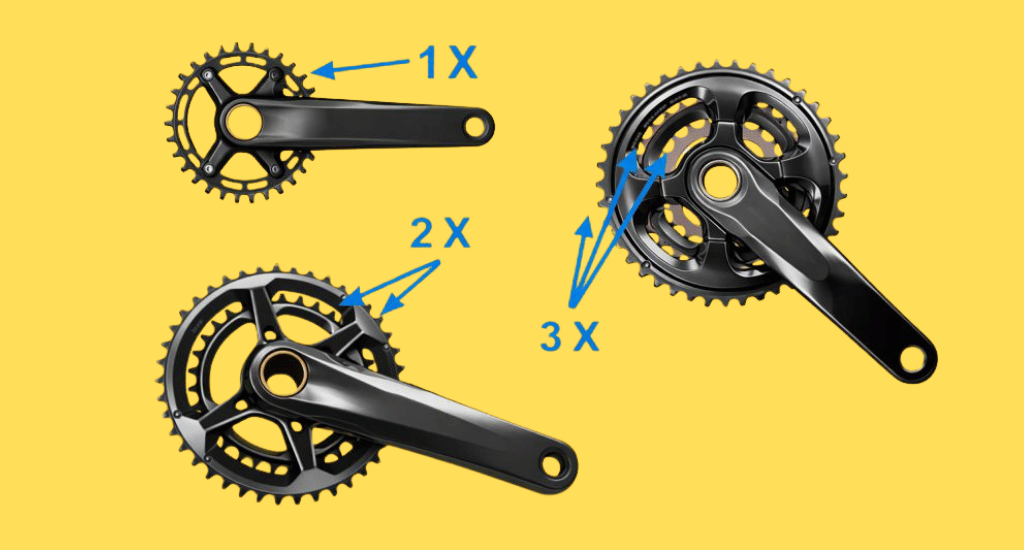
The number describes how many front chainrings the bike has. The rear cassette always carries several gears regardless of setup, but the front count changes how the bike feels on climbs and fast sections.
A 1x drivetrain has one front gear paired with a wide rear cassette. A 2x drivetrain has two front gears, adding more range for hills and flats. A 3x drivetrain uses three front gears for the widest range available, at the cost of extra weight and parts.
Core Differences Across All Three
Each setup trades simplicity for range differently. Here’s how they compare across the factors that actually affect your ride.
Number of Front Chainrings
A single chainring keeps 1x bikes simple and light. There’s no front derailleur to coordinate, so you can focus entirely on technical trail features. Adding a second ring gives you a 2x setup with more gear options for climbs and flats. Three rings, as in 3x, give the widest range but add weight and mean more frequent shifting decisions.
Total Gear Range and Top Speed
A 1x drivetrain has a narrower gear range, topping out around 47 to 48 km/h. That’s fine for trail riding and technical sections, but it can feel limiting on long flats or sustained climbs. Two chainrings widen that range and add roughly 15 to 20 percent more top speed. Three chainrings widen it further still, giving both very low climbing gears and high top-end speed.
Weight and Component Count
Single-chainring bikes are the lightest, since there’s no front derailleur or second shifter. Less weight makes climbing and acceleration feel more responsive. 2x bikes add a modest amount of weight for the extra range. 3x bikes carry the most components and the most weight, but also the widest range for long or steep rides.
Shifting Complexity
A 1x bike only needs one shifter, so shifts feel simple and predictable. A 2x bike requires you to coordinate front and rear shifts, which takes some practice. A 3x bike asks for the most attention, since rough front shifts are easy to make if you’re not paying attention to chain angle.
Chain Retention and Reliability
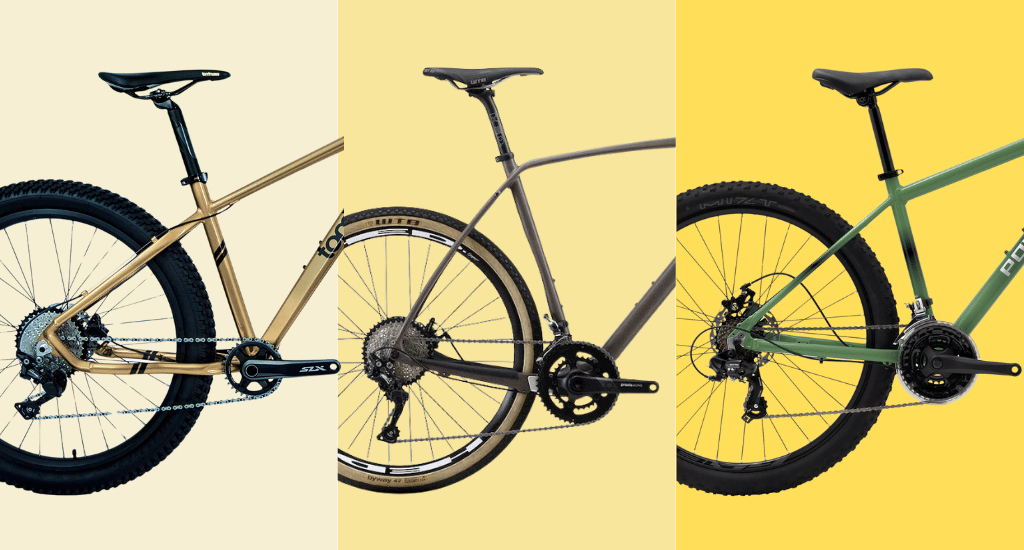
Modern 1x systems use narrow-wide chainrings and clutch derailleurs to keep the chain seated, which cuts down on chain drops over rough terrain. 2x bikes carry a moderate risk of chain drop, mainly when shifting the front ring under load. 3x bikes carry the highest risk of cross-chaining and chain slip and typically need more frequent maintenance as a result.
Maintenance Needs
1x needs the least upkeep, since there’s less to adjust. 2x asks for regular front derailleur tuning. 3x asks for the most: both front and rear adjustment, careful alignment, and more frequent inspection to keep shifting smooth across the full range.
Modern MTB Compatibility
Most current trail, enduro, and downhill bikes ship with 1x. 2x remains common on XC, marathon, and bikepacking builds that need the wider range. 3x mostly shows up on older or budget bikes, where it still offers useful versatility for heavy touring despite the added weight.
2x vs 3x: Which Wins for Touring and Long Rides
If you’ve already ruled out 1x and you’re deciding between two or three chainrings specifically, the choice comes down to how much range you actually need versus how much maintenance you’re willing to take on.
A 2x setup gives most of the range benefit of a triple with noticeably less weight and fewer parts to maintain. It suits XC racers, marathon riders, and lighter touring setups where you want climbing gears without the extra bulk. A 3x setup goes further still, adding a granny gear that matters most on very steep, sustained climbs or fully loaded bikepacking trips where every low gear counts. The tradeoff is real: more shifting to manage, more parts that can go out of adjustment, and more weight to carry.
For most riders doing mixed terrain or moderate touring, 2x hits the better balance. Reach for 3x specifically when your rides involve loaded climbs steep enough that a 2x’s lowest gear still isn’t low enough.
Which Drivetrain Should You Choose?
Matching your bike to your goals comes down to terrain, riding style, and fitness more than any universal rule.
Choose 1x If You Ride Modern Trails or Technical Terrain
Riders on technical trails, enduro, or downhill benefit most from 1x. It keeps the bike light, simple, and reliable, with quick shifting that lets you focus on the trail instead of the drivetrain. For a full breakdown of exactly where 1x pulls ahead of a two-ring setup, including chain retention and cost, see our 1x vs 2x mountain bike comparison.
Choose 2x If You Need a Wider Gear Range
XC riders, marathon racers, and mixed-terrain cyclists often prefer 2x. The second chainring smooths out gear steps across long rides with real elevation change, adding versatility without the full weight and complexity of a triple.
Choose 2x or 3x for Bikepacking and Touring
Loaded touring rewards the extra low-end range a second or third chainring provides, especially on sustained climbs with a full setup on board. For the specific numbers on how much range and top speed you gain going all the way to a triple, along with real use-case breakdowns for touring versus casual riding, see our 1x vs 3x mountain bike guide.
Choose 3x If You’re on a Budget or Riding an Older Bike
Entry-level and older mountain bikes often come with 3x as standard. It delivers the widest range at the lowest cost, which helps beginners and casual riders handle hills without buying premium components. The tradeoff is more weight and more shifting to manage.
Choose Based on Fitness Level and Riding Goals
Newer or less-fit riders often do better with the lower climbing gears a 2x or 3x setup provides, since they help maintain a steady cadence without overexertion. Experienced riders frequently find a modern wide-range 1x setup is all they need, trading a bit of top-end range for simplicity and reliability.
Common Myths About MTB Drivetrains
Riders hear a lot of conflicting advice about 1x, 2x, and 3x. A few of the most common claims don’t hold up:
- “1x can’t climb well.” Climbing ability comes down to cassette range, not chainring count.
- “More gears always mean better.” Extra gears can be redundant if you never use the full range.
- “3x is dead.” It still earns its place on touring and budget bikes.
- “1x is only for downhill.” Plenty of XC and trail bikes run 1x successfully.
- “2x is too complicated.” A bit of practice makes front and rear shifting feel natural.
- “Single-chainring bikes break easier.” Modern 1x systems are built to be durable.
End Note
1x, 2x, and 3x each balance simplicity and gear range differently, and there’s no single best answer for every rider. Weigh your terrain, riding style, load, and fitness level, and dig into the specific pairwise comparisons above once you’ve narrowed it down to two contenders.
FAQs
Which drivetrain is best for a beginner mountain biker?
A 1x drivetrain is usually the easiest starting point. One shifter means less to think about while you're still learning bike handling and trail basics. A 2x setup is also fine for beginners riding longer or hillier routes who want a bit more low-end range.
Can I convert a 3x mountain bike to 1x?
Yes, but it usually means replacing the crankset, front derailleur removal, and often the cassette and rear derailleur to get a wide enough range to make up for the lost chainrings. Budget for a proper wide-range cassette rather than trying to keep your old one, or you'll lose climbing gears you relied on.
Is 2x becoming obsolete on mountain bikes?
No. Most trail, enduro, and downhill bikes have moved to 1x, but 2x remains common on XC, marathon, and bikepacking builds where riders want extra range without the weight of a full triple.
Do I lose gear range switching from 3x to 1x?
Some, especially at the very top and very bottom of the range. Modern 1x cassettes with a wide spread close most of that gap, but a fully loaded touring setup climbing very steep grades may still notice the difference more than a trail rider will.
Which climbs better, 2x or 3x?
A 3x setup has a lower bottom gear than most 2x setups, which helps on very steep, sustained climbs. For everyday trail climbing, a modern 2x with a wide-range cassette gets close enough that the difference is minor for most riders.
Do professional mountain bikers use 2x or 3x?
Almost all professional XC, enduro, and downhill racers run 1x today. Some longer-distance endurance and gravel racers still choose 2x for the wider range on mixed terrain, but 3x has largely disappeared from professional racing.


