
One small part decides how your bike feels on every climb and turn: the drivetrain. The 1x vs 3x mountain bike debate starts here, with gears that move power from pedals to wheels.
Older bikes often use three front gears, called 3x. Newer bikes favor one front gear, called 1x. Riders compare ease, gear spread, weight, care needs, ride style, and trail type.
Read this blog to learn if 1x suits your rides or if 3x still fits better. Clear answers ahead on pros, limits, weight, wheel size, and reasons budget bikes keep 3x.
1x vs 3x Mountain Bike Drivetrain
Mountain bike drivetrains decide how smooth and fast your ride feels. 1x and 3x setups work differently, and each has its strengths and limits on trails.
Gear Range & Ratios (Climbing vs Top Speed)
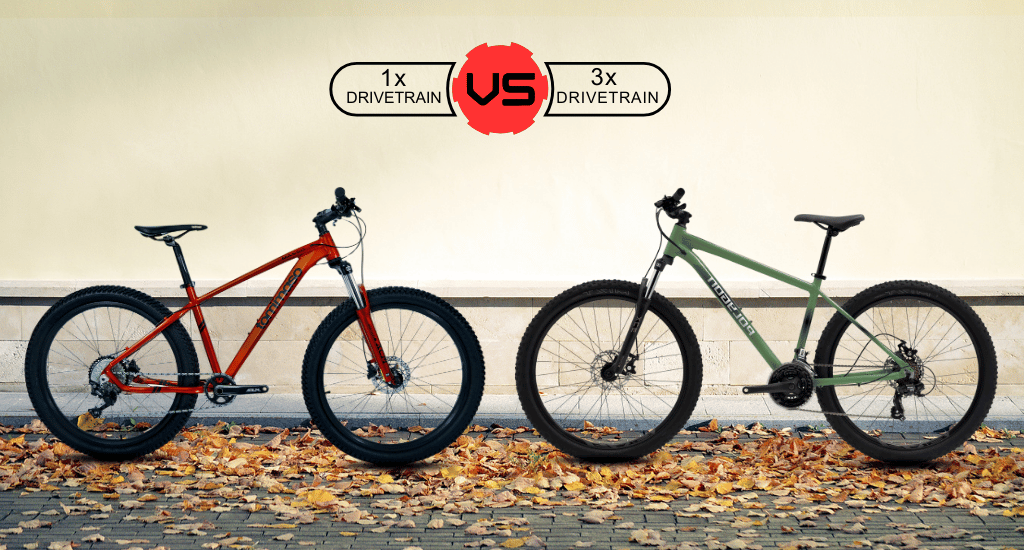
A 3x drivetrain has three front chainrings, like 42/32/22T, giving the widest gear range. It helps on very steep climbs and when carrying heavy loads. Top speed can reach around 56-57 km/h, about 15-20% faster than a 1x.
Modern 1x bikes use a single front chainring, such as 32T, paired with a 10-51T cassette. This gives a total range of about 500-510%, enough for most rides. Top speed is slightly lower, around 47-48 km/h, but simplicity makes shifting easier and maintenance lighter. 3x still wins for ultra-low gears on long climbs or heavy loads.
Gear Steps & Cadence Control
1x drivetrains have bigger jumps between gears. This means your pedaling speed, or cadence, can change noticeably when you shift. You feel each gear more, which can make climbing or sprinting a little harder to fine-tune.
3x drivetrains have smaller steps between gears. Pedaling stays smoother over long rides, which is useful for cross-country trails or touring. Beginners or riders on long rides find it easier to keep a steady cadence without thinking too much about gear planning.
Weight Difference (Components & Real-World Savings)
A 1x setup removes the front derailleur, extra chainrings, and extra cables. This makes the bike about 300-500 grams lighter than a 3x.
Lighter bikes feel easier on climbs and technical trails. Every gram counts when lifting the bike over roots, rocks, or steep slopes. The weight savings also make handling more agile on tricky terrain.
Shifting Simplicity & Rider Focus
1x bikes have only one shifter. Riders don’t need to think about front gears, so reactions on technical trails are faster.
3x bikes have two shifters. This requires planning which chainring to use. Beginners may feel confused, and coordination takes attention away from handling tricky sections. 1x helps riders focus more on the trail than the gears.
Chain Retention & Drop Risk
1x bikes use a narrow-wide chainring and clutch derailleur to keep the chain in place. Chain drops are rare, even on rough trails.
3x bikes have more chain movement between the chainrings. The risk of the chain falling is higher, especially downhill or on enduro trails. Riders need to be careful in rocky or bumpy sections.
Maintenance & Mechanical Complexity
1x drivetrains have fewer parts. Cleaning and adjustments are easier, and fewer components mean fewer problems over time.
3x bikes need front derailleur tuning, extra cables, and more attention. Maintenance takes more time and often requires shop visits. Over the years, 1x bikes have become simpler and more reliable.
Cost Over Time (Parts & Wear)
1x setups use wide-range cassettes that wear faster. Chains and cassettes may need replacement sooner, raising long-term costs.
3x bikes spread wear across multiple chainrings and use cheaper standard cassettes. Upfront cost is lower, but maintenance can be more complex. Riders trade simplicity for initial savings.
Compatibility & Modern MTB Standards
1x drivetrains work perfectly with modern MTB features, like dropper posts, new frame designs, and current groupsets. It’s the industry standard now.
3x drivetrains are rare on mid-to-high-end bikes. Upgrade options are limited, and most new bikes favor 1x systems. Choosing 1x ensures compatibility with the latest MTB trends.
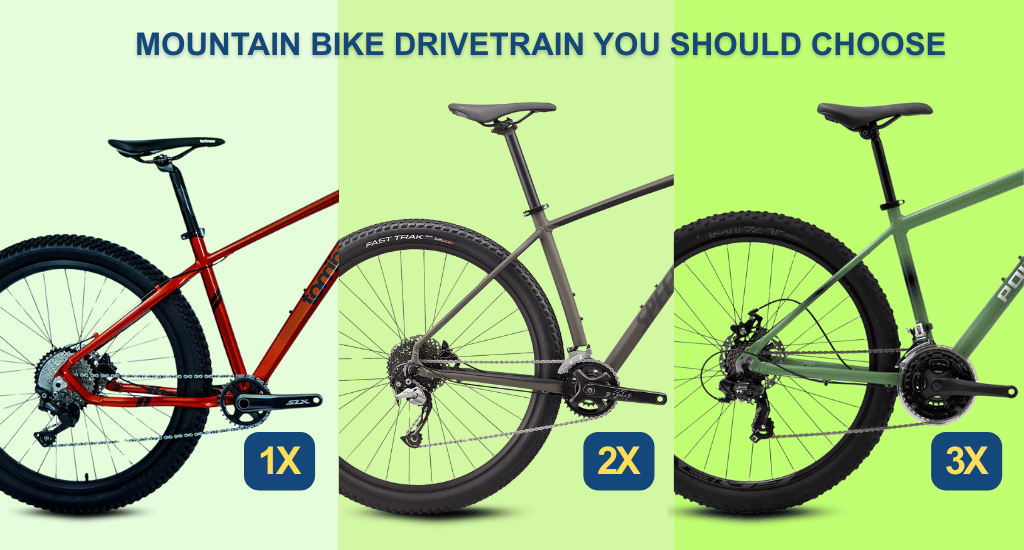
Which Mountain Bike Drivetrain Should You Choose?
Choosing between 1x and 3x depends on your riding style and terrain. Each setup has its strengths, and matching it to your needs makes rides easier, safer, and more enjoyable.
Trail, Enduro & Downhill Riders
1x is the best choice for technical trails. Its simplicity keeps your focus on the terrain, and reliability prevents chain problems on rough sections.
Pros:
- Fewer parts to fail.
- Easy shifting on rough trails.
- Lighter and simpler.
Cons:
- Slightly fewer top-speed options.
Best use: Technical trail rides, downhill tracks, and enduro racing where fast reactions and low maintenance matter most.
Long-Distance Touring & Bikepacking
3x drivetrains suit long rides with heavy loads. Extra low gears help climb steep hills without tiring quickly.
Pros:
- Very wide gear range.
- Smooth cadence on climbs.
- Cheaper replacement parts.
Cons:
- More parts to maintain.
- Slightly heavier.
Best use: Multi-day tours, loaded bikepacking trips, or long rides with steep climbs.
Beginners & Casual Riders
1x makes learning easier. Fewer decisions while riding reduce stress and let beginners focus on balance and control.
Pros:
- Simple to operate.
- Fewer mistakes.
- Lighter setup.
Cons:
- Slightly limited gear range for very steep climbs.
Best use: Leisure rides, casual trails, and learning technical skills without gear confusion.
Riders Focused on Climbing Performance
3x provides the lowest gears available, which helps on extremely steep slopes. Ideal when every gear matters for power and endurance.
Pros:
- Ultra-low climbing gears.
- Smooth cadence control.
- High top-speed potential.
Cons:
- More maintenance.
- Heavier setup.
Best use: Extreme hill climbs, mountainous rides, or long, loaded ascents where gear range is critical.
Riders Building or Upgrading a Modern MTB
1x fits modern MTB designs and standards. It makes upgrades easier and ensures new parts work without trouble.
Pros:
- Full compatibility with new frames and components.
- Easier upgrades.
- Simple maintenance.
Cons:
- Slightly higher cassette wear over time.
Best use: Building a new MTB, upgrading older bikes, or riders who want long-term simplicity and modern features.
Common Myths About MTB Drivetrains
Mountain bike drivetrains often come with confusion and wrong ideas. Some riders assume what works for others must be true. Let’s clear the most common myths simply and clearly.
- “1x can’t climb well” – cassette range makes a difference.
- “More gears always means better” – some are rarely used.
- “3x is dead” – still useful for heavy loads or long climbs.
- “1x is only for experts” – beginners benefit too.
- “Weight difference is huge” – real-world savings are moderate.
Conclusion
The 1x vs 3x mountain bike choice comes down to your riding needs. 1x dominates modern mountain biking with simplicity, lighter weight, and easy maintenance. It handles most trails and technical terrain without extra effort.
3x still survives for specific situations, like heavy loads, long climbs, or extreme gradients. Choose based on the trails you ride, how much gear you carry, your riding style, and how much maintenance you want. Pick what makes your ride smoother and more fun.
FAQs
Is 1x enough for mountain biking?
Yes, 1x is enough for most riders. It offers a wide gear range, simple shifting, and less maintenance. Beginners and trail riders can handle climbs and descents without worrying about front chainrings.
What are the disadvantages of a 1x drivetrain?
1x drivetrains have slightly fewer top-speed options and very low climbing gears. The cassette wears faster, and extreme climbs with heavy loads can feel harder compared to a 3x setup.
Is a 1:1 gear ratio good for climbing?
Yes, a 1:1 gear ratio works for steep climbs, especially with modern wide-range cassettes. It provides low enough gears for most trails, but very heavy loads or extreme slopes may still need lower ratios.
Why are 3x drivetrains disappearing?
3x drivetrains are disappearing because 1x systems are simpler, lighter, and easier to maintain. Modern mountain bikes, new frames, and riders prefer 1x for reliability and compatibility with current MTB standards.


