

A bent or buckled mountain bike rim can turn a smooth ride into a rough one fast. The wheel may shake side to side, brakes may rub the rim, and tires may lose air after a hard hit on a rock or pothole. Riders use different words for this same problem. Some call it a bent rim. Others call it a buckled wheel. In bad cases, riders call it a tacoed or pretzeled wheel, named for the shape it takes after a serious hit.
Most of these problems have a simple fix at home. A careful spoke adjustment can pull the rim back into shape, and gentle pressure can correct a dented edge. You only need basic tools, and in an emergency, you can even manage a short-term fix with your hands.
This guide walks through how to spot a bent or buckled rim, how to fix it step by step, what causes it, and when the damage means the wheel is done for good.
Key Takeaways
- A bent rim and a buckled wheel describe the same core problem: the rim is out of true and wobbles as it spins.
- Most small bends can be fixed at home with a spoke wrench and small quarter-turn adjustments.
- Dented rim edges (bead lip damage) need a different fix than a lateral wobble.
- A “tacoed” wheel is a severe case that usually needs replacement, not repair.
- Regular tire pressure checks and smart line choices on the trail help prevent bent rims before they start.
How to Tell If Your Rim Is Bent or Buckled
A bent or buckled rim usually shows clear warning signs during a normal ride on rough trails. Hard impacts from rocks or potholes can deform the rim and affect how the wheel spins.
Look for these common signs:
- Side to side wheel wobble during rotation
- The tire edge is sitting unevenly on the rim
- Brake pads that touch the rim during wheel movement
- A tire that slowly loses air, especially on tubeless setups
- Visible dents or flat spots along the rim edge
Simple At-Home Inspection
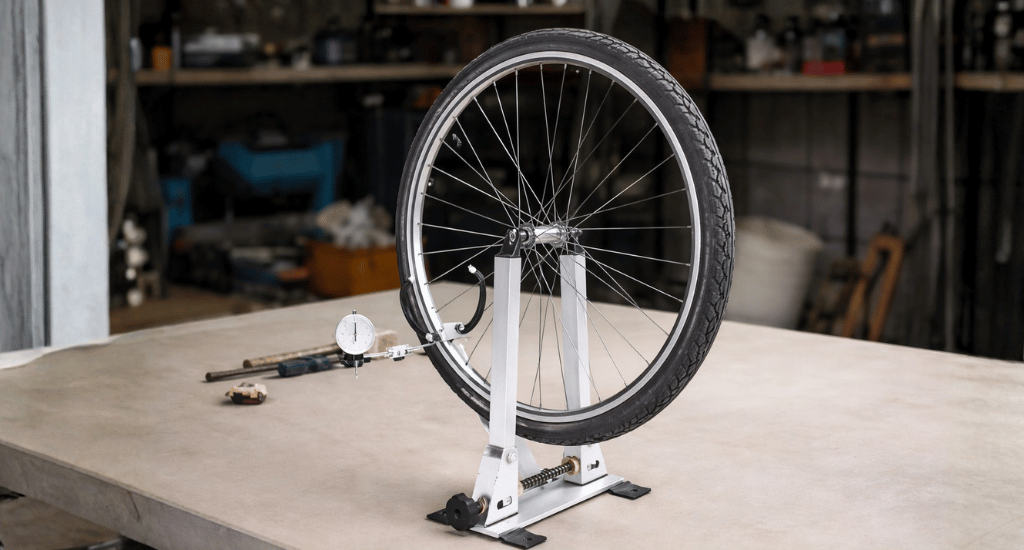
Turn the bike upside down, or use a repair stand if you have one. Spin the wheel slowly with your hand and watch the rim as it passes a fixed point, like a brake pad or a zip tie taped to the fork.
Watch for side-to-side movement first. That lateral shift shows where the rim needs work. Then check for up-and-down motion, sometimes called a wheel hop, which points to a different kind of bend.
- A normal wheel usually stays within 1 to 2 mm of side movement
- 3 to 5 mm of wobble or more usually means the wheel needs truing
- Mark the worst section with chalk or tape so you stay focused on the right spot
How to Fix a Bent or Buckled Mountain Bike Rim (Step by Step)
Fixing a bent or buckled rim mostly comes down to small, careful spoke adjustments. Go slow, check your progress often, and stop if the rim shows cracks or splits instead of a smooth bend.
Step 1: Understand Spoke Direction Before You Adjust
Each spoke connects the rim to the center hub and pulls the rim toward its own side. That pull is what lets you correct the shape.
- If the rim leans left, tighten the spokes on the right side
- If the rim leans right, tighten the spokes on the left side
Adjusting the wrong side makes the wobble worse, so confirm the direction before you turn anything.
Step 2: Tighten Spokes in Small Steps
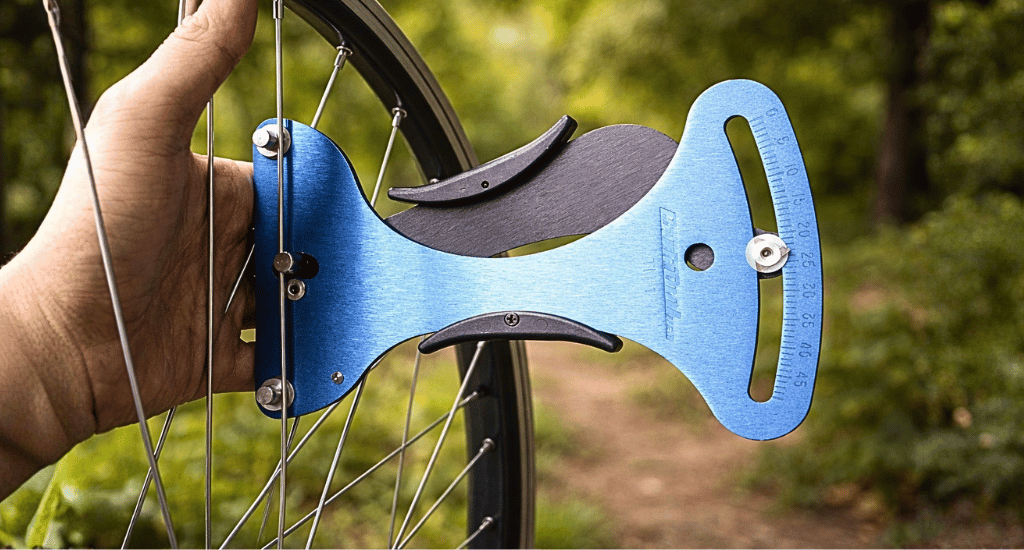
Use a spoke wrench (also called a spoke key) to turn the nipples near the worst part of the bend. Work on two or three spokes around that section rather than just one, so the tension stays even across the wheel.
- Turn each nipple a quarter turn at a time
- Spin the wheel and recheck after every round of adjustments
- Repeat slowly rather than trying to fix it in one pass
Excess spoke tension can bend the rim further, so patience matters more than speed here.
Step 3: Fix a Dented Rim Edge (Bead Lip Damage)
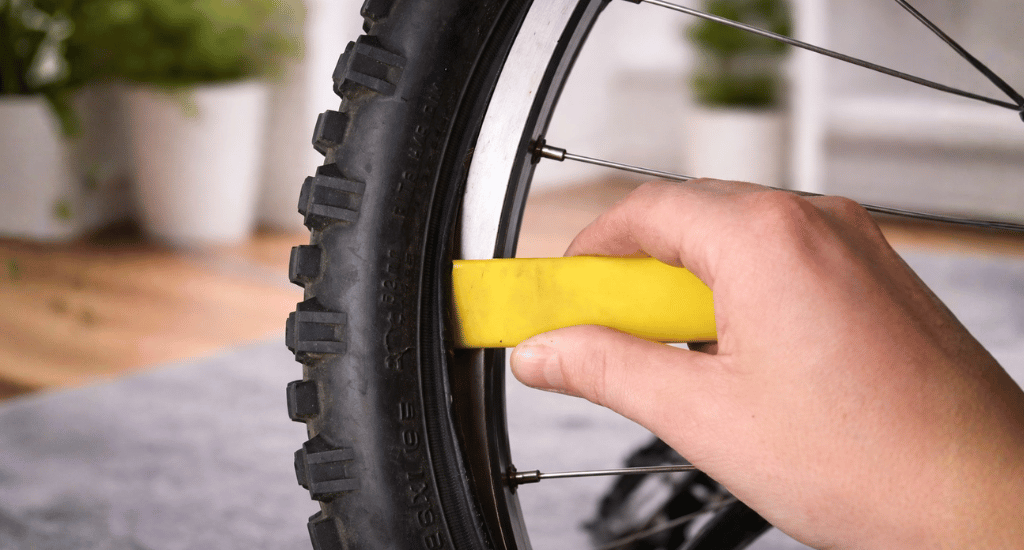
Some damage shows up on the outer edge where the tire seats, known as the bead lip. This kind of dent often causes air leaks on tubeless setups.
- Use a large adjustable wrench to grip the bent edge
- Bend the bead lip back into shape with one smooth, steady motion
- Apply gentle pressure and avoid sudden force
- Check the shape after each small correction
Aluminum rims weaken with repeated bending, so avoid working the same spot more than a couple of times.
Step 4: Correct Vertical Bends (Radial Truing)
A vertical bend makes the wheel bounce or hop instead of moving side to side. This needs the same spoke tool, but you adjust the spoke pairs around the raised section together, rather than one side at a time.
- Find the highest point of the hop as the wheel turns
- Tighten the spokes around that area evenly
- Work in small turns to keep tension balanced on both sides
Step 5: Recheck the Wheel
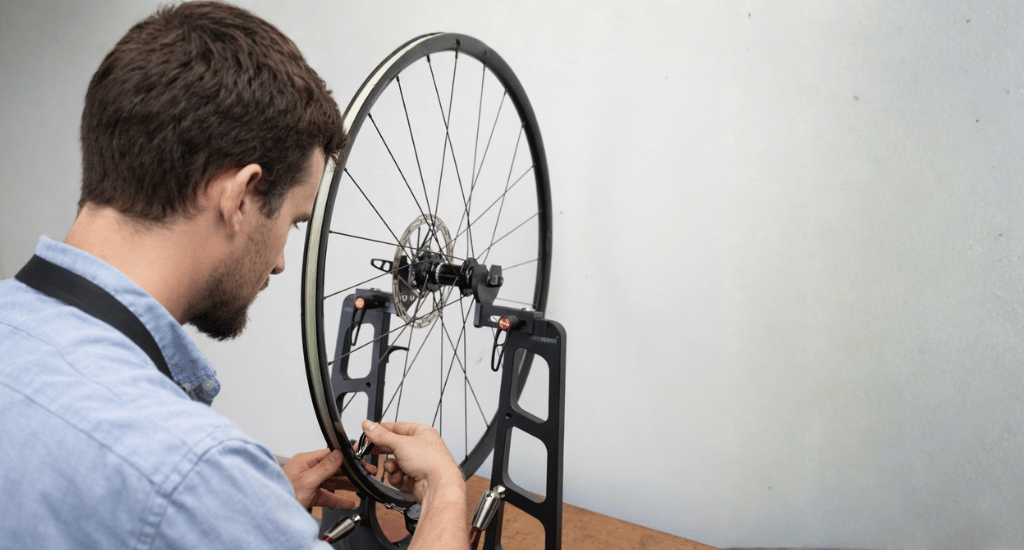
Spin the wheel one more time and watch the gap between the rim and the brake pads. The gap should stay close to even through a full rotation, with about 1 to 2 mm of movement considered normal for most mountain bike wheels.
Quick Fix Without Tools (Trail Emergency Method)
If you buckle a wheel mid-ride and don’t have a spoke wrench, you can still manage a short-term fix by hand.
- Turn the bike upside down so the wheel spins freely
- Spin it slowly and watch where the rim shifts side to side
- Push the rim gently in the opposite direction of the bend with your hands
- Use light, steady pressure. Sudden force can damage the rim further
This only works for small bends, usually 2 to 3 mm or less, and it is not a long-term fix. Get a proper spoke adjustment done once you are home or back at a shop.
What Causes a Bent or Buckled Rim
A rim bends when force or uneven tension pulls it out of shape during a ride. Knowing the common causes helps you prevent the next one.
Hard Impacts on Rough Trails
Rocks, roots, and sharp edges can strike the rim with a lot of force. A hard landing after a jump can bend the wheel and create a visible wobble right away.
Loose or Uneven Spoke Tension
Spokes lose tension over time, especially on rough terrain. When some spokes go loose while others stay tight, the rim gets pulled unevenly, which slowly leads to a buckled shape even without a single big impact.
Poor Quality or Weak Rims
Lighter, budget rims handle repeated trail impacts less well than reinforced ones. Riders who hit aggressive terrain often see more bends on basic single-wall rims.
Front vs Rear Wheel Differences
Front wheels usually bend from a direct hit on an obstacle. Rear wheels carry more weight and also take on drivetrain forces, which increases the risk of buckling over time.
When the Damage Is a Tacoed Wheel
If a wheel folds sharply to one side and holds a deep curve, riders often call it a tacoed or pretzeled wheel, named for the shape. This is different from a simple wobble.
A tacoed wheel usually cannot be fully restored to a like-new state, even with careful spoke work. In some cases, you can back off spoke tension enough to pop the rim closer to its original shape, then retighten and true it like a fresh build, but the rim is often weaker afterward. If the rim shows any cracking, especially near the spoke holes, replace the wheel rather than repair it. Riding on a cracked rim is a real safety risk.
Preventing Bent or Buckled Rims
A few consistent habits go a long way toward protecting your rims on rough terrain.
Maintain Proper Tire Pressure
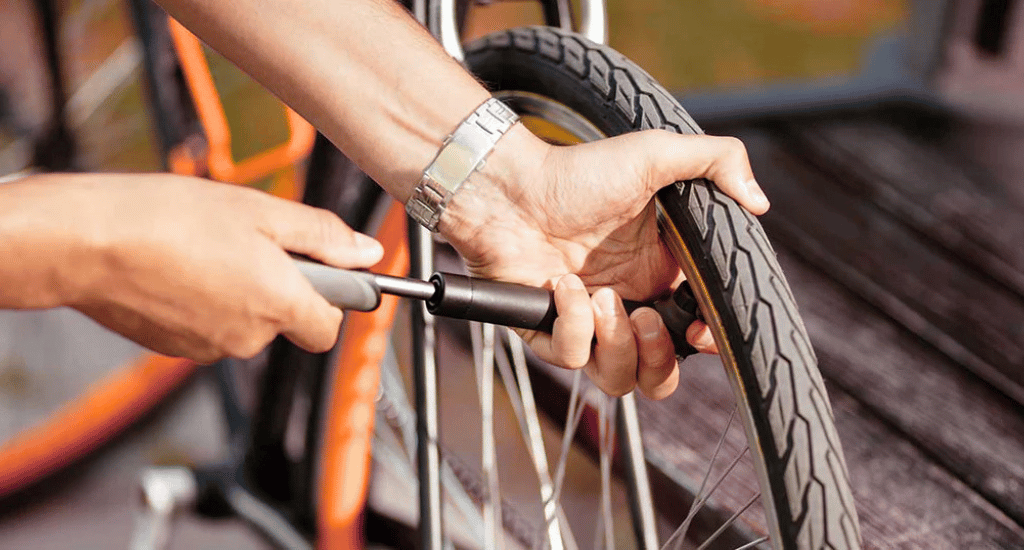
Correct pressure cushions the rim from hard hits. Tubeless mountain bike tires usually run best around 22 to 30 PSI, while tubed tires often need closer to 30 to 40 PSI. Low pressure raises the risk of the rim striking a rock directly.
Choose Your Line Carefully
Avoid square-edged rocks that create sudden, direct rim impacts. A small front wheel lift over an obstacle takes a lot of force off the rim.
Upgrade to a Stronger Rim
Double-wall rims resist bending better than basic single-wall designs. Wider trail rims and reinforced enduro rims hold up better under aggressive riding.
Check Spoke Tension Regularly
Uneven or loose spokes are one of the quieter causes of a buckled wheel. Check tension every 1 to 2 months, especially if you ride rough terrain often.
Land Smart on Jumps and Drops
Land with bent arms and knees to absorb impact rather than transferring it straight into the wheel. Smooth landings protect the rim over the long run.
If you’re also dealing with a tire that keeps slipping off the bead, read our guide on a bicycle tire coming off the rim. And if you’re not sure your current wheel size fits your riding style, our 26 vs 29 mountain bike wheel size comparison can help you decide on your next build.
Final Thought
Bent and buckled rims are common after rough rides over rocks, potholes, or sudden drops. Most small bends respond well to careful spoke adjustment, bead-lip correction, and simple truing with basic tools. A cracked rim or a severely tacoed wheel is the exception. When you see cracking or a deep, sharp fold, replacement is the safer choice over repair.
FAQs
Can a bent or buckled mountain bike rim be fixed?
Yes, most small bends and wobbles can be fixed at home with a spoke wrench. Careful spoke adjustment pulls the rim back toward a straight shape, and minor dents on the edge often respond to gentle, steady pressure.
How do you straighten a bent bicycle rim?
Spin the wheel to find the worst point of the wobble, then tighten the spokes on the opposite side of the bend in small quarter turns. Recheck often and keep adjustments even on both sides to avoid over-tightening.
Can a dented MTB rim be fixed?
Yes, in most cases. Use a large adjustable wrench to gently bend the dented bead lip back into position, working in small corrections and checking the shape after each one.
How do you straighten a bent front bike wheel?
The same spoke adjustment method used for any bent rim applies to a front wheel. Front wheels are often easier to work on since there is no drivetrain in the way, giving you better access to every spoke.
Can you unbuckle a mountain bike wheel completely?
Yes, as long as the rim metal itself is still intact and not cracked. Careful, gradual spoke tensioning can bring a buckled wheel back to close to its original shape.
What does it mean when a wheel is "tacoed"?
A tacoed or pretzeled wheel is a severely bent rim that has folded sharply to one side, usually from a hard impact or a bike falling over on the wheel. Unlike a simple wobble, a tacoed wheel is rarely worth repairing and usually needs a full replacement.
How do I know if my rim needs replacing instead of repair?
Check for cracks, especially near the spoke holes, and look for a sharp, deep fold rather than a gentle wobble. If either is present, replace the wheel. Riding on a cracked or severely bent rim is a safety risk, not just a comfort issue.


