
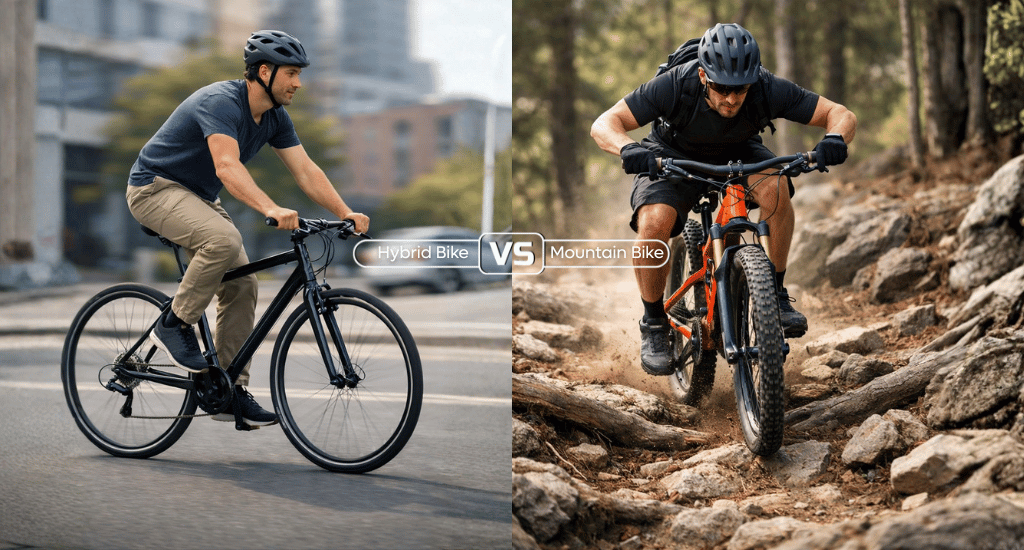
A bike may look perfect yet feel wrong after real rides begin. This confusion often starts with the hybrid bike vs mountain bike choice, where many riders rely on looks instead of real road needs.
People mix these bikes because both share flat handlebars and wide tires. At first sight, they seem alike, but their purpose differs, the ride feel changes, and each bike fits very different ground.
This guide explains the use, features, comfort, terrain, and smart purchase choice in simple words. Read this blog to see clear differences and select a bike that truly suits daily rides.
Hybrid Bike vs Mountain Bike: Feature-by-Feature Comparison
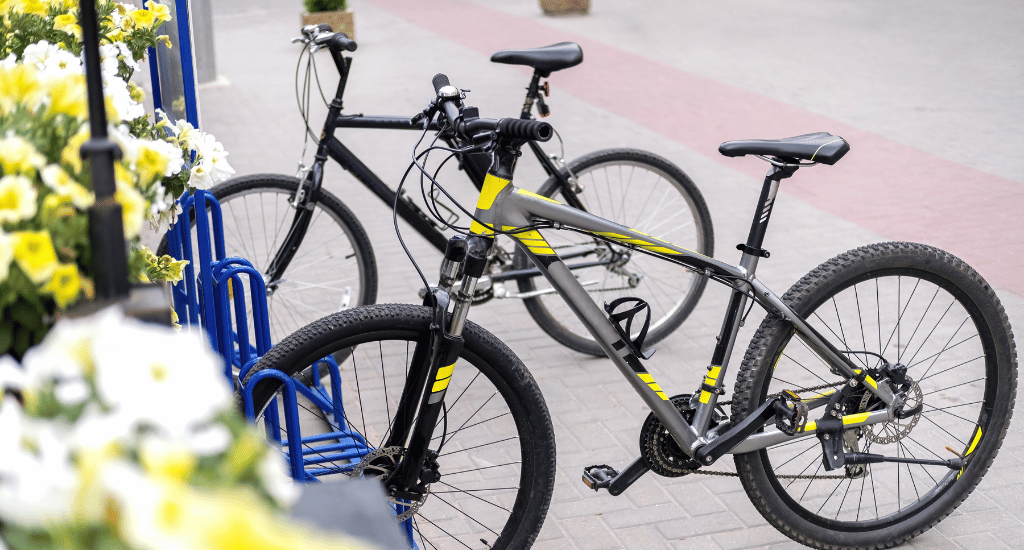
A quick look does not reveal how different these bikes feel on real roads. As a bicycle expert, I see many riders regret a fast choice. This section breaks each feature clearly, so you can match the bike with your daily rides.
Riding Position & Comfort
A hybrid bike keeps your body more upright during rides. This position reduces pressure on the lower back, neck, and wrists. It feels relaxed and natural, especially during long city rides or daily travel.
A mountain bike also keeps the rider upright, but the feel changes on rough ground. The body leans slightly forward to keep control of the trails. This stance helps balance, but can feel tiring on smooth roads.
Tires & Grip
Hybrid bikes use smoother tires with light surface lines. These tires roll fast on roads and paved paths. Less friction means less effort, which helps during long rides through city streets.
Mountain bikes use wide tires with deep, sharp knobs. These bite into dirt, sand, and mud. The grip stays strong on loose ground, rocks, and wet trails where smooth tires slip easily.
Tire size guide:
- Hybrid bikes usually use 28-50 mm wide tires.
- Mountain bikes start around 2.0 inches or wider.
Suspension Setup
Most hybrid bikes come with a stiff front fork or very light suspension. This setup keeps the bike efficient on roads. Pedal power moves the bike forward without energy loss.
Mountain bikes rely on strong suspension systems. These absorb shocks from rocks, roots, and drops. The ride feels stable and safe even when the ground hits hard and fast.
Frame & Durability
Hybrid bike frames focus on lightweight and smooth travel. This makes rides feel quick and easy. It suits roads, bike lanes, and light paths without heavy stress.
Mountain bike frames use thick tubes and strong joints. They handle jumps, rough landings, and trail hits. Extra strength adds weight but protects the bike during hard use.
Gearing Range
Hybrid bikes offer gears that handle city slopes, bridges, and mild hills. Gear steps feel smooth and simple. This helps riders keep a steady pace without stress.
Mountain bikes include very low gears. These help climb steep hills and rough paths. Control matters more than speed when trails rise sharply or turn technical.
Braking System
Hybrid bikes may use rim brakes or disc brakes. Disc brakes now appear on most models. They stop the bike well during rain and busy traffic.
Mountain bikes use disc brakes as standard equipment. These brakes stay strong on mud, dust, and water. Reliable stopping power matters on steep descents and tight trails.
Speed & Efficiency
Hybrid bikes move fast on flat roads. Narrower tires and lighter frames help maintain speed. This suits commuting, fitness rides, and long-distance travel.
Mountain bikes feel slower on smooth roads. Wide tires and heavy frames add drag. Speed matters less when control and safety take priority.
Maintenance & Upkeep
Hybrid bikes stay simple to maintain. Fewer moving parts mean less frequent service. This suits daily riders who prefer low-effort care. Mountain bikes need regular checks. Suspension, gears, and brakes face heavy stress. Proper care keeps performance strong and prevents trail damage issues.
Best Use Cases: Which Bike Fits Your Riding Style?

The right bike feels easy only when it matches how and where you ride. Many riders face discomfort because the bike does not suit daily roads. This section connects real riding habits with the correct bike type.
Choose a Hybrid Bike If You:
Hybrid bikes work well for riders who spend most of their time on smooth surfaces. These bikes balance comfort and speed, which makes daily travel and casual riding feel easier and less tiring.
- Ride mostly on paved roads or bike paths: Hybrid bikes roll smoothly on roads and shared paths without extra effort or vibration.
- Commute daily or ride for fitness: The lighter frame helps maintain a steady pace during regular travel or exercise rides.
- Want speed with comfort: An upright riding position reduces stress on the back, shoulders, and wrists.
- Occasionally ride light gravel: Hybrid tires handle dry gravel and park trails without losing control.
Choose a Mountain Bike If You:
Mountain bikes suit riders who prefer rough ground and uneven paths. These bikes focus on stability and control, which helps riders stay confident on difficult terrain.
- Ride technical trails: Mountain bikes stay stable on narrow trails with sudden turns and drops.
- Deal with rocks, roots, mud, or steep terrain: Strong suspension and wide tires help maintain grip on loose or wet surfaces.
- Want control over speed: Powerful brakes help manage speed on sharp descents and tight sections.
- Plan a trail or adventure riding: These bikes handle long off-road rides without damage or loss of control.
Can a Hybrid Bike Replace a Mountain Bike?
This question comes up often because hybrid bikes look capable at first glance. Many riders hope one bike can do everything. The short answer is no. A hybrid bike can handle some trail use, but it cannot fully replace a mountain bike.
Hybrid Bike on Trails
Yes, a hybrid bike can handle light trails in parks or open areas. These trails usually have firm ground and gentle turns. The ride feels fine when the surface stays smooth.
Problems start on rough ground. Rocks, roots, drops, and loose soil demand a strong grip and suspension. A hybrid bike lacks these features, which makes control harder and increases the risk of damage.
Disadvantages of Hybrid Bikes
Hybrid bikes offer limited grip on rough terrain. Their tires slide easily on mud, sand, or loose stones. This reduces confidence and safety on uneven paths. These bikes are not made for jumps or technical trails. The frame and fork cannot absorb hard impacts. Repeated trail stress can bend parts or cause early wear over time.
Hybrid Bike for Uphill Use
Hybrid bikes perform well on paved inclines and smooth slopes. Lighter-weight and road-friendly gears help climb bridges or city hills with steady effort. Loose or rocky climbs create trouble.
Tires lose grip, and higher gears feel hard to push. Mountain bikes handle these climbs better due to low gears and strong traction.
End Note
Hybrid and mountain bikes may look similar, but their purpose stays very different. One fits smooth roads, daily travel, and comfort-focused rides. The other handles rough trails, steep climbs, and hard ground where control matters more than speed.
The right choice depends on where and how you ride. Think about daily routes, surface type, and comfort needs. A clear match leads to better rides, less fatigue, and long-term satisfaction.
FAQs
Is a hybrid bike good for long rides?
Yes, a hybrid bike works well for long rides on roads and smooth paths. The upright position reduces body strain, and a lighter weight helps maintain pace. It suits fitness rides, daily travel, and relaxed distance cycling.
Can beginners start with a mountain bike?
Yes, beginners can start with a mountain bike if they plan off-road rides. The stable frame and wide tires feel secure. On city roads, the weight and tire drag may feel tiring for new riders.
Are mountain bikes harder to maintain?
Yes, mountain bikes need more care than hybrid bikes. Suspension parts, wide tires, and disc brakes face heavy stress. Regular checks keep performance safe, especially after trail rides or rough terrain use.


