
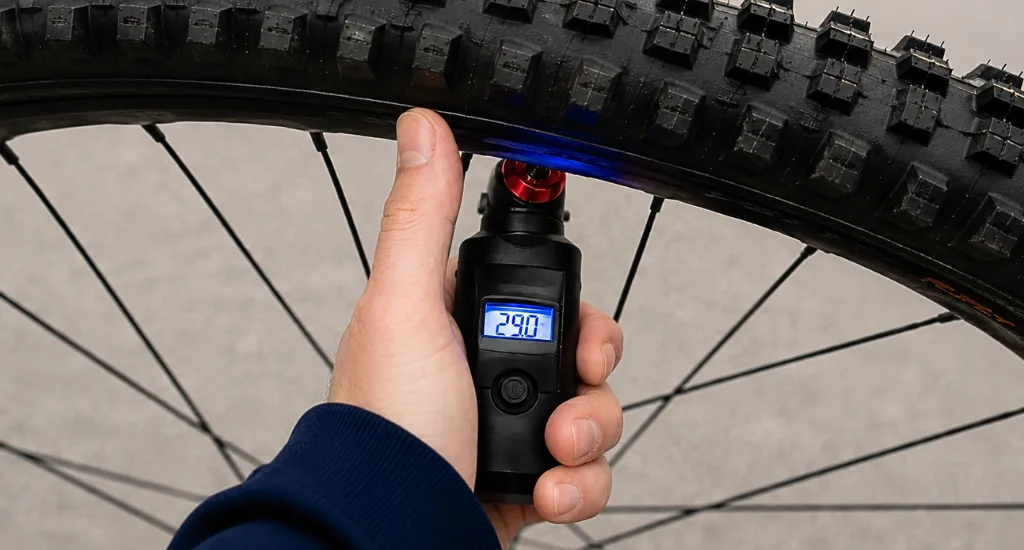
Finding the right tire pressure for a 29-inch mountain bike frustrates plenty of riders, especially beginners. Every trial feels different, and a pressure that works one day feels harsh or unstable the next. There is no single PSI that fits every rider or every ride.
Several factors shape the right number: rider weight, tire width, tubeless or tube setup, terrain, riding style, and wet or dry conditions all play a part. Tire pressure MTB 29 depends on how these pieces combine for your specific setup. As a quick starting point, 20 to 30 PSI works well for most riders, with the rear tire usually running a touch higher than the front.
This guide breaks down each factor step by step. Keep reading to find a starting PSI that matches your weight, tires, and the trails you ride most often.
What Is the Best Tire Pressure for a 29-Inch MTB?
Most 29er riders land somewhere between 20 and 30 PSI, though the exact number shifts based on tire width, terrain, and whether you run tubes or go tubeless. This range gives a solid baseline before fine-tuning.
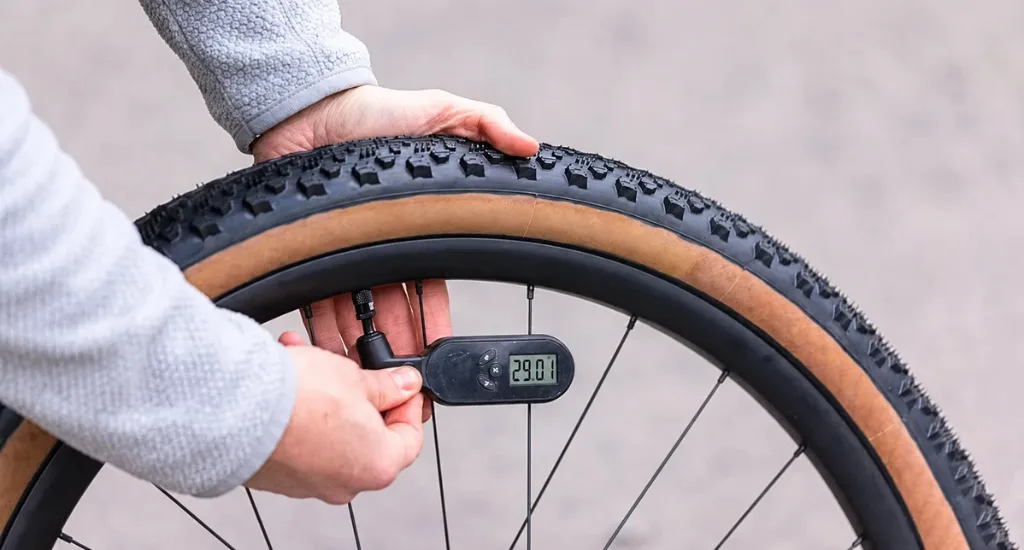
General Tire Pressure Range for 29-Inch Mountain Bikes
Riders commonly start in the 20 to 30 PSI window, though the ideal spot within that range depends on tire size and the type of trail.
29 MTB tire pressure varies more than most riders expect once you factor in rim width and casing stiffness. The rear tire usually needs more air than the front since it carries the bulk of the rider’s weight during climbs and braking.
- Front: around 20 to 28 PSI
- Rear: around 22 to 30 PSI
Treat these as starting points rather than fixed rules. Your final number will depend on the remaining factors covered below.
Recommended Front vs. Rear Tire Pressure
The rear tire supports more of the rider’s weight, so it typically runs firmer than the front. A softer front tire improves steering grip and cornering confidence on loose or technical terrain. Most riders keep a 1 to 3 PSI gap between the two.
- 21 PSI front, 23 PSI rear
- 24 PSI front, 26 PSI rear
- 19 PSI front, 21 PSI rear for lighter riders
Tire Pressure for 29er MTB Based on Tire Width
Wider tires hold more air volume, which generally allows lower pressure without sacrificing support. A 2.0 to 2.2 inch tire needs firmer pressure than a 2.4 to 2.6 inch tire to avoid rim strikes.
29-inch MTB tire pressure should reflect your specific tire width rather than a blanket number pulled from another rider’s setup. Width alone should not decide your final PSI, though, since rider weight and terrain still matter just as much.
Tubeless vs. Inner Tube Tire Pressure
Tubeless setups allow lower pressure since there is no tube to pinch against the rim. Many tubeless riders start around 25 PSI before adjusting up or down based on feel.
Inner tube setups need firmer pressure to avoid pinch flats on rocky or rooty sections. Extremely low tubeless pressure brings its own risks, including rim strikes and tire burping in corners.
How to Choose the Right MTB 29 Tire Pressure
Several variables shape your ideal PSI beyond the general starting range. Rider weight, terrain, weather, and riding style each push the number up or down from that baseline.
MTB Tire Pressure Based on Rider Weight
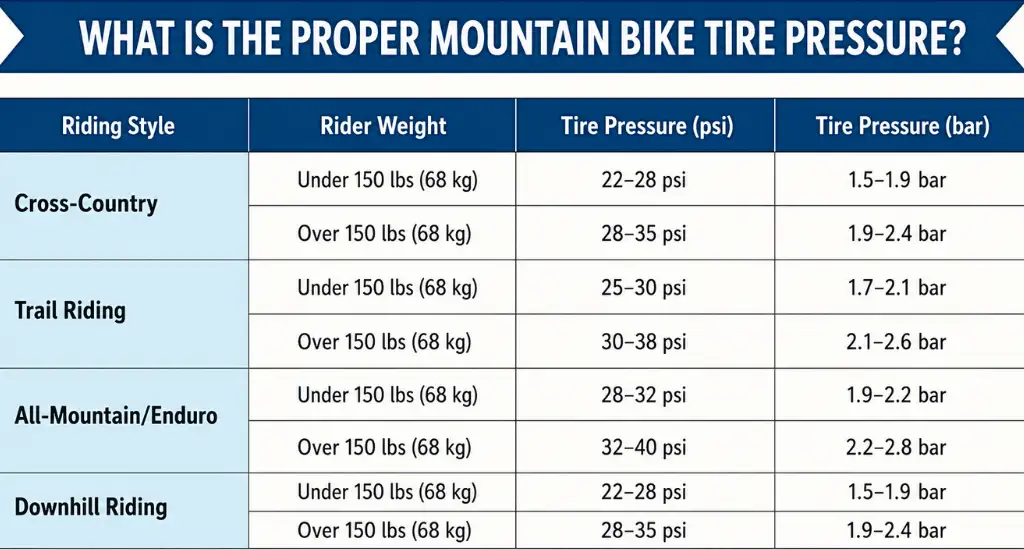
Heavier riders generally need firmer pressure to protect rims and maintain stability at speed. Lighter riders often run softer setups for extra grip without much added risk. Weight affects several things at once:
- Tire stability under load
- Rim protection on hard hits
- Grip through corners
- Rolling resistance on climbs
Start near the middle of your weight-based range and adjust gradually from there.
Tire Pressure Based on Terrain
Smooth roads and hard-packed trails handle firmer pressure well since traction demands stay low. Rocky, rooty, or technical downhill terrain benefits from softer pressure that lets the tire flex and grip uneven surfaces.
Higher pressure suits faster, smoother riding, while lower pressure favors control on rough ground.
Wet vs. Dry Trail Conditions
Wet trails often benefit from slightly lower pressure since softer tires grip slick roots and mud more effectively. Riders should avoid dropping pressure too far, though, since rim strikes become far more likely.
As a loose reference, wet conditions often fall near 14.7 to 22.8 PSI, and dry conditions near 16.4 to 25.4 PSI. These figures vary widely by rider weight and tire setup, so treat them only as a rough starting reference.
Riding Style and Speed
Aggressive riders pushing higher speeds usually need firmer pressure for rim protection and tire stability.
Cross-country riding favors efficiency and slightly higher PSI, while trail, enduro, and downhill riding often benefit from softer setups that absorb impacts. Faster cornering also demands a bit more support to avoid tire squirm.
Use a Tire Pressure Calculator as a Starting Point
Online calculators factor in rider weight, bike weight, tire width, wheel size, tube or tubeless setup, and terrain type all at once. They give a solid starting number, though the true test happens on the trail.
Whether you ride a 26 or 29 inch mountain bike, a calculator narrows the range before you fine-tune by feel.
How to Adjust Tire Pressure on a 29er MTB
Dialing in pressure usually takes a few rides rather than one lucky guess. Small changes, made one at a time, reveal what your tires actually need on your local trails.
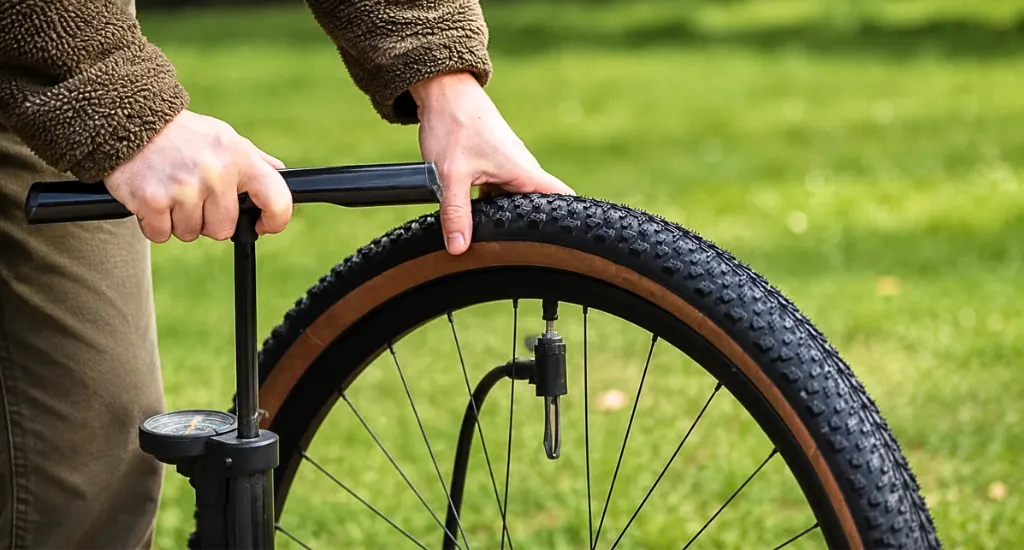
Adjust in 1 to 2 PSI increments rather than large jumps. Pay attention to how the bike feels:
- Harsh ride: lower pressure slightly
- Front wheel lacks grip: soften the front a touch
- Rear feels unstable: raise rear pressure slightly
- Frequent rim strikes: raise pressure overall
- Tire squirms in corners: raise pressure slightly
- Excessive rolling resistance: consider a small increase
Check pressure before every ride using a reliable gauge, digital or analog. Temperature swings and slow air loss both affect readings between rides. Keep a simple log of your preferred PSI for different trails so you are not guessing each time.
Quick Tire Pressure Guide for 29-Inch MTB
The table below offers starting points based on rider weight and setup type. Treat these numbers as a launch pad, not a universal answer, since the recommended tire pressure for 29 mountain bike setups still needs trail testing to confirm.
| Rider/Setup | Front PSI | Rear PSI |
|---|---|---|
| Lightweight rider | 19 to 22 PSI | 21 to 24 PSI |
| Average weight rider | 21 to 25 PSI | 23 to 27 PSI |
| Heavier rider | 24 to 28 PSI | 26 to 32 PSI |
| Tubeless 29er | 20 to 25 PSI | 22 to 27 PSI |
| Technical or rough trails | 19 to 24 PSI | 21 to 26 PSI |
| Smooth or hard-packed trails | 24 to 30 PSI | 26 to 32 PSI |
- Start near the middle of the recommended range
- Keep the rear slightly higher than the front
- Lower pressure improves traction but raises rim strike risk
- Higher pressure improves rolling efficiency but reduces grip
- Check the tire manufacturer’s recommended pressure range
- Adjust based on weight, tire width, and trail conditions
Final Thought
The ideal tire pressure for a 29-inch mountain bike depends on the full setup working together. Rider weight, tire width, terrain, and tube or tubeless choice all shape the final number.
Tire pressure for a 29-inch MTB sits comfortably in the 20 to 30 PSI range for most riders, with the front running 1 to 3 PSI softer than the rear.
Whether you ride a 27.5 or 29 mountain bike, small adjustments based on grip and comfort matter more than chasing an exact number. Start with a reasonable PSI, ride the trail, and adjust in small steps until the bike feels balanced underneath you.
FAQs
What PSI should I run on a 29-inch mountain bike?
Most riders start between 20 and 30 PSI, adjusting based on rider weight, tire width, and whether the setup runs tubeless or tubes.
Is 30 PSI too high for a 29er MTB?
Not necessarily. Heavier riders, narrower tires, or smoother trails often suit 30 PSI without any loss of comfort or control.
Is 20 PSI too low for a 29-inch mountain bike?
It can work well for lighter riders on wider tubeless tires, though it raises the risk of rim strikes and tire instability on rough terrain.
Should the front or rear MTB tire have more pressure?
The rear typically needs slightly more pressure since it carries more of the rider's weight during climbs, braking, and cornering.
What PSI should I use for tubeless 29er tires?
Start around 20 to 25 PSI, then adjust based on rider weight, tire width, and terrain. 29 MTB tire psi for tubeless often runs lower than a tubed setup, unlike a mountain bike or Fixie comparison where tire pressure logic barely overlaps at all.


