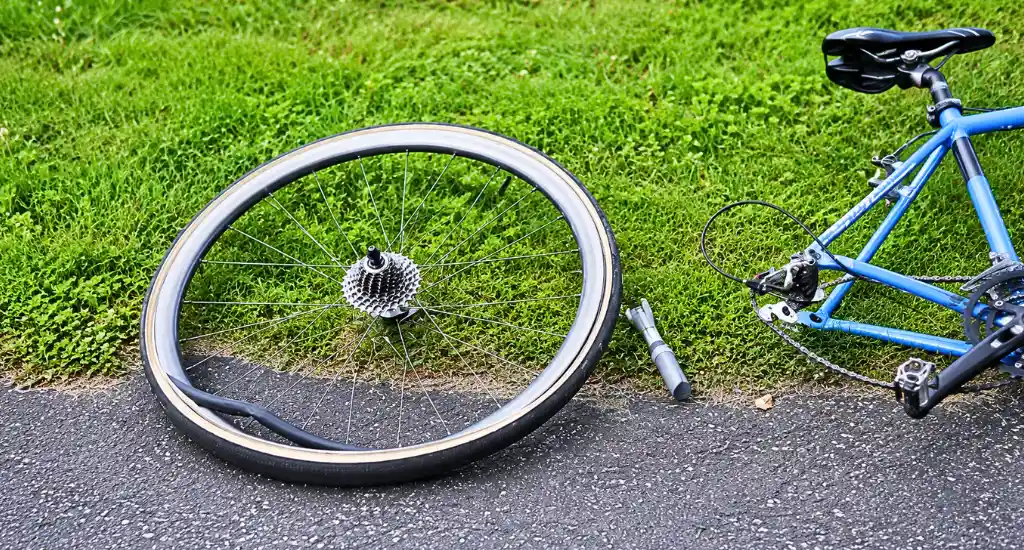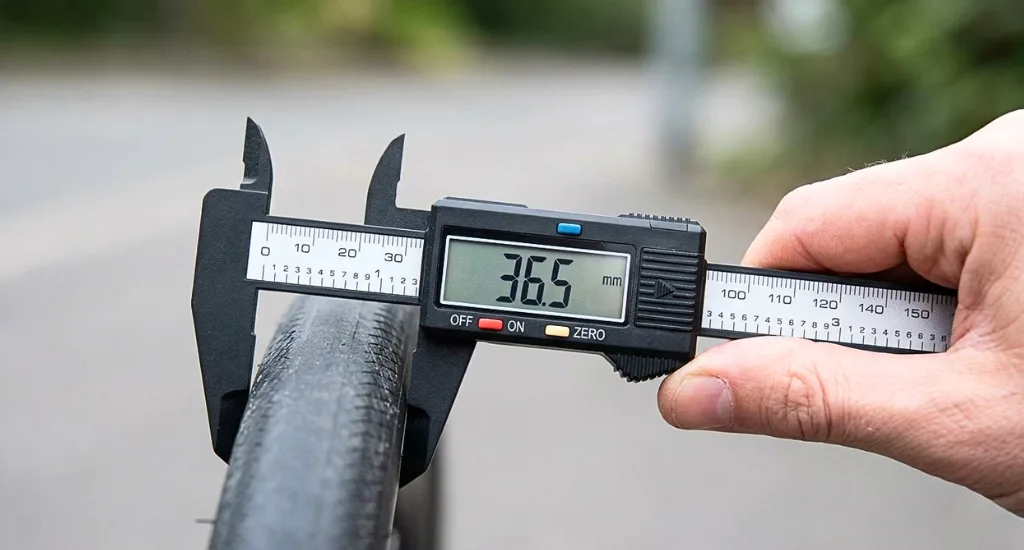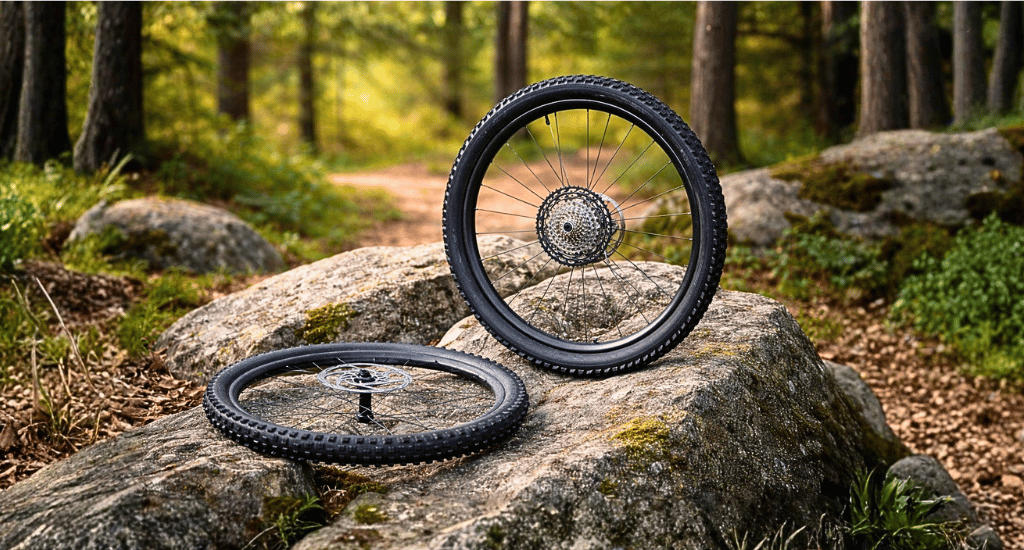
A buckled wheel means the rim moves side to side instead of staying straight while it spins. This wobble often comes from hard hits on rocks, loose spokes, or uneven spoke tension.
You can fix this problem by adjusting spoke tension in small steps to pull the rim back into shape. Simple methods work at home with a spoke tool or even without tools for small bends.
This guide will explain the easy steps, tools, and signs that show when a wheel can be fixed and cannot be fixed.
How to Fix a Buckled Wheel on a Mountain Bike (Step-by-Step)
Fixing a buckled wheel means small spoke adjustments that slowly pull the rim back into shape and restore smooth rotation at home. It can be done with simple tools or careful hand control, so follow each step below carefully.
Step 1: Turn the Bike Upside Down or Use a Stand
Start by placing your bike upside down so the wheels can spin freely. You can also use a repair stand if you have one available at home.
This position gives easy access to the wheel and helps you see any side movement clearly. A freely spinning wheel makes inspection simple and more accurate for beginners.
Step 2: Spin the Wheel to Identify the Buckled Area
You should spin the wheel slowly and watch the gap between the rim and brake pads. If your bike has disc brakes, watch the space between the rim and frame.
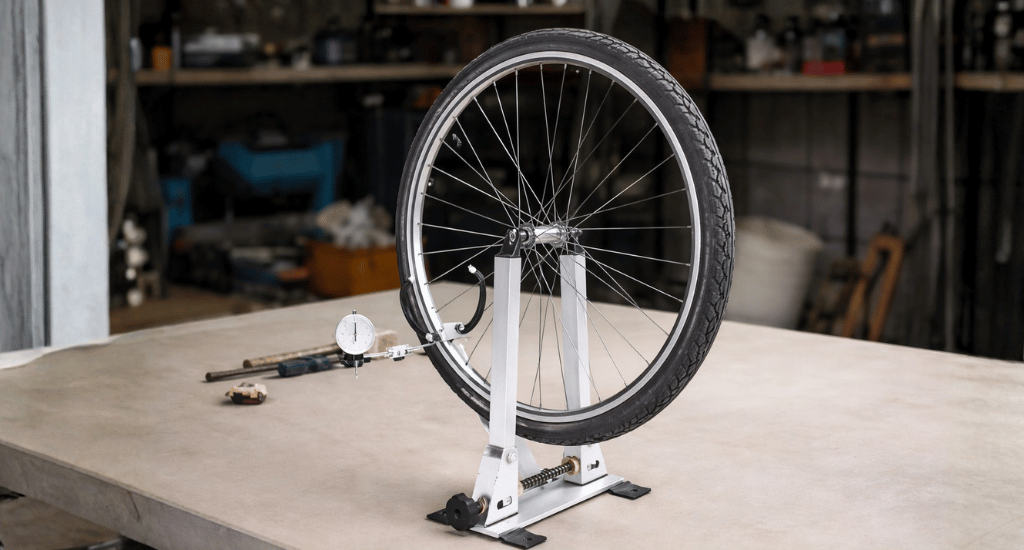
Look for side-to-side movement, which means the rim shifts left and right while spinning. This uneven motion shows the exact area where the wheel is bent.
You should mark the worst section using chalk, tape, or a simple pen mark. It can help you stay focused on the problem area during adjustment.
- A normal wheel usually stays within 122 mm of side movement
- A visible buckle often shows 3-5 mm or more of wobble
Step 3: Understand Spoke Direction Before Adjusting
Each spoke connects the rim to the center hub and pulls the rim toward its side. This pulling force is what helps you fix the wheel shape.
You must adjust the correct side to move the rim back to center. Wrong adjustment can make the problem worse instead of better.
- If the rim moves to the left, tighten spokes on the right side
- If the rim moves to the right, tighten spokes on the left side
This simple rule will help guide every adjustment you make during the repair process.
Step 4: Adjust Spoke Tension Gradually
Use a Spoke Key (Recommended Method)
You can use a spoke key tool to turn the spoke nipples carefully. These are small metal ends where spokes connect to the rim.
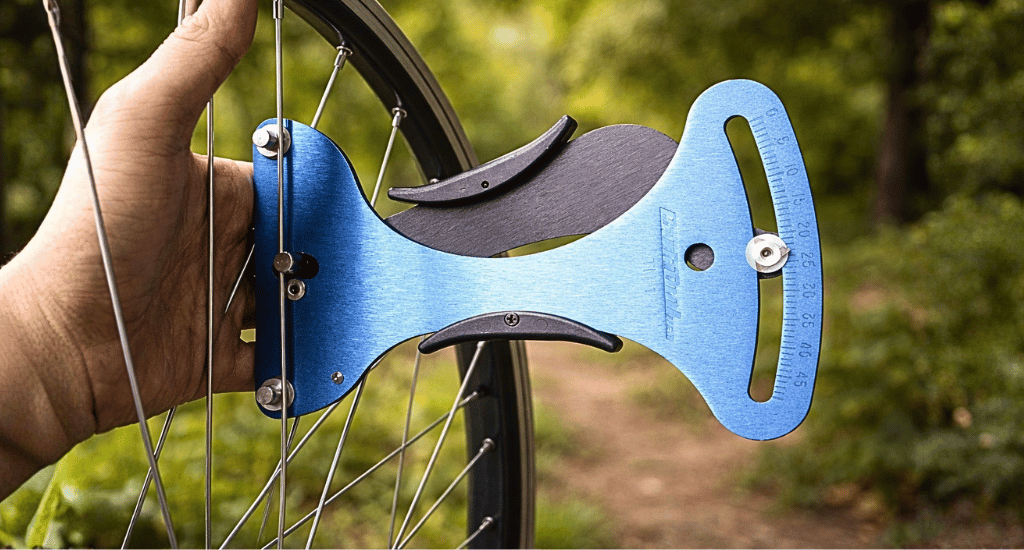
Turn each nipple only a quarter turn at a time to avoid damage. Small adjustments give better control and reduce the risk of over-tightening.
You should focus only on the spokes that connect near the marked buckle area. Tighten slowly and check the effect after each change.
Work in Small Sections
Do not adjust a single spoke only, because that creates uneven tension across the wheel. You should work on two or three nearby spokes around the bent area.
Try to keep the tension balanced so the rim stays stable after correction. Even tension helps the wheel remain strong during rides.
- Adjust 2-3 spokes around the buckle.
- Do not exceed ¼ turn per adjustment cycle.
- Check the wheel after each round of changes.
Step 5: Spin the Wheel Again to Reassess
Spin the wheel again after each adjustment cycle to check the progress. You should watch the same marked area and see if the wobble has reduced.
If the movement is still visible, repeat small adjustments using the same method. Slow and careful changes bring better results than fast corrections.
How to Fix a Buckled Bike Wheel Without Tools
You can fix a small buckle without tools by using careful hand pressure and simple visual checks, but this method only gives a short-term result. So, you should follow the steps below for a quick emergency solution.
Is It Possible? (Honest Answer)
Yes, a basic fix is possible when the wheel has only a small bend. This method works in emergency situations when you do not have access to proper tools.
However, this fix is not very accurate because you cannot control spoke tension precisely. The wheel may look straight, but internal tension can still remain uneven.
This method should not replace proper repair using a spoke key. It only helps you ride safely until you can fix the wheel the correct way.
Quick Emergency Fix Method
You should start by turning your bike upside down so the wheel spins freely. Spin the wheel slowly and watch where the rim moves side to side.
Use your hands to gently push the rim in the opposite direction of the bend. Apply light pressure and avoid sudden force, as the rim can get damaged easily.
You can use the brake pads or frame as a visual guide to check alignment. Keep adjusting slowly until the side movement reduces and the wheel looks more centered.
- This method works only for small bends, around 2-3 mm or less.
- It does not provide a long-term solution for regular riding.
- A proper spoke adjustment is still needed for a permanent fix.
What Causes a Buckled Wheel on a Mountain Bike
A mountain bike wheel bends when force or uneven tension pulls the rim out of shape during rides. It really helps to know the main causes before repair or prevention, which we will explain below.
Hard Impacts on Rough Trails
Riding over rocks, roots, or sharp edges can hit the rim with strong force. A hard landing after a jump can also bend the wheel slightly and create a visible side wobble.
Loose Spokes Over Time
Spokes can lose tension after many rides, especially on rough terrain. When some spokes become loose, they fail to hold the rim evenly, which slowly leads to a buckled wheel shape.
Uneven Spoke Tension
If some spokes are tighter while others stay loose, the rim gets pulled more to one side. This uneven pull creates an imbalance, and over time, the wheel starts to move side to side.
Poor-Quality or Weak Rims
Low-quality rims may not handle strong impacts or heavy use for long periods. These rims can bend more easily under pressure, especially during off-road rides with rough surfaces and repeated shocks.
Front vs Rear Wheel Buckling
Front wheels usually bend because of direct impacts from obstacles on the trail. Rear wheels carry more weight and face drivetrain force, which increases stress and makes them more likely to buckle over time.
Read this blog to know which wheel size 26 vs 29 mountain bike you should choose for comfort.
How to Prevent Wheel Buckling
Wheel buckling can often be avoided with simple care, smart riding habits, and better parts, so a few small actions can keep your bike stable, reduce damage risk, and extend wheel life over time.
Maintain Proper Spoke Tension
Spokes must stay tight and even to hold the rim in proper shape during rides. You should check spoke tension every 1-2 months to keep the balance and reduce the chance of side movement or bending.
Check Wheel Alignment Regularly
Spin your wheel and watch for small side movement before it becomes serious. Early checks on wheel alignment help you catch minor bends and fix them before they turn into larger and harder problems.
Ride Smart on Rough Terrain
Careful riding on rough trails helps protect your wheels from sudden impact damage. You should slow down before rocks or drops, and avoid hard landings that put extra force on the rim.
Avoid Overloading the Bike
Too much weight on the bike increases pressure on the wheels during rides. Heavy loads can stress the rim and spokes, which raises the risk of bending, especially on uneven ground.
Upgrade to Stronger Rims
Stronger rims handle rough riding better and resist bending under pressure from impacts. If you ride aggressive trails often, a durable rim upgrade can reduce wheel damage and improve long-term performance.
Final Thought
Fixing a buckled wheel needs patience and small spoke adjustments to bring the rim back into line. Most minor wobbles can be corrected at home with simple steps and careful checks.
Severe bends often require rim replacement when the damage goes beyond safe limits. Regular spoke checks and smooth riding habits can reduce stress on the wheel and help prevent future buckling.
FAQs
Can a buckled bicycle wheel be straightened?
Yes, a buckled bicycle wheel can be straightened if the bend stays small or moderate, usually within about 5 mm. Larger bends often damage the rim structure, so repair becomes unreliable, and replacement is the safer option.
How to straighten a bent front bike wheel?
Use the same spoke adjustment method to straighten a bent front bike wheel. Front wheels are easier to fix because they do not carry drivetrain parts. Also, it allows better access and simpler control during spoke tension adjustment.
Can you unbuckle a mountain bike wheel completely?
Yes, you can fully unbuckle a mountain bike wheel if the rim stays strong and not over-bent. When the metal shape remains intact, proper spoke adjustment can restore alignment and bring the wheel back to near-perfect condition.