
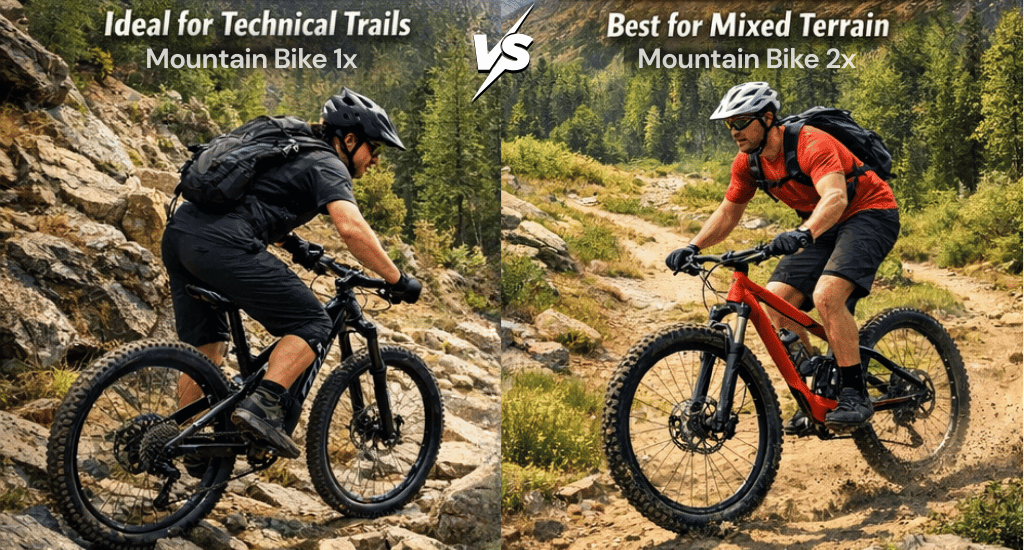
One small part of a bike can change how a ride feels. In mountain bike 1x vs 2x, the focus stays on the drivetrain, the system that moves power from the pedals to the wheel.
The debate sounds simple, but matters. 1x or 2x refers to the number of front chainrings at the pedals. One ring or two rings can change control, speed, and comfort on trails.
This guide breaks down the 1x and 2x difference, with clear pros/cons for 1X vs 2X. Read on to see which setup fits your terrain, your rides, and your goals.
What Is a 1x Drivetrain?
A 1x drivetrain uses one chainring at the front of the bike. Power moves from pedals to the rear wheel through one shifter, one chain, and a wide-range cassette system.
This setup removes the front derailleur, which is the part that shifts front gears. Fewer parts make the bike easier to use on rough trails and sudden climbs without extra hand movement.
Here are the core features of
- Single front chainring keeps gear change simple and reduces rider confusion.
- No front derailleur means fewer parts that need setup work.
- Wide rear cassette helps handle climbs and fast flat sections.
- Better chain control on bumps and rocky trail surfaces.
What Is a 2x Drivetrain?
A 2x drivetrain uses two chainrings at the front of the bike. The rider shifts between these rings to control speed and power across climbs, flat paths, and downhill trail sections.
This system adds a front derailleur, which moves the chain between front rings. More gears help keep leg movement steady during long rides on mixed surfaces and changing terrain.
Here are the core features of
- Two front chainrings offer more gear options for different riding needs.
- The front derailleur shifts the chain between rings for better speed control.
- Smaller gear gaps help maintain a steady pedal rhythm.
- Works well for long rides across mixed terrain surfaces.
Mountain Bike 1x vs 2x Drivetrain: Detailed Comparison
This section compares how 1x and 2x drivetrains feel in real riding. Each point explains use, gears, weight, reliability, and care needs in a clear and practical way.
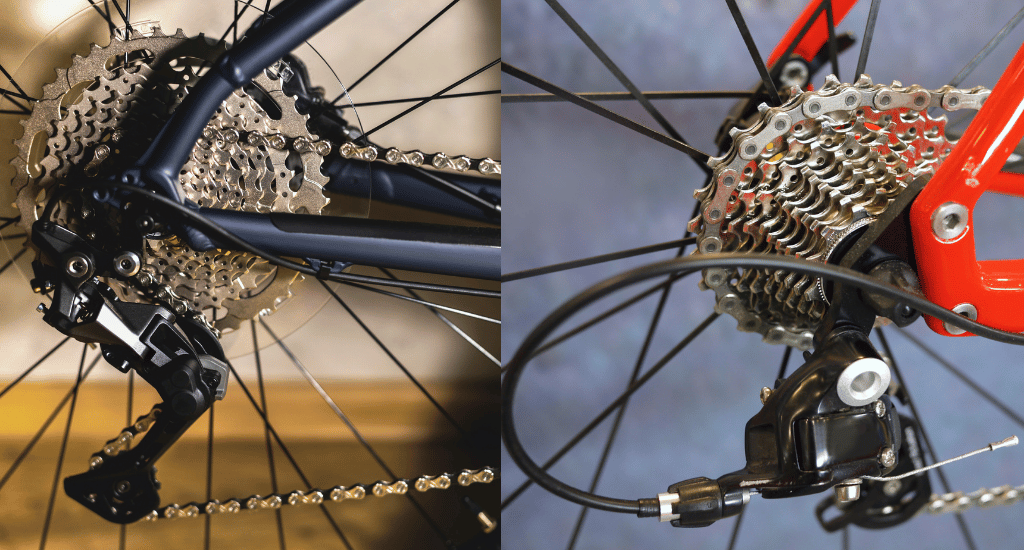
Purpose & Common Use Cases
A drivetrain choice depends on ride type and terrain. Some riders prefer simple trail rides, while others ride long distances on mixed surfaces. Each setup suits a different riding purpose.
|
Riding Type |
1x Drivetrain |
2x Drivetrain |
| Trail riding | Very common and popular | Less common |
| Long rides | Good but limited range | Very suitable |
| Mixed terrain | Works well | Works very well |
| Beginner use | Easy to learn | Needs more practice |
Gear Range Differences (Climbing vs Speed)
A 2x drivetrain gives a wider gear range through two front chainrings. One ring supports steep climbs, while the other helps high-speed riding. This range helps riders face hills and flat roads with ease.
A 1x drivetrain uses one front ring with many rear gears. Steep climbs feel harder for some riders, yet modern wide cassettes help a lot. On fast flat paths, speed stays good, but top pace feels limited.
Gear Steps and Cadence Feel
Gear steps mean how big the change feels between gears. On a 1x system, these steps feel larger. Pedal speed can change suddenly, which some riders notice on smooth roads.
A 2x drivetrain has smaller steps between gears. Pedal motion feels smooth and steady on long rides. On rough trails, larger steps matter less since focus stays on balance, grip, and line choice.
Weight and Bike Simplicity
A 1x setup removes the front derailleur, extra chainring, and second shifter. Fewer parts make the bike lighter. Less weight helps the bike feel quick and easy during climbs and sharp turns.
A lighter bike feels easier to control on trails. Steering reacts faster, and effort feels lower. A 2x bike carries more parts, which adds weight and makes the frame area feel crowded.
Reliability and Chain Retention
A narrow-wide chainring has teeth that grip the chain firmly. This design keeps the chain stable on bumps. It helps the 1x drivetrain stay secure on rocky and root-filled trails.
A clutch rear derailleur adds tension to the chain. This tension reduces chain slap and drops. With no front derailleur, the 1x setup drops chains less often on rough ground.
Maintenance and Setup Complexity
A 1x drivetrain needs less care. Cleaning feels simple since fewer parts collect dirt. Gear setup also feels easier because there is only one shifter and no front adjustment work.
A 2x drivetrain needs more attention. Front derailleur alignment takes time and care. Over long use, extra parts mean more tuning, cleaning, and a chance of small mechanical issues.
Pros and Cons of 1x vs 2x Mountain Bike Drivetrains
Both drivetrain types bring clear strengths and limits. The right choice depends on ride length, terrain type, and comfort needs. This section shows the benefits and downsides in a simple, honest way.
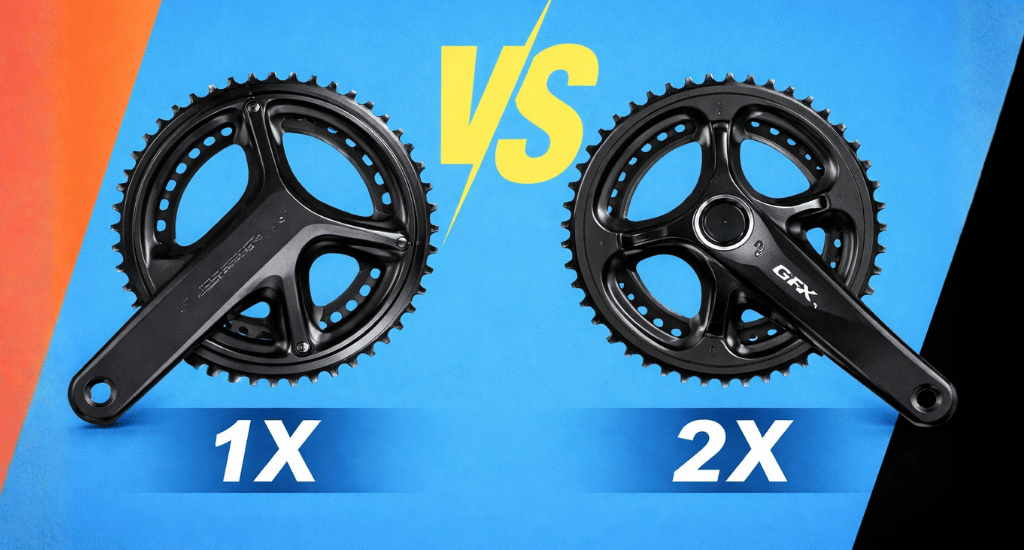
1x Drivetrain Pros
The 1x drivetrain focuses on ease and control. It suits riders who want fewer controls, lighter bikes, and less worry during trail rides on rough ground.
- One shifter makes gear change simple and stress-free.
- Fewer parts reduce total bike weight.
- A strong chain grip helps on rocky and bumpy trails.
- Cleaning and care take less time.
- Extra space helps with mud and frame clearance.
1x Drivetrain Cons
A 1x setup trades range for simplicity. Some limits appear on smooth roads and long climbs where fine gear choice helps rider comfort and steady pedal speed.
- Gear gaps feel larger during speed changes.
- Overall gear range feels smaller on long rides.
- High-speed road sections feel less comfortable.
2x Drivetrain Pros
The 2x drivetrain offers control and range. It suits riders who ride long hours and face many terrain types in a single ride.
- Two chainrings create a wide gear range.
- Low gears help with long and steep climbs.
- Small gear steps keep pedal speed steady.
2x Drivetrain Cons
Extra parts add weight and care needs. Riders must handle more setup work and watch for small issues during long-term use.
- Extra parts add more weight to the bike.
- The front derailleur needs careful cleaning and tuning.
- More parts increase the chance of mechanical trouble.
Which One Should You Choose? (Riding Style Guide)
The right drivetrain depends on how and where the bike is used. Riding surface, distance, and comfort needs shape this choice more than trends or popular opinions.
Choose 1x If You…
A 1x drivetrain suits riders who spend most of their time on rough trails. Simple gear control helps focus on balance and direction. This setup fits enduro, downhill, and trail bikes that face rocks, roots, and sharp turns.
Choose 2x If You…
A 2x drivetrain fits riders who travel across many surfaces. Long rides feel easier with smoother pedal motion. This setup works well for road, gravel, XC, and marathon routes with climbs and flat sections.
Terrain-Based Comparison
On technical trails, 1x feels direct and controlled. Long climbs favor 2x due to a wider range. Flat fast paths feel smoother on 2x. Mixed surfaces often suit 2x for steady speed and comfort.
Conclusion
One drivetrain feels clean and light, the other feels wide and steady. Mountain bike 1x vs 2x comes down to simplicity versus range. One uses fewer parts and feels direct on trails. The other offers more gear choices for long and mixed rides.
Trends change fast, but riding style stays personal. Match drivetrain choice with terrain, distance, and comfort needs. Mountain bike 1x vs 2x has no single winner. The right setup builds confidence, control, and joy on every ride.


