
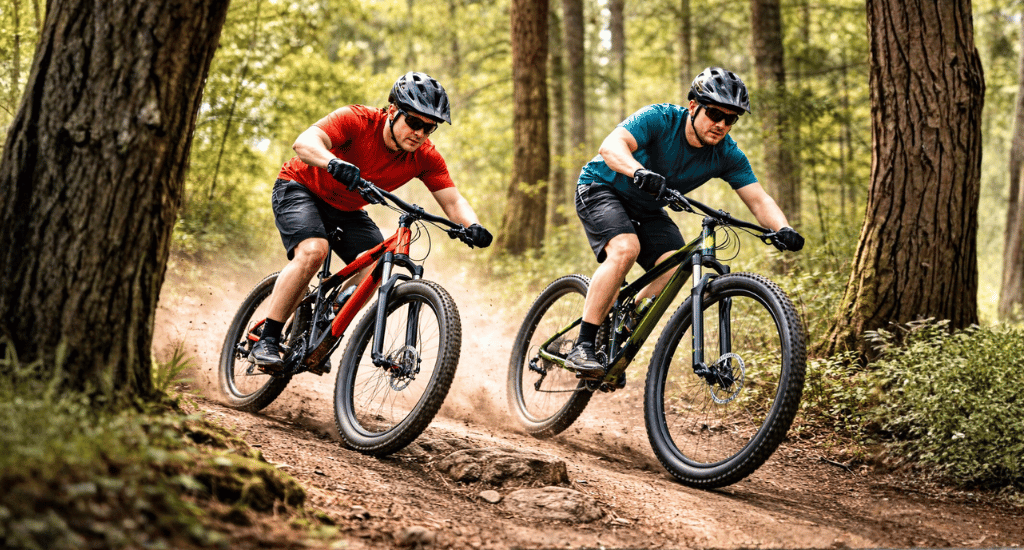
A mountain bike wheel size changes how a trail feels under your tires. Riders often compare 26 vs 29 mountain bike wheels because each size brings a different ride feel. Speed, balance, and control often change with wheel diameter.
A 26-inch bike reacts fast and feels lively on tight trails with sharp turns. A 29-inch bike rolls across rocks and roots with smoother motion and a stronger grip. Tests show about 2.4% faster times, nearly 7.5 seconds quicker, in some controlled comparisons.
This guide explains how each wheel size affects speed, stability, handling, terrain comfort, and rider height fit. Read this article on 26 vs 29 mountain bike wheels to decide which mountain bike wheel size fits your trail style and riding needs.
26 vs 29 Mountain Bike – Key Differences Explained
Wheel size strongly shapes how a mountain bike feels on the trail. A 26-inch and a 29-inch bike react differently across rocks, roots, and turns. Well, these factors help riders decide which wheel size matches their riding style and trail conditions.
Wheel Size and Basic Design Difference
Wheel size refers to the diameter of the bike wheel with the tire installed. A 26-inch mountain bike uses a rim with about 559 millimeters in diameter. A 29-inch mountain bike uses a larger rim with a diameter of around 622 millimeters.
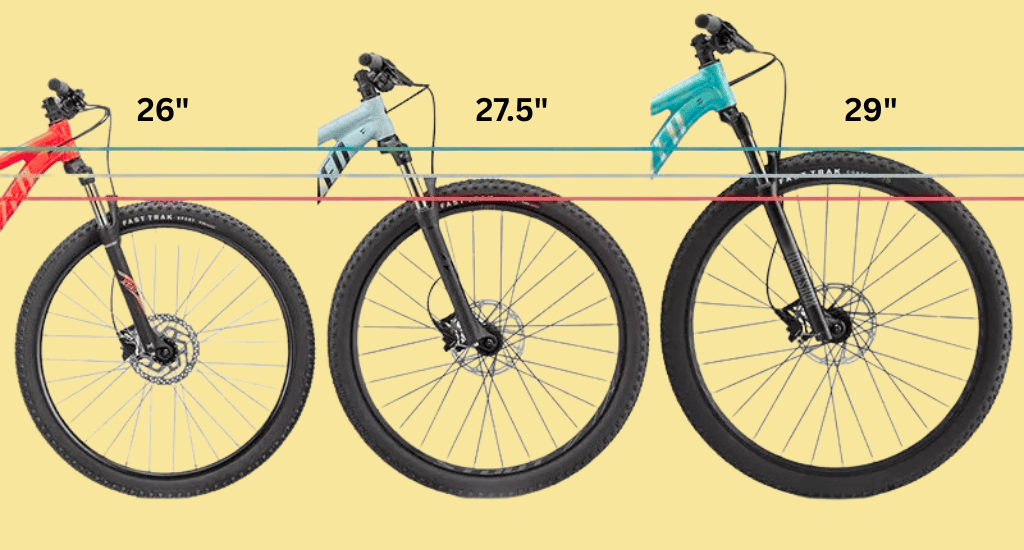
This change may appear small, yet it affects the bike frame and overall design. A larger wheel needs more space inside the frame, which increases the bike’s length slightly. The distance between the front and rear wheels, called the wheelbase, usually becomes longer.
A longer wheelbase often improves balance on rough trails. Many 29-inch bikes also use a taller front section to fit the bigger wheel properly.
Main design differences include:
- 26-inch rim diameter: about 559 mm
- 29-inch rim diameter: about 622 mm
- Larger wheels increase bike length and wheelbase
- 29-inch bikes often use longer frames and higher front sections
Speed and Rolling Efficiency
Wheel size also affects how easily a bike moves across rough ground. A larger wheel climbs over rocks and roots with less effort. The tire meets obstacles at a smoother angle, which helps the bike roll forward easily.
Many riders explain this advantage in a simple way. The nice thing about 29″ tyres is that they roll easier than 26″ on rough terrain.
Rolling resistance also plays an important role in speed. This term describes how much energy a tire loses while moving across the ground. Larger wheels usually waste less energy during this motion.
Many comparisons confirm this point. Reports often state that 29ers do have lower rolling resistance than their 26-inch equivalent.
Some controlled trial tests also show a small speed difference. Riders on 29-inch bikes finished about 7.5 seconds faster, which equals nearly a 2.4 percent improvement.
Stability and Control on Rough Trails
Trail stability helps riders stay balanced during rough or fast sections. The larger wheel diameter of a 29-inch bike supports smoother movement across uneven terrain.
The bike often tracks straight across rocks, roots, and loose soil. Riders usually feel more confident during downhill sections and fast trail segments.
This calm ride feels good for riders who prefer long-distance routes.
Important stability benefits include:
- Strong balance on rocky terrain
- More control during high-speed sections
- Smooth movement across roots and trail bumps
These qualities make 29-inch bikes popular for cross-country trails and long rides.
Handling and Agility
Handling describes how quickly a bike reacts during turns and direction changes. Smaller wheels usually feel faster and more responsive in tight trail sections.
The compact wheel size allows quick movement when riders face sharp corners or narrow paths. Riders often feel more control during technical trail sections.
Many riders describe the ride as feeling clear. 26-inch wheels will be more maneuverable and playful during jumps because the bike reacts faster.
Acceleration and Momentum
Acceleration explains how quickly a bike reaches speed after pedaling begins. Smaller wheels often spin up faster because they carry less rotating mass.
This allows riders to gain speed quickly after corners or short climbs.
Larger wheels require slightly more effort during the first pedal strokes. Once the bike reaches speed, it holds that pace longer.
Many riders explain this effect with a simple comparison. A 29er is effectively a 12% higher gear, which means the bike travels farther with each pedal turn.
Traction and Climbing Performance
Traction describes how well a tire grips the ground. A larger wheel usually touches the trail across a wider area.
This type of wider contact patch improves grip on loose dirt, gravel, or wet ground. A strong grip can help riders climb steep hills with better control.
Bike Weight and Strength
Wheel size also affects bike weight and structure. A 26-inch wheel uses shorter spokes and a smaller rim circle. This design often creates a lighter and stiffer wheel.
A 29-inch wheel uses longer spokes and a larger rim. This structure can add a small amount of weight and slight flex during aggressive riding.
Both wheel sizes remain durable for normal trail use, yet their ride feel differs because of size and structure.
Are 26-Inch Mountain Bikes Still Relevant Today?
Mountain bike designs have changed a lot during the past decade. Many brands now focus on larger wheels for modern trail performance. Even so, the classic 26-inch mountain bike still serves several riders and riding styles today.
Declining Market Availability
Most modern mountain bikes now use 27.5-inch or 29-inch wheels. Bike companies prefer these sizes because they offer smoother rides and stronger stability on rough trails. Because of this shift, fewer brands release new 26-inch mountain bikes today.
The change also affects replacement parts and upgrades. Many bike stores now stock more tires, rims, and components for larger wheels. Riders with older 26-inch bikes may notice fewer options when searching for new parts.
Common market trends include:
- Most new bikes use 27.5-inch or 29-inch wheels
- Fewer brands produce new 26-inch models
- Replacement parts appear less often in stores
Situations Where 26-Inch Bikes Still Make Sense
Even with these changes, 26-inch bikes still work well for several riders.
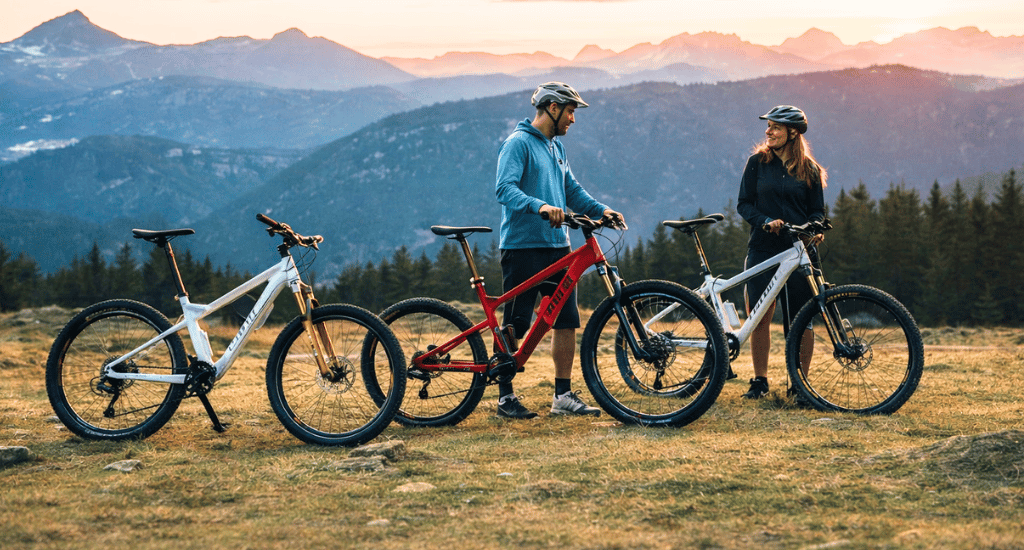
They remain popular for:
- Dirt jump trails that require quick control
- Budget mountain bikes with lower prices
- Youth riders who need smaller frames
- Riders who prefer agile and responsive handling
The 26-inch mountain bike may be less common today, yet it still offers a fun and capable ride for many trail styles.
How to Choose Between a 26 or 29 Mountain Bike
Wheel size affects comfort, control, and overall trail performance. The right choice depends on your riding style, trail conditions, and body size. Understanding these factors helps you select a mountain bike that feels natural and easy to control.
Choose a 29-Inch Mountain Bike
A 29-inch mountain bike suits riders who enjoy smooth speed and stable trail movement. Larger wheels roll easily across rough ground and help riders maintain control on long rides.
- Cross-Country Riding: Large wheels roll smoothly across long trails and maintain speed during extended off-road rides.
- Better Stability and Traction: Bigger tires create stronger ground contact, which improves balance and grip on uneven terrain.
- Rocky or Root-Filled Trails: Large wheels climb over roots and rocks more easily, which reduces sudden bumps.
- Taller Riders: Riders around 5’6″ or taller usually feel comfortable with the larger frame proportions.
Choose a 26-Inch Mountain Bike
A 26-inch mountain bike works well for riders who want fast reactions and playful control. Smaller wheels respond quickly when the trail becomes narrow, steep, or highly technical.
- Tight Technical Trails: Smaller wheels allow quick turns and precise control on narrow, twisty singletrack trails.
- Quick Acceleration and Agility: Lightweight wheels gain speed quickly after corners or short climbs.
- Jump Lines and Technical Downhill: Compact wheels respond quickly during jumps, drops, and fast downhill trail sections.
- Shorter Riders: Riders under 5’5″ often feel more comfortable on smaller frames with 26-inch wheels.
End Note
A 29-inch mountain bike offers strong speed, stable handling, and better traction on rough trails. A 26-inch bike delivers quicker acceleration, agile movement, and easier control on tight or technical terrain sections.
The best choice depends on the trail type, riding style, and rider height. Riders who want speed and smooth trail travel often choose 29ers. Riders who prefer sharp control and playful handling may still enjoy 26-inch wheels.


