
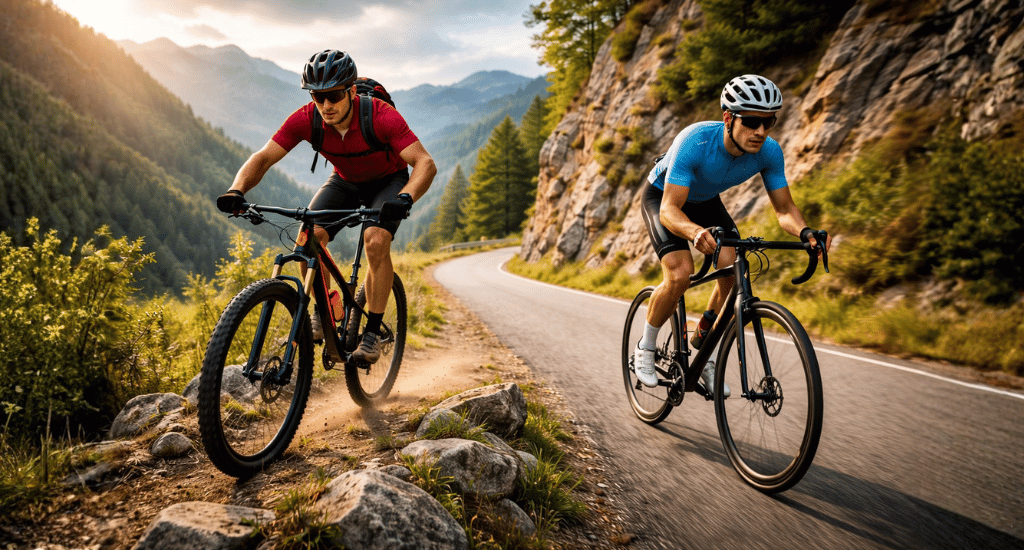
Bikes are more than a way to move; they can shape how you explore the world. In the USA, cycling has grown into a popular activity for fun, fitness, and commuting. People now face a choice: mountain bike vs road bike, each built for different paths and experiences.
Mountain bikes handle rough trails, dirt paths, and hills with strong frames and wide tires. Road bikes glide on smooth streets, letting you ride faster and farther. Gravel bikes mix features from both, offering flexibility for mixed surfaces.
Deciding on the right bike depends on your terrain, performance needs, and lifestyle. This blog breaks down each type so you can pick what fits you best. Keep reading to discover the differences and choose wisely.
What Is A Mountain Bike?
A mountain bike is built for rough and uneven trails. Its frame is strong, tires are wide, and the design helps riders stay stable on dirt, rocks, and hills.
This bike works well for outdoor adventures, off-road paths, and hilly areas. Riders can handle bumps and obstacles without losing control, making it perfect for trail exploration and casual mountain rides
Here are the core features of a mountain bike:
- Thick, knobby tires for better grip on rough trails.
- Strong frame to handle shocks and heavy use.
- Wide handlebars for stable control and balance.
- Suspension system to absorb bumps and rough terrain.
- Multiple gears for climbing hills and varied trails.
What Is A Road Bike?
A road bike is made for smooth streets and paved paths. Its frame is light, its tires are thin, and it allows riders to travel faster with less effort over long distances.
This bike works well for city rides, fitness, and long road trips. Riders can enjoy speed and efficiency, making it perfect for commuting, group rides, or casual weekend cycling.
Here are the core features of a road bike:
- Thin, smooth tires for faster rides on pavement.
- Lightweight frame for easy handling and speed.
- Drop handlebars for multiple hand positions and comfort.
- Narrow seat for efficient pedaling over long rides.
- Multiple gears to handle hills and flat roads.
Core Differences Between Mountain Bikes and Road Bikes
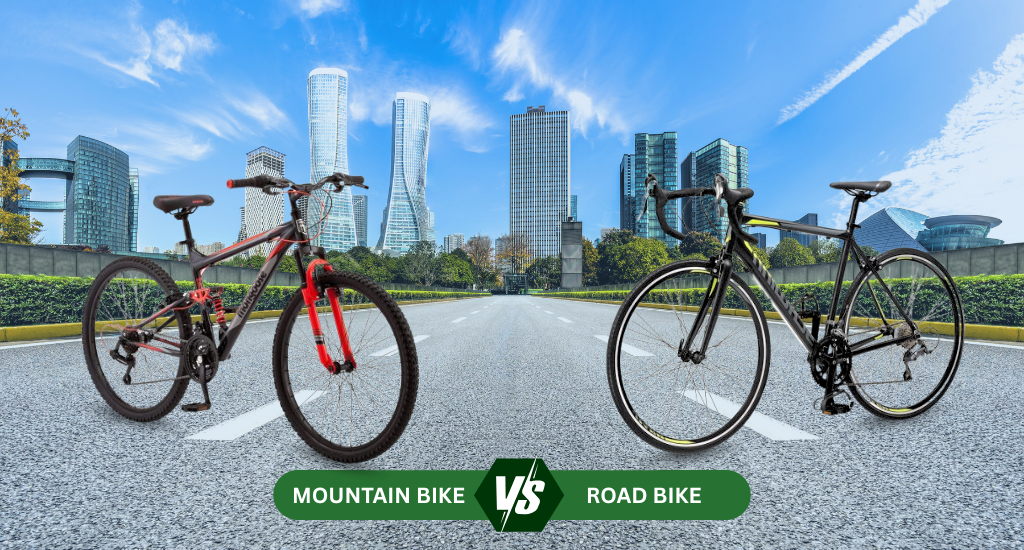
Mountain bikes and road bikes are built for very different experiences. One is made for rough trails and adventure, while the other focuses on speed and smooth rides. Knowing the differences can save time and frustration when choosing a bike.
Terrain
Mountain bikes shine on rough trails, dirt paths, rocky areas, roots, and mud. Their design helps riders stay balanced while climbing hills or descending steep tracks. Off-road obstacles feel manageable thanks to strong frames and wide tires.
Road bikes are designed for smooth pavement, city streets, and bike paths. They glide efficiently and maintain speed with less effort. However, uneven surfaces, gravel, or mud can make riding difficult and uncomfortable.
Frame & Weight
Mountain bike frames are heavier and built to withstand shocks, bumps, and hard landings. The weight adds stability, which is essential for maintaining control on rough or steep trails.
Road bike frames are lightweight and aerodynamic. The rigid construction improves speed and allows efficient pedaling over long distances. Lightweight frames make climbing small hills easier but are less forgiving off-road.
Tires
MTB tires are wide, knobby, and run at low pressure (15-35 PSI). This provides a strong grip on dirt, mud, and rocks, preventing slipping. Tires also help absorb trail vibrations for comfort.
Road bike tires are narrow, slick, and run at high pressure (50-100 PSI). They reduce rolling resistance, which allows riders to maintain high speed. Gravel or hybrid bikes use semi-slick tires for mixed surfaces.
Suspension
Mountain bikes often have front suspension (hardtail) or full suspension (front + rear, 100-200mm travel). Suspension softens bumps and protects the rider on rough trails.
Road bikes have rigid frames with no suspension. Comfort comes from smooth roads and proper tire pressure. Suspension is rarely needed because streets are mostly flat and even.
Handlebars & Riding Position
Mountain bikes use flat handlebars that encourage an upright, relaxed posture. This helps with stability, visibility, and control on tricky trails. Riders can react quickly to obstacles.
Road bikes feature drop handlebars with a forward-leaning posture. This aerodynamic stance reduces wind resistance and allows faster rides. Riders may feel strain at first but gain efficiency over long distances.
Gearing & Brakes
Mountain bikes have lower gears to climb hills easily and handle steep trails. A wide rear cassette gives flexibility, and disc brakes provide strong stopping power on slippery or rough terrain.
Road bikes use higher gears for speed on flat roads. Most bikes have 2x or 1x gear setups. Brakes can be rim or disc type, giving smooth and controlled stopping. Efficient gearing supports fast rides over long distances.
Speed & Efficiency
Mountain bikes move more slowly on pavement because of heavy tires and frame design. More effort is needed per mile, but stability and safety are the focus.
Road bikes are optimized for speed. Their thin tires, light frame, and aerodynamic design reduce rolling resistance. Riders cover longer distances faster and with less fatigue compared to MTBs.
Frame Geometry and Riding Position
MTB frames have short reach, upright posture, a slacker head tube angle, and a low center of gravity. This makes them stable on rough terrain and forgiving for new riders.
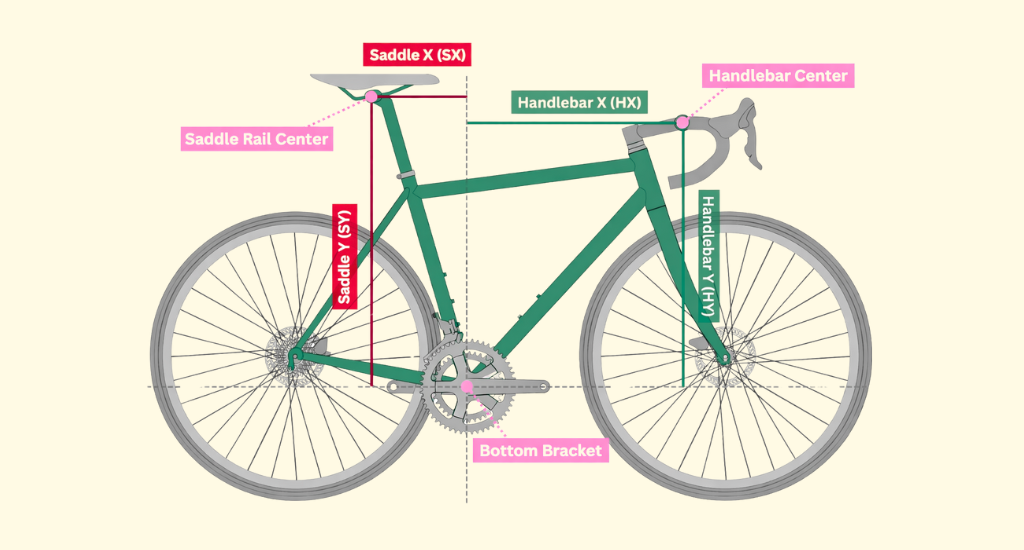
Road bikes have a long reach and a forward-leaning posture. Closed hip angles increase efficiency and speed. Endurance road bikes relax the geometry slightly for comfort but remain aerodynamic. Posture impacts fatigue, handling, and comfort.
User Experience and Comfort
Mountain bikes are beginner-friendly and forgiving on rough terrain. They provide fun and confidence for exploring trails, hills, and forests. Off-road riding is safer and less tiring.
Road bikes are efficient for long rides but require proper fitting. Poor posture can strain the neck, shoulders, and back. Road bikes perform poorly off-road. Mountain bikes can ride on roads, but slower than road bikes.
Advantages and Limitations: Mountain Bikes & Road Bikes
Every bike type has strong points and weak points. Knowing advantages and limitations helps riders match a bike to their style, terrain, and goals for a better riding experience.
Mountain Bike
Mountain bikes are built for rough trails and adventurous rides. They give stability, control, and fun on multiple surfaces, but may feel slower on smooth roads.
Pros of Mountain Bikes:
- Versatile on trails, dirt, rocks, and mud.
- Safe and stable on rough paths.
- Strong control over obstacles.
- Fun experience on off-road trails.
- Handles hills, roots, and uneven surfaces.
Cons of Mountain Bikes:
- Heavier, harder to pedal on roads
- Less efficient for smooth streets
- Slower speed on paved surfaces
- Can feel bulky for commuting
Road Bike
Road bikes are designed for speed, efficiency, and long-distance riding. They excel on smooth roads but are less suited for off-road paths or rough terrain.
Pros of Road Bikes:
- Fast and smooth on pavement.
- Efficient for long rides and distances.
- Ideal for fitness and endurance.
- Great for city commuting.
- Lightweight and aerodynamic.
Cons of Road Bikes:
- Not durable on rough trails.
- Less versatile across surfaces.
- Needs smooth roads for comfort.
- It can be uncomfortable off-road.
Hybrid and Alternative Options for Mountain Bikes & Road Bikes
Some riders need a bike that blends features from both mountain and road bikes. Gravel bikes are a popular choice, offering smooth riding on roads while handling light trails and dirt paths.
Mountain bikes with slick tires give riders the stability of an MTB but perform better on pavement, making them flexible for mixed use. Cyclocross and endurance bikes are designed for varied terrains, combining durability with speed.
They allow riders to tackle technical paths and long rides comfortably. These hybrid options give versatility for adventure and commuting without limiting performance to one type of terrain.
Conclusion
Choosing between a mountain bike vs road bike comes down to where and how you ride. Mountain bikes excel on rough trails, while road bikes offer speed and efficiency on smooth streets. Gravel and hybrid bikes provide flexibility for mixed surfaces.
Consider your terrain, fitness goals, riding style, and experience before deciding. The right bike makes riding safer, more enjoyable, and suited to your lifestyle. Explore your options and ride with confidence wherever you go.


