
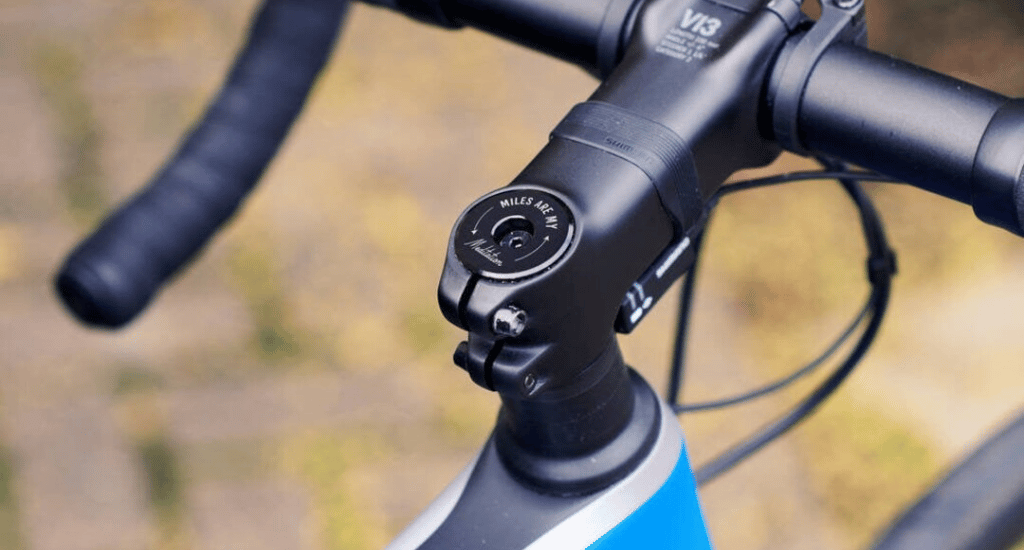
The 1 vs 1 1/8 headset question comes down to steerer tube diameter. One inch measures 25.4mm. One and one-eighth inch measures 28.6mm. That 3.2mm difference affects fork compatibility, stem options, and steering stiffness.
The 1 1/8 inch headset is the modern standard on most bicycles made after the mid-1990s. The 1-inch headset appears on vintage bikes, some steel frames, and track bikes.
This guide covers the key differences, compatibility rules, conversion options, and instructions for measuring your headset. You will know exactly which size you have and which you need.
What Is a Bicycle Headset and What Does It Do?
A bicycle headset is the bearing assembly that allows your fork to rotate inside the frame’s head tube. It connects your handlebars to your front wheel and enables steering.
The headset consists of upper and lower bearing cups pressed into the head tube, bearings that allow rotation, and a crown race that sits on the fork crown. The steerer tube passes through the center of these bearings.
Headset “size” refers to the diameter of the fork steerer tube it accommodates. This is not the head tube outer diameter. A 1-inch headset fits a 25.4mm steerer. A 1 1/8 inch headset fits a 28.6mm steerer.
This distinction matters because the steerer tube determines which forks, stems, and headsets fit your frame.
What Is the Difference Between a 1 Inch and a 1 1/8 Inch Headset?
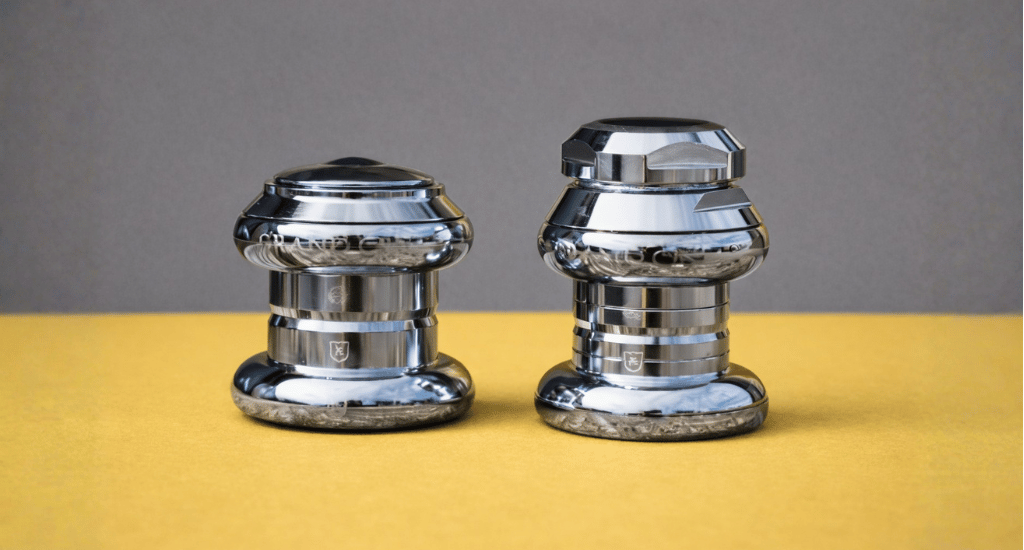
Five key differences separate 1-inch and 1 1/8 inch headsets.
Steerer Tube Diameter
The 1-inch steerer measures 25.4mm. The 1 1/8 inch steerer measures 28.6mm. This 3.2mm difference determines which forks, stems, and headsets fit your bike.
Stiffness and Strength
The 1 1/8 inch headset is significantly stronger and stiffer. Increasing tube diameter adds strength disproportionately to weight gain. The larger steerer flexes less under braking and cornering loads. Larger bearing races distribute force across more contact points.
For mountain biking and aggressive riding, 1 1/8 inch provides noticeably better steering response. For casual road riding on steel frames, 1 inch remains adequate.
Weight
The 1-inch system is marginally lighter. Headset weight difference runs 18-26 grams, depending on brand. Chris King, Cane Creek, and FSA all show similar gaps between their 1-inch and 1 1/8 inch models. This difference is negligible for most riders.
Head Tube Inner Diameter
The headset cups press into the frame’s head tube. A 1-inch headset requires approximately 30.0-30.2mm inner diameter. A 1 1/8 inch headset requires approximately 34mm inner diameter. These dimensions prevent direct conversion between sizes.
Component Availability
The 1 1/8 inch standard dominates the market. Forks, stems, and headsets are widely available and affordable. Suspension forks are almost exclusively 1 1/8 inch or larger.
Finding 1-inch components requires more effort. Selection is limited to vintage replacements, track cycling parts, and specialty manufacturers.
| Specification | 1 Inch | 1 1/8 Inch |
|---|---|---|
| Steerer diameter | 25.4mm | 28.6mm |
| Head tube bore | 30.0-30.2mm | 34mm |
| Stiffness | Adequate | Superior |
| Weight | Slightly lighter | Standard |
| Parts availability | Limited | Excellent |
Threaded vs Threadless: How Headset Type Relates to Size
Headset size and headset type often go together. The 1-inch steerer is predominantly threaded, using a quill stem that inserts into the steerer and expands with a wedge bolt. A locknut on the fork threads secures the headset adjustment.
The 1 1/8 inch steerer is predominantly threadless, using the Aheadset system. A star nut inside the steerer accepts a top cap bolt for bearing preload. The stem clamps around the steerer and holds everything in place.
Both sizes can technically use either system. A threaded 1 1/8 inch exists but is rare. Threadless 1 inch is uncommon but available.
The quill stem offers infinite height adjustment within its range. The threadless system requires spacers below the stem or a different stem angle to change bar height. A 1 1/8 quill stem adapter lets you use threadless stems on threaded forks.
Where Do Tapered Headsets Fit In?
Tapered steerers represent the next evolution beyond straight 1 1/8 inch. They measure 1 1/8 inch at the top and 1.5 inch at the bottom.
This design increases stiffness at the fork crown, where braking and cornering loads concentrate. The top remains 1 1/8 inch for standard stem compatibility.
Tapered headsets require a tapered-specific head tube and headset. They are not interchangeable with straight 1 1/8 inch setups without reducer cups in the lower bearing.
Most modern mountain bikes and performance road bikes now use tapered headsets as standard.
How Do I Know What Size Headset My Bike Has?
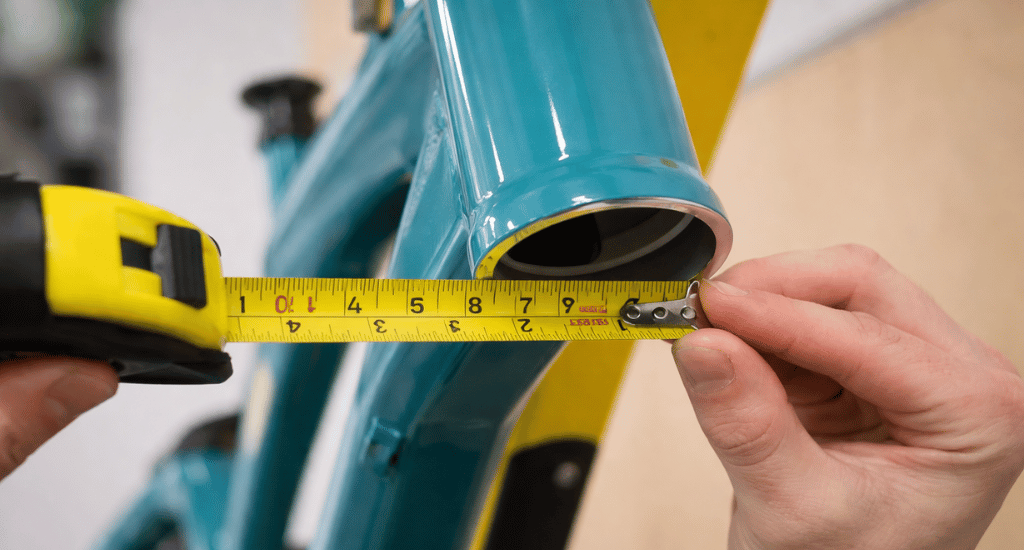
Measuring your headset size takes two minutes with basic tools.
Step 1: Remove the Stem
Loosen the stem bolts and slide the stem off the steerer tube. This exposes the steerer for measurement.
Step 2: Measure the Steerer Tube
Use calipers to measure the outer diameter of the steerer tube. A reading of 25.4mm indicates a 1-inch headset. A reading of 28.6mm indicates a 1 1/8 inch headset.
Step 3: No Calipers Alternative
A 1-inch steerer is roughly the diameter of a US quarter coin. A 1 1/8-inch steerer is noticeably thicker, closer to a half-dollar.
Step 4: Check Head Tube Bore
Alternatively, measure the inner diameter of the head tube. Approximately 30mm indicates a 1-inch system. Approximately 34mm indicates a 1 1/8 inch system.
| Specification | 1 Inch | 1 1/8 Inch |
|---|---|---|
| Steerer OD | 25.4mm | 28.6mm |
| Head tube ID | 30.0-30.2mm | 34mm |
| Crown race OD | 26.4mm | 30.0mm |
| Bearing OD | 30.2mm | 34.1mm |
Are 1 Inch and 1 1/8 Inch Headsets Compatible?
The short answer is no, not directly. The two sizes are not interchangeable without additional parts or modifications.
a. 1 1/8 Inch Fork into 1 Inch Frame: Not Possible
A 1 1/8 inch steerer (28.6mm) cannot fit into a 1-inch head tube bore (30.0-30.2mm). The steerer is too large. The bearing cups would need walls thinner than 1mm, which is structurally unsafe. No adapter exists for this direction.
b. 1 Inch Fork into 1 1/8 Inch Frame: Possible with Reducers
Reducer shims allow a 1-inch fork to fit in a 1 1/8-inch head tube. Problem Solvers and other brands make these shims. They fit inside the larger head tube and accept 1-inch headset cups.
c. Stem Adapters Are Different
Quill stem adapters let you use a 1 1/8-inch threadless stem on a 1-inch threaded fork. This changes stem compatibility only. It does not change the headset size, head tube, or fork steerer diameter.
A true size conversion requires replacing the fork, headset, and stem as a set. Replacing the head tube by a framebuilder is the only way to change the frame itself.
Which Headset Size Should You Choose?
Your choice depends on your bike and goals.
1. New Bike or Custom Build
Choose 1 1/8 inch or tapered. The modern standard offers the widest parts selection, better stiffness, and future upgrade compatibility. There is no practical reason to choose 1 inch for a new build.
2. Vintage Bike Restoration
Keep the 1-inch system. Threaded headsets and quill stems remain available for period-correct builds. The 1-inch size maintains authenticity and avoids unnecessary modification.
3. Upgrading an Existing 1 Inch Bike
Evaluate cost versus benefit carefully. A full fork, headset, and stem replacement may cost more than the frame is worth. Consider a quill stem adapter to ensure compatibility with modern stems without changing the headset.
4. Mountain Bike Use
The 1 1/8 inch is the minimum. Choose tapered if your frame supports it for maximum front-end stiffness.
5. Road and Gravel
The 1 1/8 inch is standard. Use 1 inch only when maintaining a classic steel frame.
Final Verdict: 1 Inch vs 1 1/8 Inch Headset
The 1 vs 1 1/8 headset decision is straightforward for most riders. The 1 1/8 inch is the modern standard for good reason. It offers superior stiffness, greater strength, and vastly better parts availability.
The 1-inch headset remains viable only for vintage bike restorations where authenticity matters.
If your frame supports 1 1/8 inch, run it. Measure your steerer tube with calipers before ordering parts. Correct sizing prevents costly compatibility mistakes.
FAQs


