
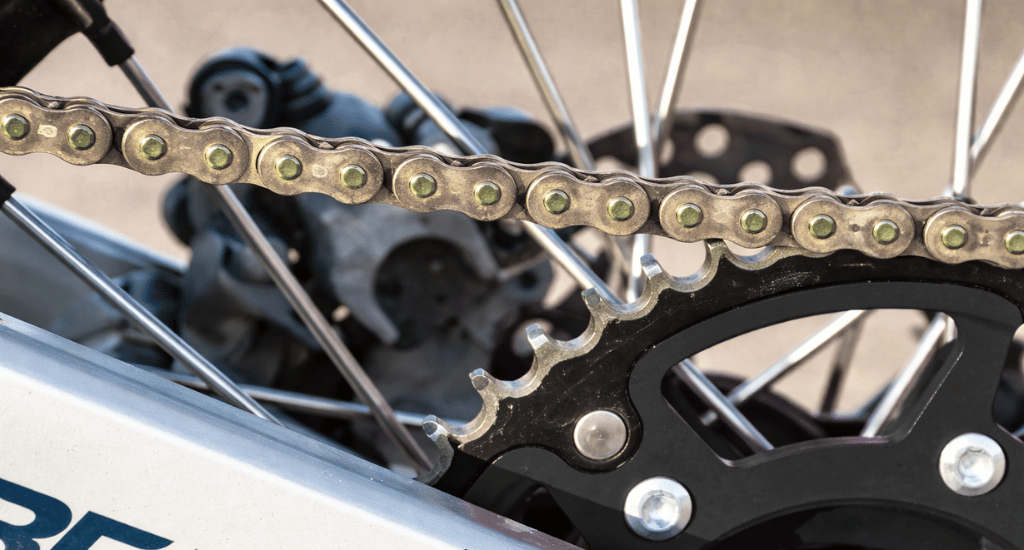
To count chain links accurately, count outer links and multiply by two. Or count each pin. Both methods give you the exact number of chain links on your bike.
Counting matters because worn chains stretch. Measuring an old chain gives the wrong length for a replacement. Only an accurate link count ensures a proper fit.
This guide covers three counting methods, accuracy checks, and standard chain lengths. These techniques work for bicycle chains, motorcycle chains, and industrial chains. For related maintenance, see our guide on fixing a slipping bike chain.
What Counts as a Chain Link?
A bike chain has two types of plates: outer links and inner links. Outer links have wide plates visible on both sides. Inner links sit between them with narrower plates and rollers.
One full link equals one outer plate pair plus one inner plate pair. This measures exactly 1/2 inch (12.7mm), called the chain pitch. When manufacturers list “114 links,” they count each plate pair separately. A 114-link chain measures 57 inches.
The master link (also called a quick link) is a removable connector. It counts as one outer link.
Chain links always total an even number. Outer links only connect to inner links, creating alternating pairs throughout the chain.
How to Count Chain Links on a Bike (Step-by-Step)
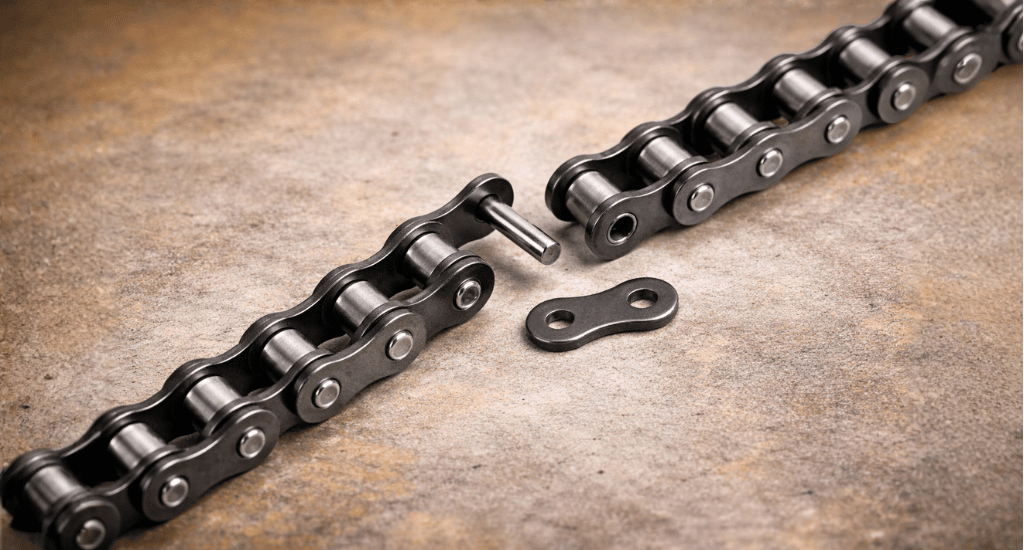
Three methods work for counting chain links. Start by securing your bike, then choose the method that suits your situation.
1. Secure the Bike and Access the Chain
Flip the bike upside down or place it on a maintenance stand. The goal is to access the chain from the side while allowing the wheel to spin freely.
View the chain from the side. Outer plates are clearly visible from this angle, making counting easier.
2. Mark Your Starting Point
Use a grease pen, marker, tape, or zip tie to mark one of the outer links. This prevents losing count when completing the loop.
If your chain has a master link, start there. Count the master link as zero, then proceed to the next link.
Skip marking if the chain is already removed from the bike. Lay it flat and count from one end to the other.
3. The “Count by Twos” Method
This is the most accurate counting method. Start at the master link as zero. The first inside link is 1, the next outside link is 2. Continue counting every pair of rivets or rollers until you return to your starting point.
Each count of “2” represents one full inch of chain. A count ending at 114 means 114 links and 57 inches of chain length.
Your total will always be an even number. Common counts include 114, 116, and 120 links. An odd result means you miscounted somewhere.
4. The Individual Link Method (Alternative)
Count every single inner plate and outer plate individually. This method is slower but equally accurate.
It works best when the chain is laid flat off the bike. You can see each plate clearly without spinning the wheel.
The result must still be an even number. Recount if you get an odd total.
5. The Pin Counting Method
Count each pin (rivet) in the chain. The number of pins equals the number of links.
Start with the first pin, then count every pin after it until you complete the loop or reach the end.
This method works well when viewing the chain from the side. Pins are clearly visible at this angle.
How to Make Sure Your Count Is Accurate
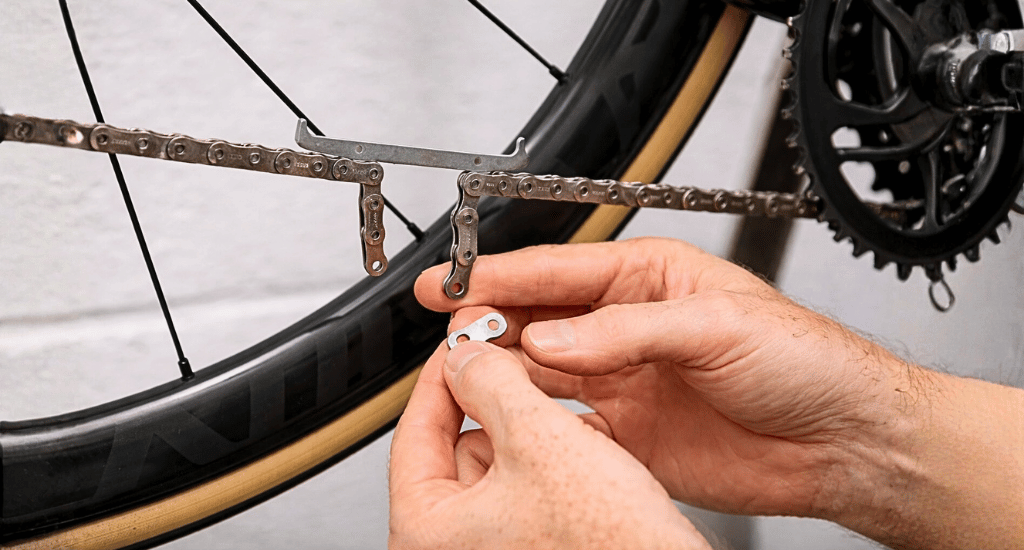
A wrong count leads to a chain that’s too long or too short. Use these checks before cutting.
a. The Even Number Rules)
Total link count must always be even. Outer links only attach to inner links, creating alternating pairs throughout the chain.
An odd number means a counting error. Recount immediately. Do not cut the chain until your total is even.
b. Count Three Times Before Cutting
Always count at least two to three times before cutting a new chain. Once links are removed with a chain tool, they cannot be easily added back.
Mark your count on paper between attempts. Only cut when all three counts match.
c. Include the Master Link in Your Count
The master link (also called quick link or power link) counts as one outer link. Do not skip it when counting.
If using the master link as your starting point, count it as zero. Then proceed to the next link as one.
Why You Should Count Links Instead of Measuring Length
Worn chains “stretch” over time. The pins and rollers wear down, increasing the chain pitch. An old chain may be 0.5-1% longer than its original length.
Matching an old chain to a new one by length gives wrong results. The new chain ends up too long, causing sloppy shifting and potential chain slipping under load.
Counting links stays accurate regardless of wear. The number of links never changes, even as the chain stretches.
If comparing chains side by side, match pin-to-pin rather than end-to-end. This accounts for any stretch in the old chain.
Standard Bike Chain Link Counts
Most bike chains from Shimano, SRAM, and KMC come with 114 or 116 links. This fits most standard frames.
Mountain bikes with longer chainstays often require 120-link chains. 12-speed mountain bike chains typically come with 126 links to accommodate 1x vs 2x drivetrain setups.
Road bikes usually require 106-112 links after sizing. The extra links get removed during installation.
Match chain speed to your drivetrain. An 11-speed chain fits an 11-speed bike. A 12-speed chain fits a 12-speed cassette.
Always buy a chain with more links than needed. Cut to size using a chain tool.
How to Size a New Chain Using Your Link Count
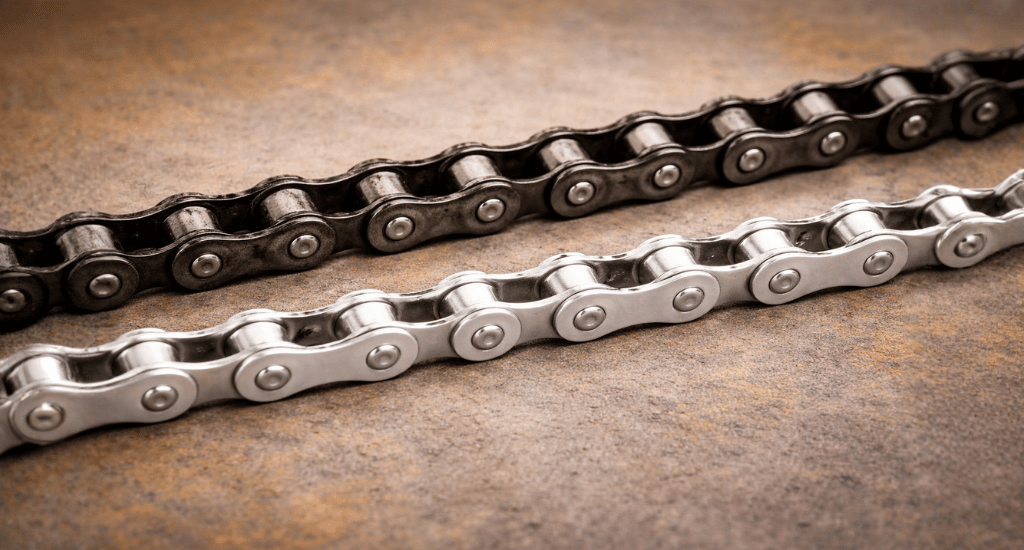
Count the links on your correctly sized old chain if it has not stretched beyond 0.5% wear. This gives you the exact link count for the replacement.
For a new build, use the big-big method. Wrap the chain around the largest chainring and largest cog, bypassing the derailleur completely. Add 2 links (1 inch) for standard drivetrains. Add 4-6 links for full-suspension bikes or 1x systems.
Cut the chain to length with a chain tool. Connect the ends with a master link or connecting pin.
A chain that’s too short can damage your derailleur during hard shifts. Too long causes skipping and chain slap.
Conclusion
Count outer links by twos and multiply, or count each pin. Both methods give accurate results. Always verify using the even-number rule and count 2 to 3 times before cutting.
Counting links beats measuring every time. Worn chains stretch, but link counts stay true. An accurate count ensures your new chain fits properly and shifts smoothly from day one.
Match the chain speed to your drivetrain, and buy more links than you need. Follow BicycleXpert for more drivetrain maintenance guides and repair tips.


